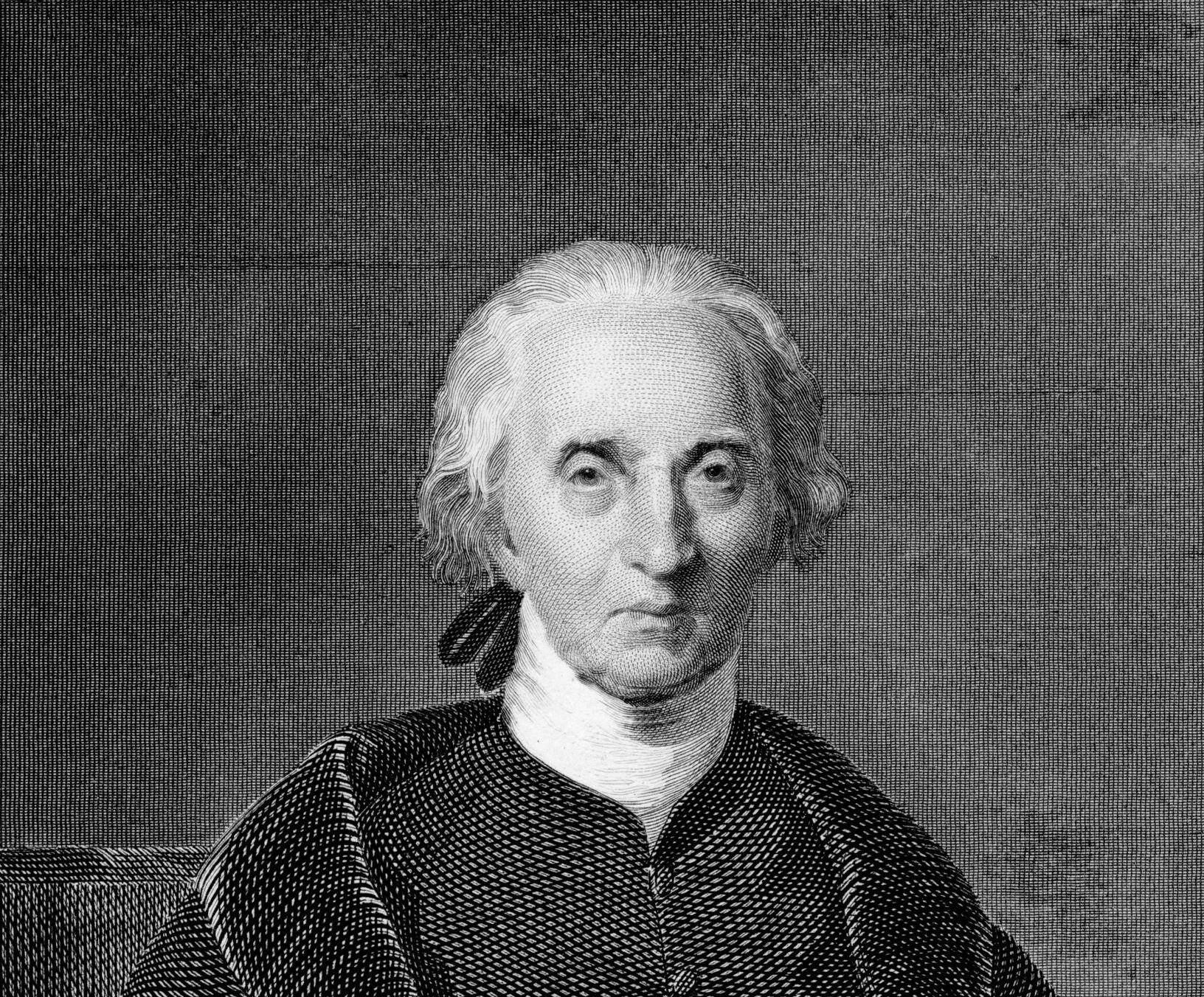


Of the signers who had much to lose for supporting American independence, there was one whose voice and courage would shape its trajectory. His name was Charles Carroll of Carrollton.
Born of Irish Catholic immigrants, Charles Carroll was born Sep. 19, 1737, in Annapolis, Maryland. His family had done quite well for themselves through their ventures as planters and businessmen. They were among the wealthiest families in the American colonies.
Despite his family’s extensive fortune, the Carrolls faced pervasive persecution for their Catholic faith. At the time, Catholics were excluded from public life in Maryland under the colony’s 1704 act to “Prevent the Growth of Popery.” Under the law, Catholics were prohibited from holding public office and participating in law, denied the right to vote, and prevented from instructing their children in the manner of their faith.
Carroll deserves profound respect from us today and should inspire future generations to preserve the values that he and his fellow signers so deeply believed in.
Despite persecution at home, Charles was fortunate enough to be sent over to France and later to London to undergo his classical as well as legal education. During his time in France, Carroll learned the French language, literature, philosophy, accounting, and Roman Law. It was also during his education that he would develop his own republican ideals upon reading the works of the great minds of Aquinas, Montesquieu, Cicero, and others. In 1759, Carroll moved to London to continue his legal studies and even attended sessions of parliament, though his Catholic faith constricted his educational opportunities.
While studying in Europe, Carroll’s father wrote to him about the growing perilous conditions in the colonies. As the growing persecution of Catholics was becoming a serious situation, especially during the wars between Anglican Britain and Catholic France, the British government had begun to exercise authority beyond what was allowed and was tyrannizing the citizens of the colonies. Despite persecution, Carroll would soon turn his own voice into an instrument for the cause of independence for the colonies.
Upon his return home from London in 1765, Carroll would challenge Britain’s rule over the colonies. In 1772, under the pseudonym “First Citizen,” Carroll wrote anonymous letters to the Maryland Gazette questioning the authority of the British regime and defending the rights of the colonists. In his writings, he challenged the Stamp Act and the violation of freedoms of the colonists under the British government by appealing to natural law, the Anglo-Saxon common-law traditions, and the minds of Western civilization. “The British North American Colonies are thus circumstance,” he wrote in his first letter, “they have then a right to chuse [sic] a constitution for themselves, and if the choice is delayed (should the contest continue) necessity will enforce that choice — Whether it be prudent to wait till necessity shall compel these colonies to assume the forms, as well as the powers of government, shall be discussed in this paper.”
The success and popularity of his letters to the Gazette would make Caroll the leading voice of independence in Maryland, winning over the minds of his fellow Marylanders.
In 1774, when Boston led its famous Tea Party, merchants with British tea in the Chesapeake Bay asked Charles for advice to help spare them the same fate, to which he replied: “Gentlemen, set fire to the vessel and burn her, with her cargo, to the water’s edge.” His voice and respect from his fellow colonists eventually led to him serving the colonial cause within Maryland’s Committee of Correspondence, and then as a member of Maryland’s Provincial Congress and Committee on Public Safety in 1775. Even though he was Catholic, he was sent as an unofficial observer and advisor to the First Continental Congress.
In the spring of 1776, Charles, along with Salmon Chase and Benjamin Franklin were sent by the Congress up north to convince the Canadians to join the cause of the colonists. Carroll was considered a natural choice for the mission, as his Catholic faith and ability to speak French appealed to the largely French Catholic population up north. Although Carroll’s own background appeared to be key to appealing to the French Catholics, the negotiations ended with the Canadians deciding not to join the cause.
Carroll’s actions nonetheless led to his election to the Second Continental Congress as a delegate on July 4, 1776, the day of the formal approval of the Declaration of Independence. Despite not being present at the vote for independence, the 38-year-old Marylander would sign his name, “Charles Carroll of Carrollton,” on August 2, 1776, becoming the only Catholic and the wealthiest of the signers of the Declaration of Independence.
Using his skills, Carroll would serve the colonial cause on the War Board to assist with supplying the Continental Army until 1778. Upon his return to Maryland, Charles served on the committee to assist with drafting a constitution for Maryland. It was during this period that Charles would upend decades of persecution by enshrining religious liberty and the right to vote for Maryland’s citizens under their newly created constitution, rescinding the barriers that once prohibited individuals like himself from entering the realm of government.
After the Revolution, Carroll would continue to be of service to the newly independent American nation. He remained quite active within Maryland politics, especially in its legislature. Though he was absent at the Philadelphia Convention in 1787, Carroll’s work on Maryland’s constitution and his republican beliefs would help influence the convention’s framework for the structure of the U.S. federal government. His belief in a mixed regime — combining aristocracy, monarchy, and democracy — as the best way to “protect lives, Liberty, & property of its citizens” would help foster the creation of the U.S. Senate.
To that end, it would later be James Madison in Federalist 63 who affirmed that the framers saw Maryland’s Senate, which Carroll had helped mold, as the model for the U.S. Senate. “The Maryland constitution is daily deriving, from the salutary operation of this part of it,” Madison wrote, “a reputation in which it will probably not be rivalled by that of any State in the Union.”
It wasn’t too long before Charles would serve Maryland as its first U.S. senator, which he did until 1792. The most notable aspect of his tenure was when he served on the committee to help approve and finalize the amendments that would become the Bill of Rights. He remained a staunch Federalist during his years and continued to stay vigilant of the dangers brought on by the radical Jacobinism of his day.
In his years of public service, Carroll would also take on the cause of Abolitionism. Despite being a slave owner himself, Carroll saw slavery as against the natural order and hoped to lay the foundations of its gradual abolition. In 1789, Carroll became active in pushing a bill in Maryland to gradually free its slaves as well as end the exportation of slaves from Maryland. In the end, the bill failed, as the necessary support did not materialize. Despite the bill’s failure, Carroll remained active with the cause by serving as president of the Auxiliary Colonial Society of Maryland. In his letter of April 23, 1820, regarding the Compromise of 1820, he wrote, “But why keep alive the question of slavery? It is admitted by all to be a great evil; let an effectual mode of getting rid of it be pointed out, or let the question sleep forever.”
On July 4, 1826, Carroll wrote a special note to his fellow Americans, reminding them of their inheritance granted by the signers and those before them. “I do hereby recommend,” he announced, “to the present and future generations the principles of that important document as the best earthly inheritance their ancestors could bequeath to them.” On November 14, 1832, at the ripe old age of 95, Carroll passed into eternity as the last of the surviving signers. The newspaper headlines announcing his passing spoke volumes: “A great man hath fallen in Israel.” He was hailed as “The Last of the Romans.”
Charles Carroll of Carrollton had much to lose for his actions. Had the revolution failed, he would have lost everything his family acquired, not to mention the repercussions of his actions as a Catholic. Yet it was his statesmanship and firm conviction in the traditions of Western civilization that not only helped the colonies eventually secure their independence but also laid the foundations for the nation’s republican ideals and structure. Carroll deserves profound respect from us today and should inspire future generations to preserve the values that he and his fellow signers so deeply believed in. In the annals of American history, Charles Carroll of Carrollton will forever be known as America’s greatest Roman.
READ MORE from Hunter Oswald: