

On Monday, the Supreme Court released its decision in Watson v. Republican National Committee, which addressed the question of whether ballots must be physically received at polling sites by election day, or if they can simply be postmarked by election day. This case, decided in a 5-4 ruling, affirmed a Mississippi state law that allows late absentee ballots to count if they were postmarked by election day. This decision will have direct implications for late ballots received in the 2026 midterm elections. All votes received up to five days late will be counted in Mississippi and around 30 other states that have similar laws.
In 2024, the Republican National Committee and others sued Michael Watson, the secretary of state in Mississippi. The plaintiffs claimed federal law required that all election ballots counted must be received, not merely sent, by the first Tuesday in November, contrary to current Mississippi practice. The U.S. District Court for the Southern District of Mississippi, with Judge Louis Guirola Jr. presiding, ruled in favor of the plaintiffs, but soon after, the Fifth Circuit Court reversed the decision. Now the Supreme Court has ruled for Mississippi that these “grace periods,” which allow for late votes to be counted, do not violate any federal election statutes.
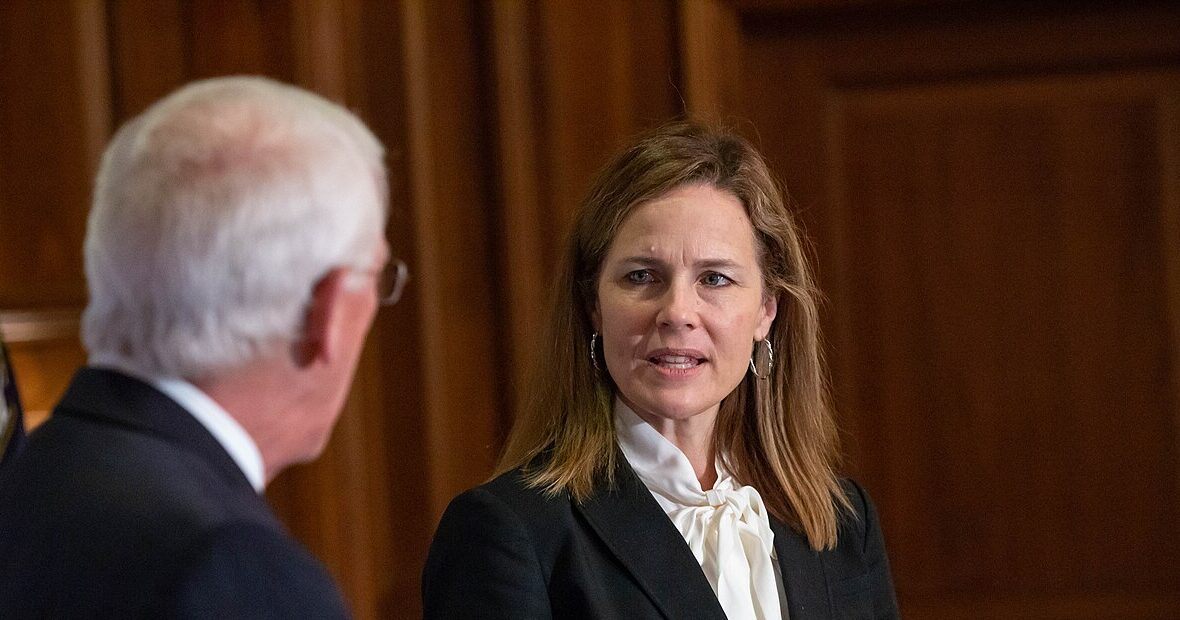
Justice Amy Coney Barrett authored the majority opinion and was joined in her assent by Chief Justice John Roberts, as well as liberal justices Sonia Sotomayor, Elena Kagan, and Ketanji Brown Jackson. Barrett stated the main argument for ruling in favor of the Mississippi state law was that election procedures are not court issues, for the “responsibility for the mechanics of congressional elections belongs to the states.”
Barrett went on to note that in the past, Congress had passed legislation on the day of elections to protect against election fraud, but otherwise, they had given states significant leeway on structuring election processes. Throughout the years, there have been changes in the accepted timing of absentee ballots due to soldiers’ late ballots received in the Civil War and World War I, and today, many states have kept those late acceptances. The specific Mississippi law is reasoned by Barrett to be useful for allowing college students and senior citizens to have their late votes counted, especially when coming from out of state. She wrote that accepting absentee ballots up to five days late is acceptable because “election” is simply “the elector’s choice of candidate” and “the electorate’s choice is made when voting is complete, not when ballots are received.”
With Barrett’s refusal to make this case a court issue, the majority decision puts pressure on Congress to pass election legislation if they want reform in this area, such as the SAVE Act, which would require ballots to be received by election day in order to be counted.
Justice Samuel Alito wrote the dissent, along with Justices Clarence Thomas, Neil Gorsuch, and, in part, Brett Kavanaugh. In contrast to the majority’s definition, Alito defined an election as “the expression of the electorate’s choice,” and this expression is “embodied in the collection of ballots.” Therefore, he sided with the plaintiffs, saying that while late absentee votes may count as “ballot casting,” they do not meet the needed requirement of a timely “ballot receipt.” Alito also refuted that the expectations the U.S. allowed for during the Civil War and World War I were reasons to accept late ballots today.
Additionally, Alito stated that allowing this law will only lead to a growing lack of confidence the United States public has in our election systems. In his words, there will be a “slurry” of questions following this decision concerning the security of the nation’s election procedures. Large numbers of votes counted in Mississippi and other states come from these late absentee ballots. Absent new legislation, the decision clears the way for late mail-in ballots to be received and counted in the upcoming 2026 midterms and future elections.
READ MORE from Caroline Petersen:
SCOTUS Rules 6-3 to Stop Anti-Gun Law in Hawaii
Rep. Alford Promises to Push the FAA for Answers on Missouri Plane Crash
Trump Celebrates His Birthday and America’s 250th With UFC Fight Held at the White House