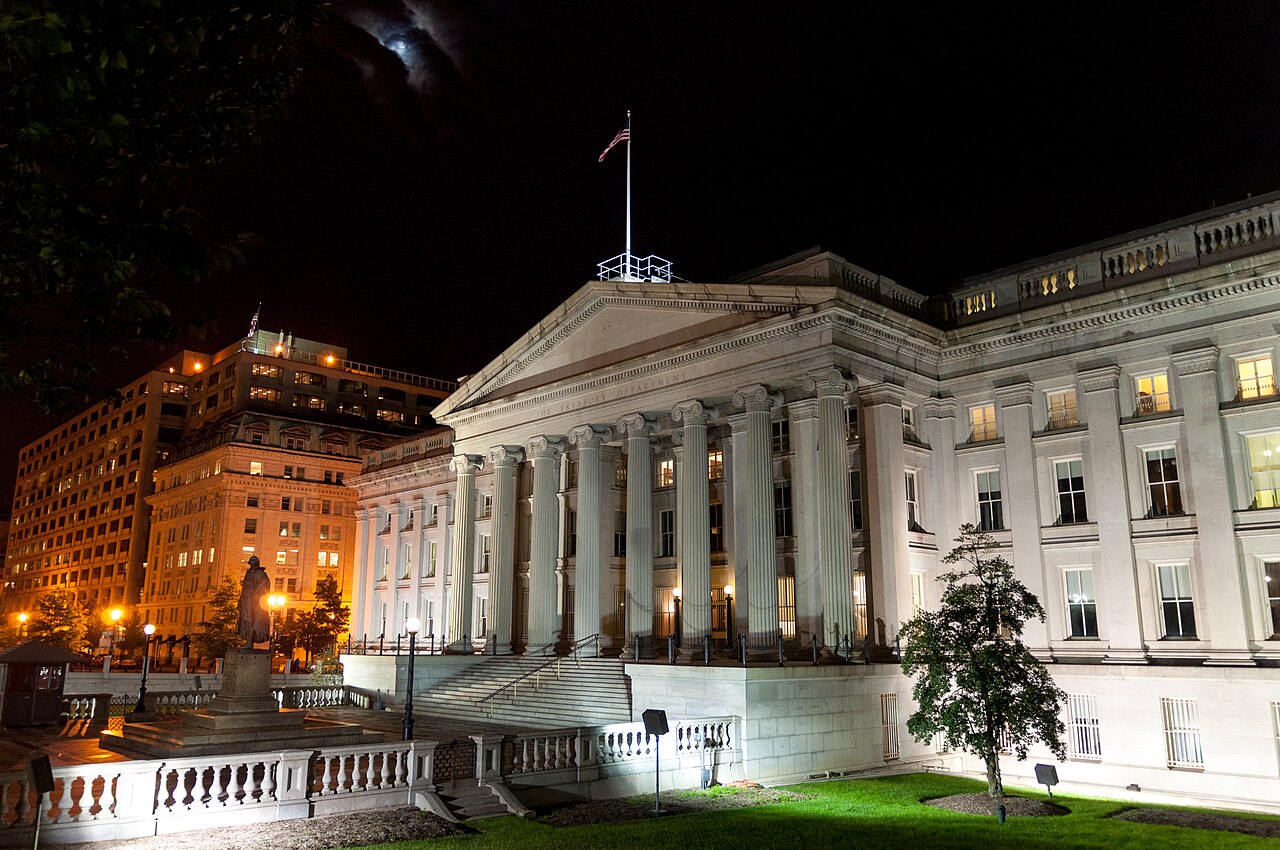


On June 2, the Treasury sanctioned Nobitex, Iran’s largest cryptocurrency exchange, accusing it of helping Tehran evade Western sanctions. Nobitex sat near the center of an Iranian shadow-finance system used by the central bank and the Islamic Revolutionary Guard Corps to move hundreds of millions of dollars beyond ordinary banking controls. Nobitex is what sanctions evasion looks like when an old regime finds new settlement rails: value moving beyond custody, compliance, and jurisdiction before responsibility can be pinned down.
The White House has made clear its objective: to anchor digital assets under U.S. jurisdiction. The alternative is a market ordered by offshore venues, Chinese state preferences, sanctions evaders, and opacity-for-hire jurisdictions. American financial primacy rests on legal gravity: custody, disclosure, supervision, sanctions compliance, and reachable counterparties. The test of the CLARITY Act is whether it extends that gravity into digital assets. or creates liquidity without enforceability.
Financial enforcement depends on accountable control points: custody, settlement, reporting, and reachable counterparties. CLARITY’s risk is that it defines the perimeter without securing the bypass, exchanges inside, bridges, mixers, offshore protocols, and self-custodied flows outside. That is not a drafting flaw. It is routing intelligence.
Iran has spent decades learning the value of such spaces. The IRGC and its facilitators have moved through front companies, oil schemes, procurement agents, brokers, shadow banks, and friendly jurisdictions. Digital assets give that machinery another layer. The IRGC’s financial playbook now includes front companies, shadow banking networks, procurement agents, illicit commercial activity, and digital assets, including stablecoins, used to move money, evade sanctions, and support terrorism. A frozen company gives way to a cutout. A blocked wire gives way to a facilitator. A flagged intermediary gives way to another rail.
Illicit finance does not respect the categories governments prefer. Terrorism, sanctions evasion, narcotics trafficking, and cyber fraud increasingly share the same habits: obscure beneficial ownership, fragment responsibility, exploit jurisdictional seams, and outrun enforcement. In October, federal prosecutors filed the largest forfeiture action in American history, seeking roughly 127,000 bitcoin, then valued at about $15 billion, linked to the Prince Group. Trafficked workers were trapped in scam compounds and forced to run cryptocurrency fraud schemes. Forced labor supplied the operators, online fraud supplied the victims, and digital assets supplied part of the laundering channel.
Terrorist financiers have adapted too. In March 2025, authorities disrupted a cryptocurrency fundraising network allegedly supporting Hamas, after supporters circulated wallet addresses through encrypted messaging platforms before roughly $200,000 in U.S. dollars was seized. In 2020, federal investigators dismantled cyber-enabled fundraising campaigns tied to Hamas, al-Qaeda, and ISIS. The same architecture appears in criminal and state networks: a Sinaloa Cartel-linked laundering network allegedly converted U.S. fentanyl proceeds into cryptocurrency for transfer back to Mexico, while DPRK-sponsored cyber groups use virtual-currency theft to weaken sanctions.
Crypto did not invent illicit finance. It improved the operating conditions for illicit value…
Crypto did not invent illicit finance. It improved the operating conditions for illicit value: faster settlement, fewer chokepoints, greater jurisdictional distance, and more systems where the accountable counterparty is hardest to locate before the transaction clears. Some friction in finance is waste. Some of it is civilization defending itself. Customer identification, sanctions screening, transaction records, and suspicious-activity reporting are how law catches up to money.
Supporters of the CLARITY Act say the bill would bring centralized firms, brokers, dealers, and exchanges under clearer anti-money-laundering, know-your-customer, and sanctions obligations. The harder question is what remains outside the fence. Sheriffs, police chiefs, and prosecutors have warned that broad carve-outs could give criminals the blind spots they seek. The Bank Policy Institute has warned that the bill may leave no clearly responsible party for monitoring decentralized transactions.
The industry is right about one thing — writing neutral code is not the same as running a bank. A developer who never touches customer funds should not automatically be treated as a financial institution. A Blockchain Association letter signed by former law enforcement and national-security officials presses that case. Protect code. Do not launder responsibility. Congress should not let “decentralized” become the new offshore shell.
A defective CLARITY Act would not hand Tehran a loophole. It would hand it a lawful market structure with the evasive path already engineered in. The IRGC, Hamas financiers, and North Korean hackers do not need America to abandon enforcement. They need American liquidity routed through systems where custody is optional, attribution is late, and responsibility never quite lands.
READ MORE from Kevin Cohen:
When Grown Men Enter High School as Children
Image licensed under Creative Commons Attribution 3.0 Unported.