

Iran’s most valuable strategic asset isn’t its missile arsenal, its proxy network, or even its nuclear program. It is geography.
Tehran has learned to turn two narrow waterways — the Strait of Hormuz and Bab el-Mandeb — into instruments of economic coercion. It doesn’t have to sink a fleet or permanently close either passage. It only has to persuade insurers, shipowners, and commodity traders that it might. The market then does much of the damage on Iran’s behalf. (RELATED: Prepare for Trump’s Midterm Surprise)
That strategy became explicit this month when Iran instructed the Houthis to stand ready to close Bab el-Mandeb if the U.S. attacked Iranian power infrastructure. The threat extended Tehran’s reach from Hormuz to the Red Sea gateway, placing two of the world’s most important energy routes under the shadow of the same regime. (RELATED: Choke Points and the Future of Naval Power)
For decades, America has defended the routes Tehran threatens. A Saudi-Jordan-Israel corridor would begin reducing their strategic importance.
Washington’s traditional answer is familiar: send another carrier, escort another convoy, and defend another chokepoint. The U.S. has become remarkably good at protecting a vulnerability instead of reducing it.
There is a better answer: Build around Iran.
Israeli Energy Minister Eli Cohen has proposed a roughly 700-kilometer pipeline from Saudi Arabia to Eilat. From there, crude would enter Israel’s existing pipeline system, cross the Negev, and reach the Mediterranean at Ashkelon, bypassing Hormuz, the Houthi-controlled approaches to Bab el-Mandeb and the Suez Canal.
The proposal wouldn’t replace Hormuz, nor does it need to. More than 20 million barrels a day passed through the strait during the first half of 2025, equivalent to roughly one-fifth of global petroleum consumption and a quarter of maritime oil trade. Most of those barrels headed east to Asia. The strategic objective is to move enough oil beyond Tehran’s reach that closing the strait becomes less useful, less profitable, and less frightening.
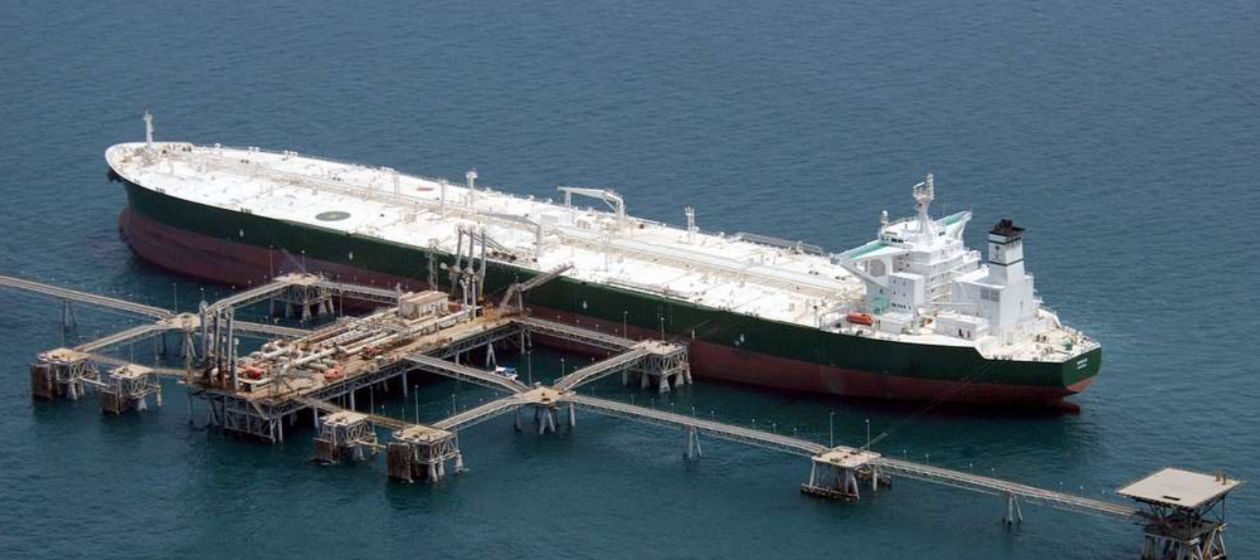
Saudi Arabia has the clearest incentive. Its East-West pipeline already moves crude from the Gulf side of the kingdom to Yanbu on the Red Sea, avoiding Hormuz. Riyadh is now considering expanding that system by as much as two million barrels a day. But Yanbu solves only half the problem. Saudi exports still enter a maritime system exposed to Houthi missiles and drones, Bab el-Mandeb and Suez. They escape one trap only to enter another.
A link to Eilat would give Riyadh direct Mediterranean access. Saudi Arabia doesn’t suffer from a shortage of oil. It suffers from a shortage of exits.
Jordan is the indispensable middle. Any practical route from northwestern Saudi Arabia to Israel would cross Jordanian territory, which means Amman can’t be treated as empty space between richer neighbors. Jordan would need transit fees, energy access, construction work, infrastructure investment, and a permanent role in the corridor’s governance and security. That isn’t generosity; it is structural integrity. A pipeline that distributes risk while concentrating reward won’t survive its first political crisis.
Israel supplies the infrastructure that makes the proposal more than a map-room exercise. The existing Eilat-Ashkelon system consists of a 42-inch, 254-kilometer bidirectional pipeline with terminals and storage facilities on the Red Sea and Mediterranean. It can move roughly 600,000 barrels a day. The western section already exists. The missing link is from Saudi Arabia to Eilat through Jordan.
The diplomatic logic is equally strong. The Abraham Accords demonstrated that Arab-Israeli relations endure when governments can point to concrete benefits. A functioning energy corridor would give Saudi-Israel normalization something more durable than handshakes and summit photographs: contracts, revenue, jobs, shared infrastructure, and a mutual interest in keeping it intact. Ceremonies fade. Balance sheets tend to linger.
The project also fits the India-Middle East-Europe Economic Corridor, conceived as a network linking India, the Gulf, and Europe through ports, railways, energy infrastructure, and data connections running through Saudi Arabia, Jordan, and Israel. A crude pipeline could become its first serious hard asset, with electricity cables, data infrastructure, freight links, refined products, and eventually hydrogen following behind it.
None of this excuses commercial fantasy. Tankers passing through an open Hormuz will often remain cheaper. Most Gulf oil is sold to Asia rather than Europe. A multibillion-dollar pipeline shouldn’t be built as a monument to normalization or another heavily subsidized regional acronym. It must carry oil, generate revenue, and attract long-term shipping commitments.
But the relevant comparison isn’t between pipeline tariffs and peaceful tanker traffic. It is between the cost of the corridor and the recurring price of war-risk premiums, delayed shipments, emergency reserve releases, lost production, inflation, and American naval deployments. The recent disruption of Hormuz forced Gulf producers to shut in millions of barrels of daily output and pushed crude prices sharply higher. A system optimized only for calm conditions isn’t efficient. It is brittle.
The financing model should reflect that reality. Saudi and Israeli sponsors, European refiners, commodity traders, and anchor customers should supply the core capital through long-term throughput agreements. Washington’s role should be diplomatic coordination, political-risk insurance, and tightly limited loan guarantees — not another blank check labeled “Middle East peace.”
Security would have to be built in from the beginning. Iran and the Houthis would target the corridor precisely because it would reduce their leverage. Buried sections, redundant pumping stations, segmented control networks, rapid-repair teams, missile defense, and joint intelligence would be operating requirements rather than optional extras.
The environmental standard must be equally unforgiving. Eilat’s coral ecosystem is both a natural and strategic asset. Any expansion should require advanced leak detection, double-hulled tankers, independent monitoring, pre-positioned containment equipment and a restoration fund financed by the corridor’s users.
The obstacles are substantial. Saudi consent is uncertain. Jordanian politics are difficult. Environmental opposition will be fierce. The economics must be proved rather than asserted. Those are serious objections, but they don’t outweigh the cost of leaving Iran’s leverage intact.
For decades, America has defended the routes Tehran threatens. A Saudi-Jordan-Israel corridor would begin reducing their strategic importance. Iran’s chokepoint strategy works because the world has too few alternatives. The answer is to build one.
READ MORE from Kevin Cohen: