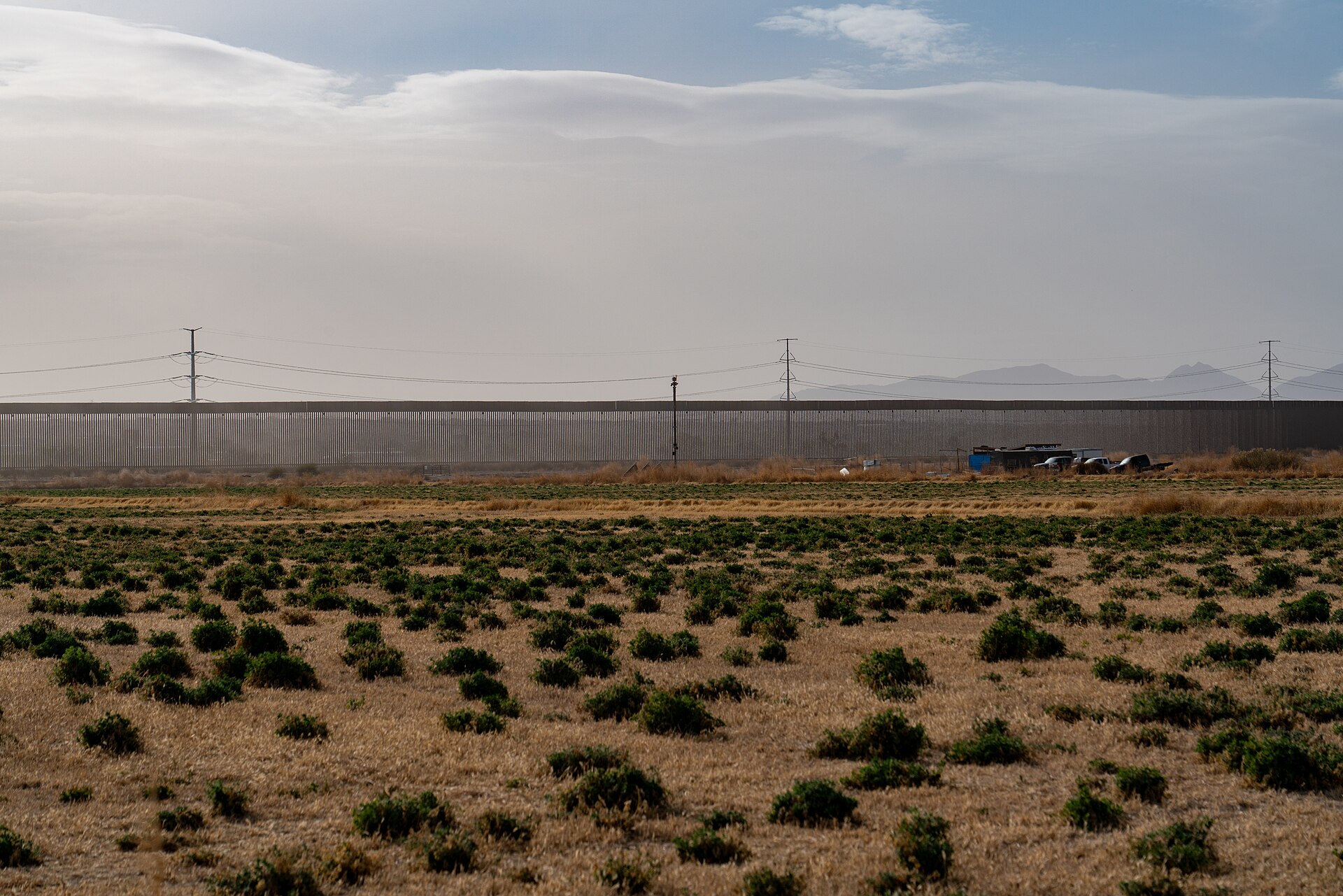


Last Thursday, the Supreme Court made two major rulings in favor of the Trump administration’s immigration efforts. The Court ruled in favor of the administration being able to end Temporary Protected Status (TPS) for Haitian and Syrian migrants in the case of Mullin v. Doe,and upheld the administration’s use of “metering,” a policy that gives the federal government discretion over when and how asylum seekers may seek entry at the U.S.-Mexico border, in Mullin v. Al Otro Lado.
Put together, these decisions will fundamentally alter immigration into the U.S., with fewer waves of asylum seekers and stronger control at the border.
After the TPS ruling, which was decided 6-3 along ideological lines, takes effect in a month, around 350,000 Haitians and 6,000 Syrians will lose their work authorization and no longer be protected from deportation. Just ending TPS for Haiti and Syria isn’t the end goal, however. The Trump administration will be looking into TPS cases from several other countries as well, which could affect 1.3 million people.
America’s immigration policy has become stricter, making the continent look less and less like a haven of escape for people with troubling situations in their home countries. Lower court judges had alleged that decision to end TPS came from a place of bigotry.
White House spokesperson Abigail Jackson countered those accusations, saying, “Today, the Supreme Court affirmed what President Trump has always maintained: temporary protected status is, by definition, temporary. It was never intended to be a pathway to permanent status or legal residency and it is committed to the discretion of the Secretary of Homeland Security. The Trump Administration continues to lawfully end the egregious abuses to our immigration system.”
Justices Elena Kagan, Ketanji Brown Jackson, and Sonia Sotomayor expressed intense disapproval in a dissent from the court’s opinion, where Sotomayor wrote that “[t]he consequences of today’s decision are predictable. More people will die. More people will attempt to cross the border illegally, and some will make it while others will not.”
She compared the Court’s decision as being as reckless as the treatment of Jews in WWII: “Congress passed the Refugee Act in 1980 because it did not want this country to repeat the mistakes of its past. Yet if the Jewish refugees aboard the M.S. St. Louis — the ship carrying more than 900 people fleeing Nazi Germany that was turned away by the United States and other countries before many of its passengers perished in the Holocaust — “were to arrive at a port of entry on our southern border today, the majority’s interpretation would allow immigration officers to refuse even to consider their asylum claims by physically preventing them from stepping onto U.S. soil.”
Some Republicans criticized the decision as well. Rep. Mike Lawler (R-N.Y.) commented after the ruling, “Just like it is not safe for Americans to go to Haiti, it is not safe to force Haitians to return at this current moment in time.” He added, “With our southern border now secure, we have the ability, and the responsibility, to pursue practical, targeted solutions that uphold the rule of law and recognize the harsh realities on the ground in Haiti.”
In the case the administration’s usage of “metering” which was also decided in a 6-3 vote, the court allowed the federal government to have the ultimate say on when asylum seekers will come into the U.S. giving control to the federal government instead of the will of the person seeking entry.
Justices Samuel Alito and Sotomayor clashed over the interpretation of the phraseology in the case; “arrives in the United States.” Alito argued that the terminology of “arrived” in the states should be interpreted plainly, referring to a person having physically arrived in the States. He asserted it was illogical to say that someone has arrived in the states and not be physically there. Sotomayor, however, interpreted the phrase should also extend into contexts where someone is close by.
The ruling gives federal officials the authority to have some people seeking asylum wait outside the U.S. border before they present their asylum claims.
Put together, these decisions will fundamentally alter immigration into the U.S., with fewer waves of asylum seekers and stronger control at the border.
READ MORE from Destiny Lugo:
Who Counts as a Woman in Sports?
Hegseth Slams NATO and Promises Review of US Military Involvement in Europe