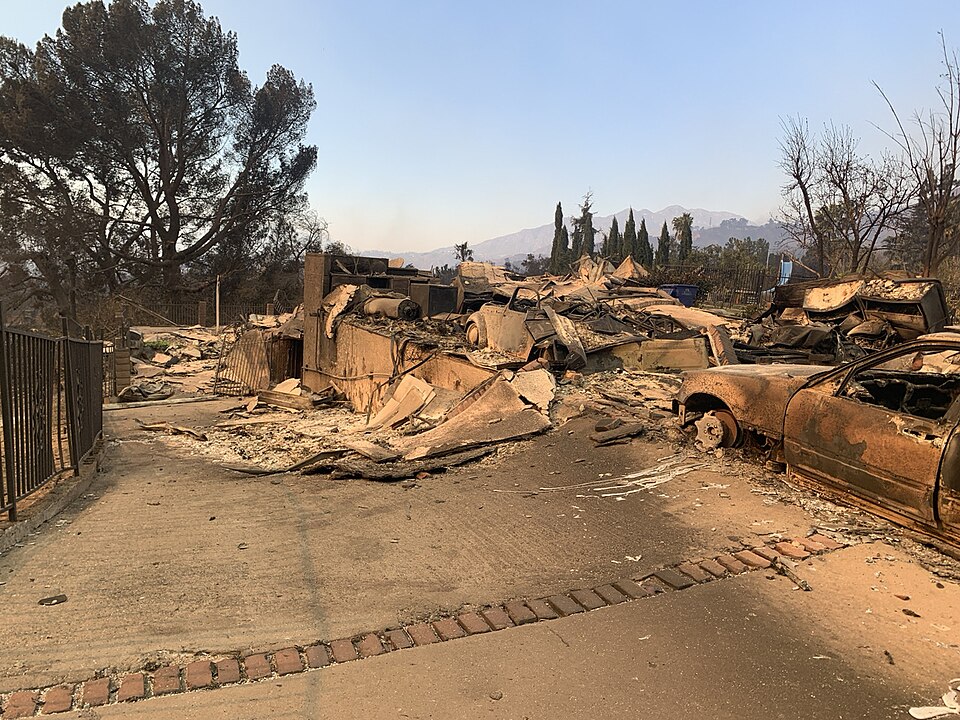


SACRAMENTO — California’s property insurance markets have been battered, as major insurers have reduced or halted their underwriting after several years of costly wildfires resulted in sustained losses. The real cause of the problem, as I’ve documented for The American Spectator, is the state’s system of insurance price controls that make it nearly impossible for insurers to price their policies to reflect their risk. Things have looked especially bleak since 2023, when the state’s largest home insurer, State Farm, halted new underwriting.
That move finally gained the state’s attention. As a result, our current insurance commissioner, Democrat Ricardo Lara, surprisingly embraced a number of market-oriented reforms that have started to take hold. A few insurers have increased their underwriting — even after the devastating Los Angeles area wildfires last year. The big questions: What reforms come next, and will the next commissioner turn back the clock on the reforms? (RELATED: California Incinerated Its Insurance Market)
One of the answers is surprisingly simple: California needs to invest in projects that reduce overall wildfire risk, such as producing better natural firebreaks, while continuing on its current insurance-reform track. Given the complicated nature of California’s insurance crisis, a little backstory is in order.
California voters in 1988 passed Proposition 103, which rolled back insurance rates by state edict. It also instituted a prior-approval pricing system, whereby the insurance commissioner gained the power to approve any rate hikes. That initiative also turned the commissioner into an elected official, which provided yet another disincentive for state approval of higher rates, given that no ambitious politician wants to be the person who approved rate hikes.
Prop. 103 forbids excessive rates, but it also requires that insurers charge adequate rates. Previous commissioners had focused on the former, but with insurers fleeing and homeowner policies becoming difficult to find, Lara implemented policies that enabled the insurers to play catch-up. One major sign of the state’s faltering insurance market: The government-created, barebones FAIR Plan (Fair Access to Insurance Requirements) had become overburdened as property owners increasingly relied on it, given the lack of other choices. Myriad officials suggested that it could have become insolvent.
The commissioner’s Sustainable Insurance Strategy bolstered that system, in part through a $1 billion assessment (paid by insurers and premium holders), and we’re now seeing it grow at a much slower rate. (Lara recently prevailed in a lawsuit over the assessment.) His strategy also sped up the rate-review process, which had become a Byzantine system of hearings that delayed rate changes even as the market changed. He approved most rate requests and allowed insurers to use forward-looking catastrophe models in pricing their policies rather than simply relying on past loss data.
He let insurers factor in the rising price of reinsurance — the insurance that insurance companies buy, and which allows them to write more policies. He recently re-filed reforms that will reduce the compensation for so-called “intervenors.” They are paid (by insurers, per Prop. 103) to oppose rate hikes. Their involvement can slow down the entire process. Not surprisingly, consumer activists are furious at the commissioner. Homeowners should be encouraged, however, now that policies are more readily available, albeit at frustratingly high prices.
Lara is termed out, and the November race pits a former legislator who said he supports the ongoing reforms and a progressive candidate who wants to create a public disaster system. So we’ll see how things go after November.
But there are some policies that pretty much everyone agrees can help reduce the overall risk of California wildfires, ranging from better forest-clearing efforts to home-hardening strategies. The problem with the latter is that they tend to be very expensive, and homeowners are loath to pay for them if they don’t see a reduction in their premiums. And insurers are loath to reduce premiums unless more people implement these home and landscaping improvements, and thereby actually reduce risk.
Basically, if you put on a fire-resistant roof and invest in better landscaping, it might not help much in the event of a fire unless the neighboring properties do so as well. California passed a law that helps fund some of these projects, but there’s an awful lot of work left to be done.
Despite boasting of its forest-thinning efforts, the Newsom administration hasn’t accomplished nearly as much as promised. The state could do much more, but seems more interested in promoting boutique climate-change projects. Note that a single year of severe wildfires undermines many years of carbon dioxide reductions, given that the fires emit so many pollutants. Fortunately, the state has passed some reforms that exempt many land-management projects from the California Environmental Quality Act (CEQA), the “landmark” environmental law that slows or halts many needed projects. California needs to use that latitude to complete more of them.
As mentioned above, one widely discussed policy that California lawmakers and private home associations need to consider: Improving the number of natural firebreaks, especially in the so-called Wildland-Urban Interface (WUI) — a bureaucratic term for growing population areas in the wooded outskirts of metropolitan areas. Insurers, homeowners, and even environmentalists are mostly in support of implementing these kinds of policies that would reduce the overall risk before wildfires strike.
The Mercury News last week reported on the significance of the problem: “From 1985 to 2024, the number of acres that burned in California’s forests has increased by roughly tenfold, according to a new study by scientists at UCLA. But the acres burned by high-severity fires — when flames explode out of control with extreme temperatures, incinerating trees rather than simply clearing out dead vegetation — have increased thirtyfold. These destructive fires have now become the most common type of forest fire.”
There’s nothing particularly high-tech about natural firebreaks. As the U.S. Department of Agriculture describes them, “A firebreak is a permanent or temporary strip of bare or vegetated land planned to retard and prevent fire from moving out of a burn area.” Like with everything related to California policy — insurance, transportation, homelessness, or otherwise — the solutions aren’t that vexing. But it comes down to actually doing them, and doing them in a cost-effective manner.
Instead of blathering about the usual — mainly blaming climate change rather than making the state more resilient in the face of a potentially changing climate — it’s time for policymakers to start taking action. The impressive success of the Sustainable Insurance Strategy shows that, yes, even California can address its most pressing problems. The administration and lawmakers need to look at other ways to reduce wildfire risk rather than just spend money on nonsense.
READ MORE from Steven Greenhut:
Democrats on Affordability: Oh, Never Mind
Republicans Learn Wrong Lessons From LA
State Workers Just Want to Stay Home
Steven Greenhut is Western region director for the R Street Institute. Write to him at [email protected].