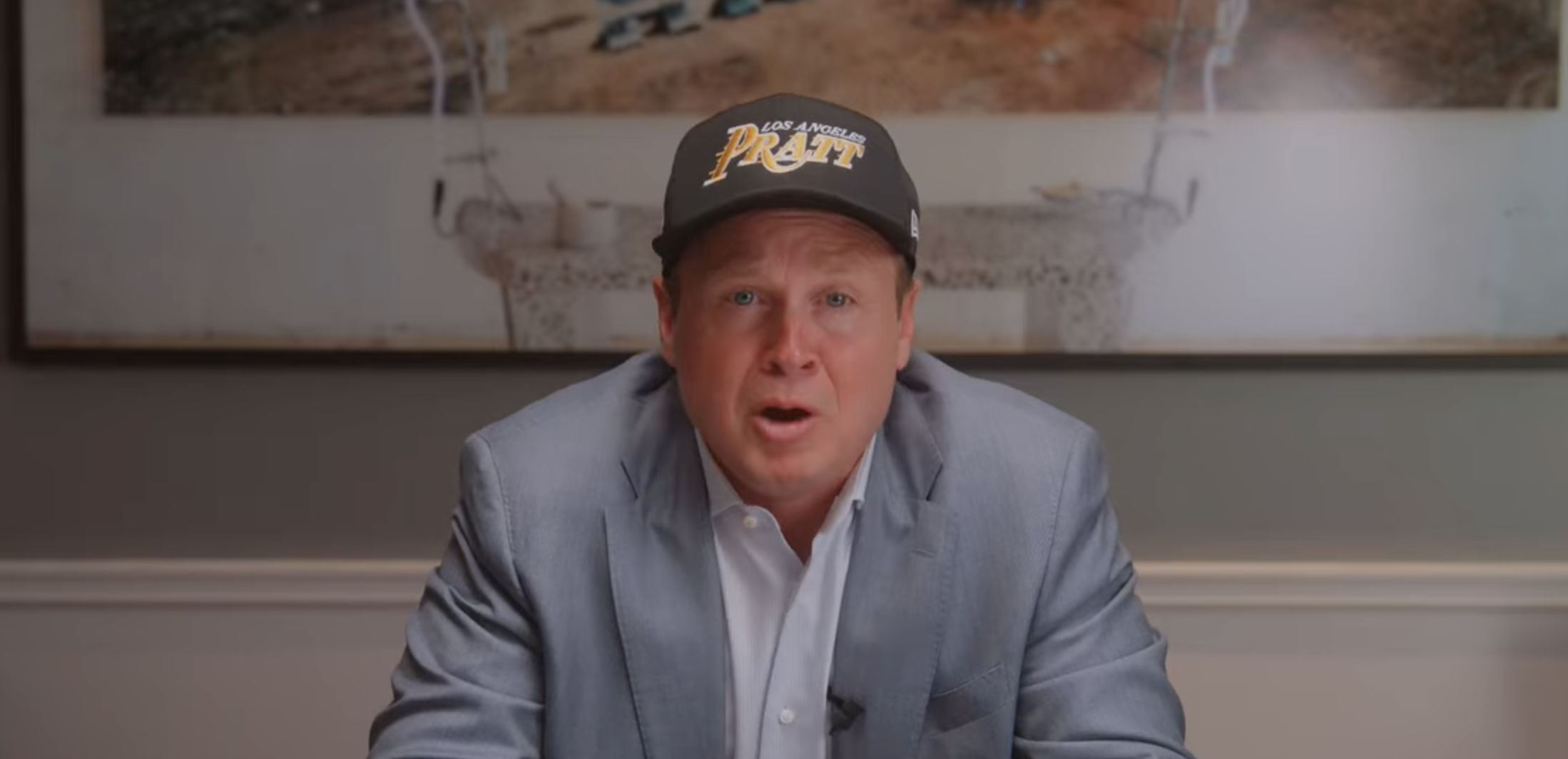


SACRAMENTO, Calif. — Republicans are in a tizzy after Spencer Pratt, the reality TV show villain who waged a late-in-the-game campaign for mayor of Los Angeles based on a campaign critiquing the city’s response to last year’s wildfires, was edged out for the second slot in the top-two primary by Councilmember Nithya Raman. She’s a progressive who challenged Mayor Karen Bass by appealing to younger voters and the Left.
Many of the people claiming voter fraud couldn’t tell you the difference between the city of Los Angeles and Los Angeles County, or between the San Fernando Valley and Eagle Rock, but they are sure only election rigging can explain why an inexperienced and somewhat clownish MAGA candidate couldn’t win in a city where Democrats have a four-to-one voter registration advantage. Perhaps they just too much time in their online populist bubble.
Advocates for these theories have no evidence, nor even a working theory about how such felonies took place. No stranger to election denialism, Donald Trump accused Democrats of stealing the election. U.S. House Speaker Mike Johnson of Louisiana said: “Some of these efforts are so diabolical and so far upstream it is impossible to prove. But think everybody knows instinctively something is wrong here.” They remind me of social justice snowflakes who think their feelings should take precedence over reality. And the burden of proof should always fall on those who are arguing that vote-rigging took place, not the other way around.
“As we have seen all too often, the Republican or conservative contender who is poised to win slowly but surely gets pulled down as his margin of victory disappears, and he vanishes into a whirlpool of magic ballots,” Deroy Murdock argued on these pages. I’ve been closely watching vote counts roll in California from registrars of voters for three decades, and there’s no magic or mystery explaining what’s happening. I’ve seen just as many vote counts trend in a conservative direction as I’ve focused on districts in right-leaning Orange County. Obviously, vote totals will be tilted one way or another based on overall registrations and particular precincts.
It’s almost embarrassing having to explain this phenomenon of red and blue mirages to people who should know better. For starters, in no world was Pratt “poised to win.” He was winning after the Election Day count, but around 90 percent of California voters cast their ballots by mail. Election Day voters — and Pratt urged his supporters not to vote by mail — trend sharply in an older, more conservative direction for obvious reasons. In-person votes are the outlier, a small distorted sample of the overall electorate. Pratt’s totals mirrored those that Trump received in 2024.
Even before last Tuesday, political observers noted (as confirmed by returned ballots) that Democrats were voting at the last minute because the race for governor was a free-for-all, with many of them undecided at the end — and others choosing to strategically vote for Tom Steyer to freeze out Republican Steve Hilton. Hilton made it to the runoff and yet Republicans seemed perfectly fine with that outcome. If Democrats are so omnipotent with their cheating capabilities, they are awfully selective in using them.
The Democratic establishment and many unions backed the incumbent Bass. Some unions ran ads to pump up Pratt. Bass focused her aim on Raman. A mayor with a controversial record would much rather run against a MAGA outsider in an overwhelmingly Democratic city than against a council member who is likely to run a tough campaign. Likewise in the governor’s race, as most Democrats would rather see their candidate have a cakewalk against a Republican who will get the usual 40 percent-ish statewide vote rather than face a knock-down-drag-out fight against a Democrat with a huge war chest.
Conservatives who float these election-stealing allegations invariably shift the terms of debate to some legitimate issues. Yes, California’s election system, liberalized during the pandemic to increase voter participation, instituted inexplicable vote deadlines. It’s absurd that registrars have a week to count votes after polls close. The state’s bureaucratic systems result in excruciatingly slow vote counting. Most people want to learn about election results right away, not focus on dribbling vote counts over weeks.
They point to ballot harvesting, which is legal but terrible as it allows interested groups (unions, the political parties) to collect ballots in batches and hand them to voting authorities. It’s worth noting that the California Republican Party has also gone all-in on such harvesting. Critics also point to outdated registrations that sometimes mean ballots are sent to an old address. That’s not unique to California — and it is driven in part by the federal Motor Voter Law that relies on the U.S. Postal Service. Government record-keeping generally is poor, and Americans move around a lot.
So, sure, California has a screwy election system, but that affects matters around the margins. If Republicans are calling for tightened-up procedures, then great. But they instead are touting election theories that will only undermine any remaining faith in our democracy. It’s the result, I suppose, of having a president who has for years made these claims. One cannot have a functioning democracy when a party that represents roughly half the country won’t accept the results when its candidates lose.
The other complaint: a lack of voter ID. California Republicans have qualified a November ballot measure that will require ID, which will fix that problem, but I doubt it will stop Republicans from instinctively claiming voter fraud. The lack of ID at the polls rarely results in fraud, but if it creates more faith in the system, I’m all for it. But keep your expectations in check.
Republicans — and non-Republicans who tout a relatively conservative agenda — can compete even in deep Blue cities and counties. Developer Rick Caruso ran an issues-oriented competitive race with Bass last election. The political dynamic has changed after the wildfires. Republican-turned-independent Nathan Hochman beat Democrat George Gascón by 20 points in the district attorney’s race. That was the county, but it’s still a lopsidedly Democratic area.
Republicans need to groom serious candidates and build the political infrastructure for reform. Granted, that’s a lot harder than hitching their wagons to the latest celebrity and then acting astounded when that candidate — who would likely have been clobbered in the general election anyway — loses. The widespread GOP conspiracy-mongering suggests that the party isn’t about to learn the right lessons any time soon.
Steven Greenhut is Western region director for the R Street Institute. Write to him at [email protected].
READ MORE by Steven Greenhut:
State Workers Just Want to Stay Home