

This past week, Grove City College’s Institute for Faith & Freedom hosted a talk by my fellow columnist Salena Zito on the near assassination of Donald Trump in my hometown of Butler, Pennsylvania. Salena has written a bestselling book on the incident titled Butler: The Untold Story of the Near Assassination of Donald Trump and the Fight for America’s Heartland. Her fascinating inside account is being made into a film by Scott Sander and his excellent production company, Pensé Productions. (READ MORE by Paul Kengor: In My Hometown — Trump the Fighter.)
That said, Butler isn’t my reason for writing today, though Salena’s experience there as a journalist on July 13, 2024, relates to my topic of newspapers — or, more specifically, disappearing newspapers. And with those newspapers, there’s the simultaneous disappearance of old-fashioned, on-the-ground, shoe-leather reporters who have done Salena’s type of journalism for centuries.
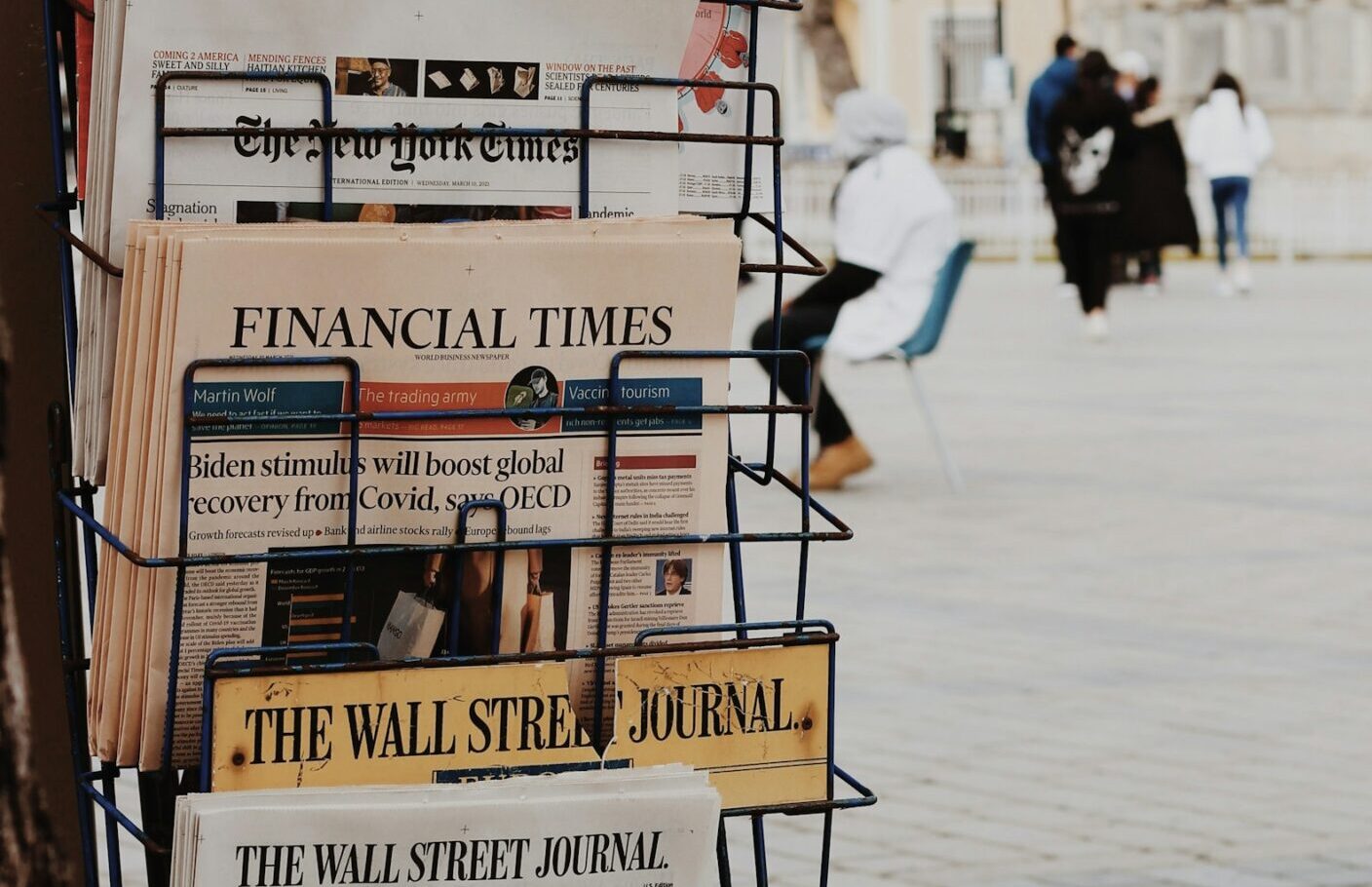
Salena lamented the rapid decline of something that was once a staple of everyday American life: the daily print newspaper. Newspapers are going out of business at an astonishing rate. According to an academic group that studies these things, some 3,500 newspapers “have vanished” since 2000, including 136 last year alone. The trend is especially acute and sad when it comes to small-town papers. Once upon a time, every little town had a newspaper, often two. Larger towns had multiple newspapers. Cities like New York and Chicago and Los Angeles and San Francisco had multiple print dailies. Many cities even had African American newspapers added to their offerings — that is, publications that catered to the local black population but that also did commendable reporting beyond that community.
I’ll give some examples from Pittsburgh, the birth town of both Salena and me. By the mid-20th century, the dominant newspapers included the Pittsburgh Post-Gazette, the Pittsburgh Press, the Pittsburgh Sun-Telegraph, and the nationally respected black newspaper, the Pittsburgh Courier, among at least a half dozen more. By the end of the century, the city was nearly a one-paper town, dominated by the Post-Gazette. The Press went out of business in 1992.
Stepping into the fold to challenge the Post-Gazette in the early 1990s was the Tribune-Review, which hailed from nearby Greensburg and became the Pittsburgh Tribune-Review. The Trib was run by the legendary Richard Mellon Scaife. Dick Scaife, of course, was a good friend and supporter of R. Emmett Tyrrell, Jr. and The American Spectator. Hillary Clinton had in mind Dick and Bob and TAS and the Trib when she decried the “vast right-wing conspiracy” out to get her and her husband, Boy Clinton. Tyrrell dubbed the duo the “Virgin President” and his “lovely wife Bruno.” (READ MORE by Paul Kengor: The Clintons vs. The American Spectator)
Dick Scaife turned the Pittsburgh Tribune-Review into a strong newspaper, infuriating the liberals at the Post-Gazette. He hired national reporters who went on to do big things, including Chris Ruddy, founder of Newsmax, Salena, and myself. To this day, in honor of my commitment to Mr. Scaife and my Trib readers, I maintain my biweekly column there.
Despite its success, the Trib has not been able to stay in print every day of the week, though it reports online daily. And it has a weekend edition. Overall, it’s faring much better than the Post-Gazette, which announced a few months ago that it was shutting down after a long, long time in business, though it appears to have been saved at the last minute. Pittsburgh was on the verge of being a one-newspaper town, and without that one paper being in print as a hard copy each weekday. It would not have been alone among American cities.
Another sad element of this decline is what has happened with what we once knew as “the Sunday paper.” I actually wrote about that in my recent Trib column, where I spoke about a strange experience I had. I was doing a lecture on the rise of Fidel Castro in Cuba. I told my students about the infamous page-one Sunday news story on Castro in the New York Times on Feb. 24, 1957. The notorious piece by reporter Herb Matthews sugarcoated Castro and framed him as a great, liberating “democrat” and even “anti-communist” who would deliver Cubans from dictatorship and bring them a “new deal.” The piece was credited with resurrecting a near-dead Castro and his movement.
As we talked about that article, I was struck by students not comprehending how one such news feature could be so influential. I proceeded to explain the power of the Sunday newspaper. This led to a discussion on what a “Sunday paper” is. These young folks had no idea. They had never heard of such a thing. What was this curiosity?
I tried to explain this entity. I proceeded to describe its much-anticipated “Classifieds” section for job seekers. I noted its huge sports section, inserts like Parade magazine, and the indispensable TV Guide. It was often wrapped by a wonderful comics section, printed in color and thus strikingly distinct from the remainder of the black-and-white newspaper. Often the lead comic was Charles Schulz’s Peanuts or Bil Keane’s Family Circus, which was a humorous look at the quirks and mirth of everyday family life. By the 1980s, both comics were bumped below the top of the fold by Bill Watterson’s Calvin and Hobbes, which was sheer genius. Incredible work.
My old man, like many dads, would pick up the paper early Sunday morning or on the way home from Mass. Oftentimes, he grabbed it on Saturday evening. The papers would be in stacks piled up in front of cash registers. Everyone at the store was grabbing a Sunday paper, usually for about $1.25.
Of course, all the major newspapers had Sunday editions. It was their biggest day. The page-one headline was a big deal. Older folks reading this right now will recall saving special editions of the Sunday paper as keepsakes when it captured a major event. I have copies handed down to me on everything from Pearl Harbor to the assassination of John F. Kennedy to the Steelers winning their first Super Bowl. As I kid, I would grab a pair of scissors and cut photos from the sports section. Every member of the family had favorite sections. I would read the newspaper while laying on the living room floor. My dad would read it in his easy chair. My mom would read it at the kitchen table with coffee.
Anyway, I shared some of those reflections in my Tribune-Review column, which prompted responses from readers lamenting the decline if not disappearance altogether of the Sunday paper. But actually, the loss for the newspaper industry is worse than that. Many dailies are no longer even daily, at least not in hard copy. They are struggling to put out a product even a few days per week. The problem is that people now read everything on their phones or computers, and they want and expect free content. They don’t pay for subscriptions. This is especially true of younger readers.
Indeed, this is our struggle at The American Spectator. We’re far removed from our heyday badgering the Clintons in the 1990s, when our print circulation was a staggering 350,000. Those were paid print subscribers. Today, our paid subscribers are a shadow of that. The vast majority of our operating revenue comes as donations to us as a 501(c)(3) nonprofit organization. We exist not on subscriptions but donations.
As for newspapers, however, they’re rarely nonprofits. They have always existed via subscriptions or thanks to the deep pockets of a powerful rich guy. We think of the William Randolph Hearst–Citizen Kane type of figure, but small towns often had smaller-scale versions of such men — such “tycoons.” When a subscriber-based company like the Pittsburgh Post-Gazette no longer gets the subscribers it needs — and blocks non-subscribers with a paywall — it’s only a matter of time until the grim reaper comes to the door.
In all, it’s a sad state of things. I miss the print dailies, terribly. I miss grabbing them at the local news stand, inserting a quarter to get one from a newspaper box on the street corner, and especially picking up a copy from the front porch. (My first job was a newspaper-delivery boy. Remember those?)
But alas, I’m increasingly in the minority with this view. And that’s why these newspapers are disappearing.