

The actress Jameela Jamil recently said on a podcast that the British were “the most evil people in history.” This is the type of moral judgment that has become popular in an age that is more inclined to study the past using the values of today. Such comments get claps on social media but they do not help much with understanding history. They turn hundreds of years of political, economic, and social events into a simple story of good and evil where Britain is always the bad guy. History deserves better than slogans. If the British Empire is to be judged it should be judged as a whole rather than just by looking at its mistakes alone.
How many lives were saved because Britain stopped the slave trade? How many Africans avoided being slaves because the Royal Navy caught slave ships? How many groups benefited from stopping human sacrifice and ending slave-raiding groups?
Empire was not something only the British did. Long before Britain became a global force empires had been built on every landmass that people lived on. The Romans took over much of Europe using the power of the military. The Mongols created the biggest empire in history by through the use of extreme violence. Genghis Khan and Tamerlane together killed 15 percent of the world’s population. This number does not include all the people who died because of the Mongol conquests, as it leaves out the deaths from other Mongol wars. To put it in context, 2.5 percent of the world’s population died during World War II.
The Ottoman Empire ruled different groups of people for a long time using military strength. Arab empires took over parts of North Africa, the Middle East, and some of Europe using war and political control. In Africa large kingdoms like Oyo, Dahomey, Asante, Benin, and Nupe spread by taking over areas, collecting taxes, enslaving those they defeated, and fighting with their neighbors for a long time. The Aztec Empire extorted tributary states while also using ceremonies that involved human sacrifice. You don’t often hear people say today that these civilizations should always be blamed for their imperial pasts. But Britain is usually seen as sinister, even though it also became one of the main powers that helped to suppress slavery and the slave trade.
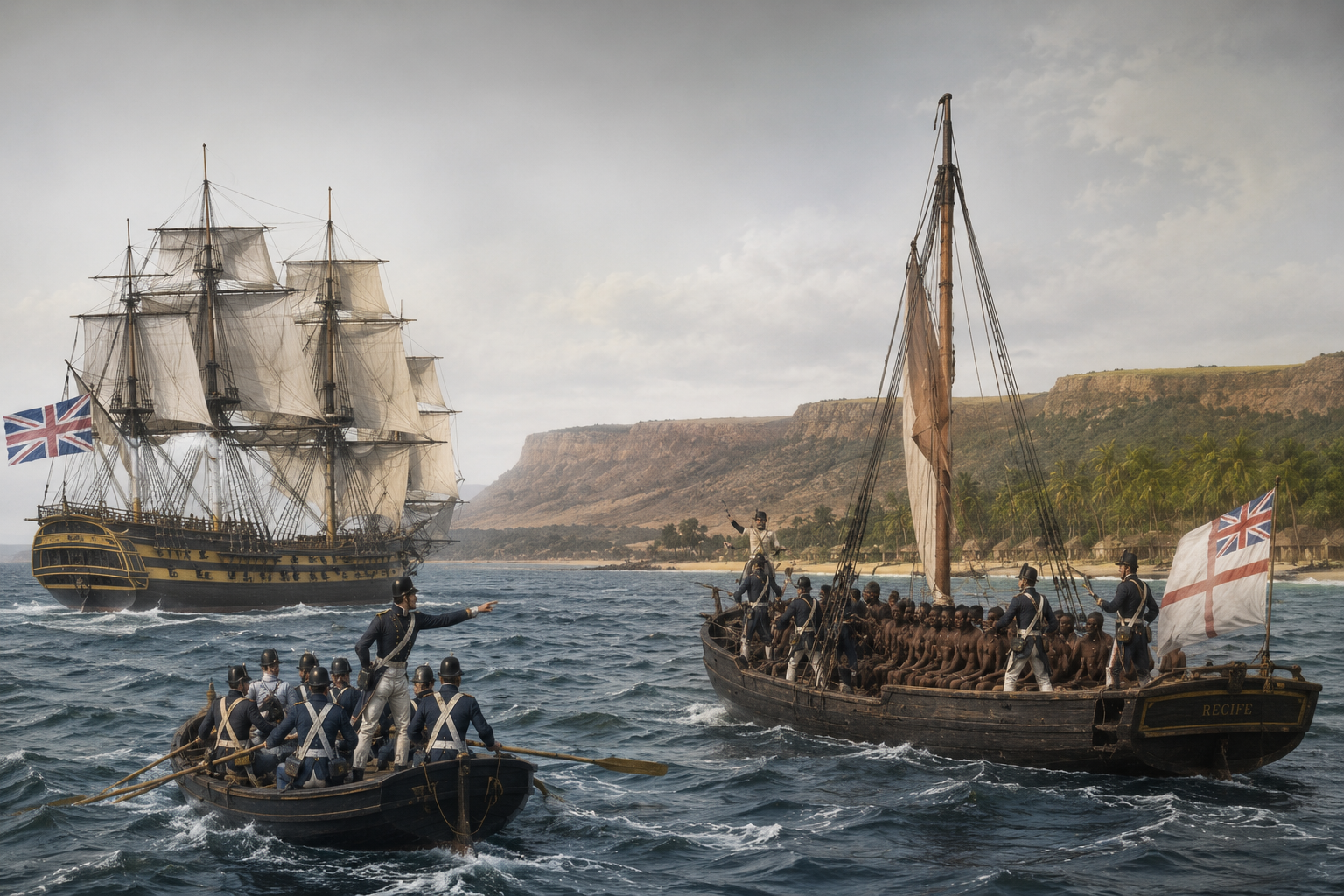
One of the points missing in the discourse about the British Empire is the huge effort that Britain made to stop the slave trade. Parliament ended Britain’s legal participation in the trade in 1807. That was just the start. The Royal Navy created the West Africa Squadron to watch over thousands of miles of coast to catch slave ships flying flags. British diplomats also made agreements with countries to stop the slave trade and gave Britain the right to check suspected slave ships to enforce these rules. Between 1808 and 1860 the squadron caught 1,600 slave ships and set free around 150,000 Africans, making it one of the biggest long-term humanitarian efforts of the 1800s.
The battle against the slave trade was not a European effort forced on Africa. African sailors also played a role in Britain’s efforts to thwart the trade. The Royal Navy employed Kroomen, freed Africans, and Black sailors from across the Atlantic world. These men served aboard Royal Navy vessels engaged in suppressing the slave trade, helping sustain naval operations in one of the world’s deadliest disease environments. On the ships studied by historians, Africans and members of the African diaspora made up roughly one-fifth of the crews. Britain’s campaign against the slave trade was therefore a cooperative effort involving British institutions and thousands of Africans who played an indispensable role in bringing the transatlantic slave trade to an end.
Britain’s efforts against the slave trade also penetrated Africa. In Old Calabar. British officials made agreements with leaders that disallowed them from taking part in the slave trade while trying to retire practices that even some African reformers saw as nefarious. The agreements stopped human sacrifice, alongside the killing of twins and their mothers, and permitted Britain’s involvement should the slave trade resume. These were not empty promises. They made rules that could be enforced by showing that suppressing the slave trade involved both diplomacy and force of arms.
The history of control in Africa is also more complicated than the usual story of one-sided Europeans subduing Africans. Some African groups fought expansion with formidable strength. Sultan Abdu of the Sokoto Caliphate opposed British rule by informing Frederick Lugard that his people did not want the British government and did not require help from Britain. He kept fighting expansion until he died.
Other African rulers reached very different conclusions. The kings and chiefs of Old Calabar repeatedly petitioned Britain for protection over several decades. They feared French expansion, hoped to strengthen commerce, sought assistance in resolving political instability, and believed that closer relations with Britain would safeguard their autonomy against rival powers. Britain initially rejected several of these requests, demonstrating that annexation was not always London’s preferred course of action. It was only after repeated appeals, changing strategic circumstances, and increasing competition with France and Germany that Britain eventually established a protectorate. This history complicates the simplistic image of Europeans imposing colonial rule upon wholly unwilling populations. African leaders exercised political agency, pursuing strategies that they believed would best protect their own societies in an increasingly competitive international environment.
Similar situations happened in parts of West Africa. The defeat of Nupe power by the Royal Niger Company in 1897 ended years of raids for slaves. For smaller groups who had been attacked and used for a long time the end of Nupe power was freedom from an existing African empire.
Nor should Britain’s record in Asia be reduced solely to economic exploitation. Colonial India’s railway network became one of the largest transportation systems ever constructed. Modern economic research demonstrates that these railways fundamentally transformed India’s vulnerability to famine. By integrating regional markets, reducing transportation costs, and allowing food to move rapidly from surplus regions to areas suffering crop failure, railways substantially reduced the impact of rainfall shocks upon local populations. Prices became less volatile, local economies became more resilient, and mortality rates became dramatically less responsive to drought conditions. The evidence suggests that transportation infrastructure significantly reduced the likelihood that crop failures escalated into devastating famines.
People who call Britain the worst often forget to ask a question. How many lives were saved because Britain stopped the slave trade? How many Africans avoided being slaves because the Royal Navy caught slave ships? How many groups benefited from stopping sacrifice and ending slave-raiding groups? How many Indians lived through droughts because railways helped move food and reduce the effects of weather? These questions cannot be left out of a look at history.
The British Empire was neither a purely good nor a purely bad force. Like every empire, it wielded power, and that power was sometimes used harshly and sometimes used well. It conquered and occupied vast territories. But it also worked to suppress the slave trade, spending significant resources fighting it, built lasting institutions and infrastructure, and at times intervened against systems of oppression that predated European rule. A genuine understanding of history requires weighing both sides honestly, rather than selecting one for political convenience.
History is not usually nice to great powers because those powers can cause pain. But they are also capable of great — in some cases, life-transforming achievements. Britain’s imperial history is no different. To say it was only evil is not just wrong; it is wrong because it omits the facts, the choices people made, and the circumstances at the time that it happened. The past deserves more than simple good or bad labels. It needs balance, a mix of ideas, and real honesty.
READ MORE from Lipton Matthews: