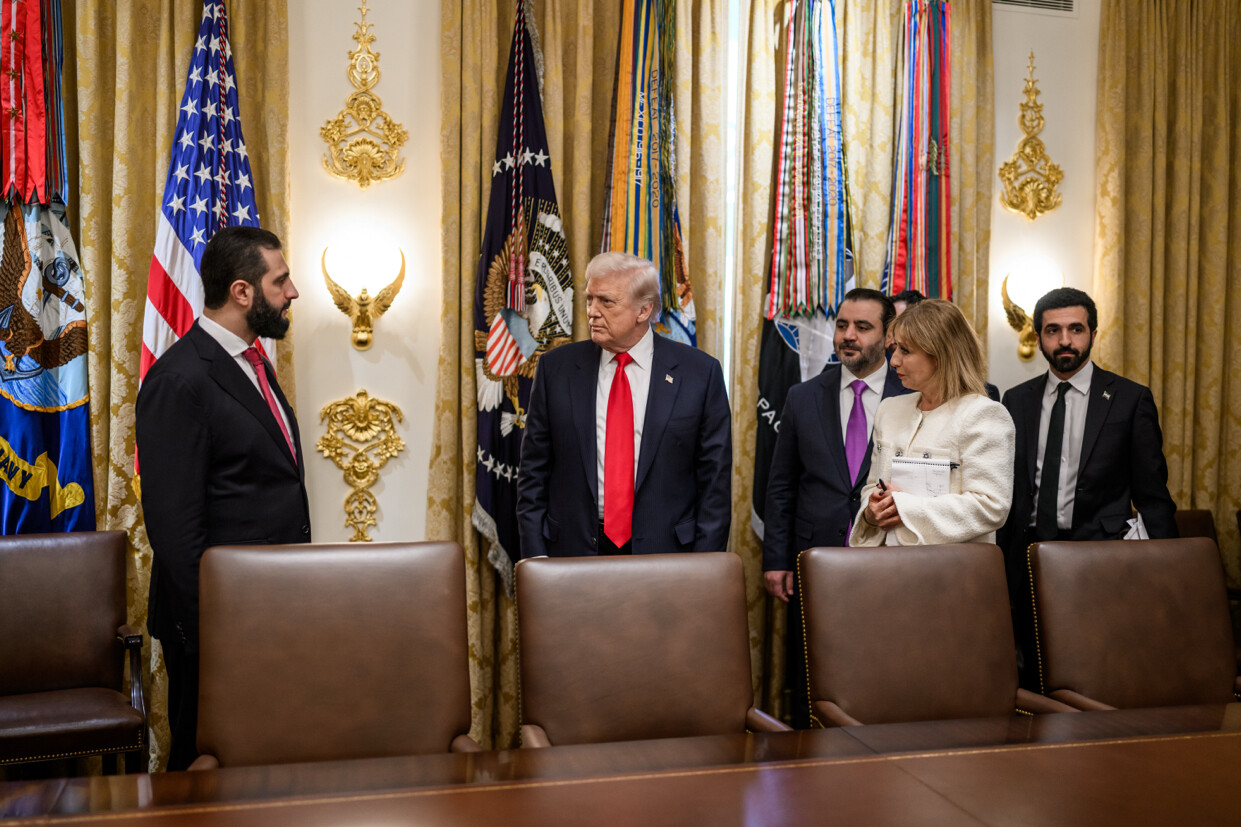


On July 8, President Donald Trump notified Congress that he will remove Syria from the State Department’s list of state sponsors of terrorism. Syria has carried the disreputable tag continuously since the list was created in 1979, alongside such esteemed fellows as Cuba, North Korea, and Iran. The decision follows Trump’s meeting with Syrian President Ahmed al-Sharaa in Ankara that same day, and is subject to a 45-day congressional review before taking effect.
The designation of state sponsor of terrorism carries restrictions on U.S. foreign assistance, defense exports, and even financial transactions that would be lifted if Congress does not block the rescission. Syria remains in dire need of reconstruction aid after more than a decade of civil war and the downfall of the Assad regime in 2024, and Trump is ready to support the effort.
“I promised to remove all barriers stopping you from rebuilding your country … We have U.S. companies ready to invest in Syria and help make your country greater and more prosperous than ever before,” wrote Trump in a letter to Sharaa after their meeting in Ankara.
The history behind the designation is important to understanding the why behind Trump’s decision. The Syrian state placed on the list in 1979 and synonymous in many minds with the picture of terrorism and chemical warfare was the Assad regime: first under Hafez al-Assad and then his son, Bashar. The Assads aligned Syria with Iran, supported Hezbollah and other terrorist organizations, and turned the country into a central link in Tehran’s regional network of power. The civil war that began in 2011 also allowed ISIS and al-Qaeda to seize large sections of Syrian territory.
That government no longer exists. Al-Sharaa’s Islamist coalition toppled a half-century of Assad-family rule in December 2024. Countries have been added and removed as circumstances in U.S. cooperation or regime change occurred, such as Sudan, Iraq, and the former South Yemen. A state-terrorism designation is supposed to describe the conduct of the government presently ruling a country, not serve as a permanent punishment attached to its territory.
Since taking power, al-Sharaa has pursued several concrete policies intended to demonstrate that Syria is no longer Assad’s Syria. Significantly, Syria joined the U.S-led Global Coalition to Defeat ISIS as its 90th member in November 2025. American forces coordinated more than 22 operations with Syrian partners during one month alone, killing five ISIS members and capturing another 19.
With al-Sharaa’s cooperation, the Organization for the Prohibition of Chemical Weapons (OPCW) has been allowed to document and destroy remaining chemical-weapons material that had been concealed by Bashar al-Assad’s weapons program for years.
For the United States, the removal of Syria from Iran’s so-called “Axis of Resistance” has turned into one of the greatest geopolitical windfalls of the decade. Syria, under the Assads, provided the land route through which Iran moved weapons and equipment across Iraq and Syria to Hezbollah in Lebanon. After Assad fell, Hezbollah leader Naim Qassem publicly acknowledged that the group had lost that key supply line.
A Damascus beyond Tehran’s reach has weakened Hezbollah, severed Iran’s main overland route to its Levantine proxies, and provided the United States with a highly tentative but possible partner in the region. At the end of the day, Syria does not need to become the next UAE or Saudi Arabia for its realignment to nonetheless serve American interests.
Whether al-Sharaa himself can be trusted is a different question; the man is no white dove. Before trading his fatigues for a suit, he commanded the Nusra Front, al-Qaeda’s affiliate in Syria. He publicly broke with al-Qaeda in 2016, and the United Nations removed him from its terrorism sanctions list in 2025, but neither action proves that he has turned a new leaf in a meaningful sense.
Syria is by no means going to become a burgeoning democracy or suddenly embrace egalitarianism. Sectarian violence, including mass killings of Alawites along the coast and fighting in the Druze-majority province of Suwayda, continues today. Armed factions incorporated into the new government have been accused of participating in some cases.
Trump’s policy does not need to rest on personal faith in al-Sharaa. Syria’s new president has powerful reasons to remain cooperative. The al-Sharaa government needs foreign investment, relief from sanctions, and international recognition for any hope of securing legitimacy and meaningfully rebuilding Syria.
Removing Syria from the terrorism list is a gamble, but it is not a blind one. Trump is betting that cooperation with the United States will be more rewarding than a return to terrorism and global isolation. For the first time in half a century, the conditions and interests of Syria actually give that bet a chance of succeeding.
READ MORE from Henry Zavalick:
American Spectator Editor Paul Kengor Brings the History of Marxism to Peterson Academy