



In recent years, the political left has been on a crusade to raise the minimum wage. While the federal wage has remained at $7.25 since 2009, twenty-six states have increased their minimum wage in the last three years, with 30 states now sporting a higher minimum than the feds. This progressive push may have reached its apex in the form of New York City Mayor Zohran Mamdani’s “$30 by ’30 campaign,” which underscores that, when it comes to minimum wage policy, there truly is no ceiling on the left’s aspirations.
This article is from The American Spectator’s summer 2026 print magazine. Subscribe to The American Spectator to receive the magazine.
But lost in these topline numbers is a related progressive war on tips. Tips and the minimum wage are intertwined due to what’s known as the tipped-wage credit, which is what allows tipped employees to be paid below the minimum wage as long as their tips bridge the gap. This enables the proverbial college-age waiter to make as low as $2.13 an hour on paper but bring home upwards of $40 an hour once tips are factored in.
The tipped-wage credit has a long history. It has existed at the federal level since 1966, with various states enacting their own versions over the years. The upshot is that, for sixty years, the restaurant and hospitality industry has operated under this legal structure, which both has allowed workers in tipped occupations to accrue substantial cash earnings and allowed employers to control labor costs amid tight margins.
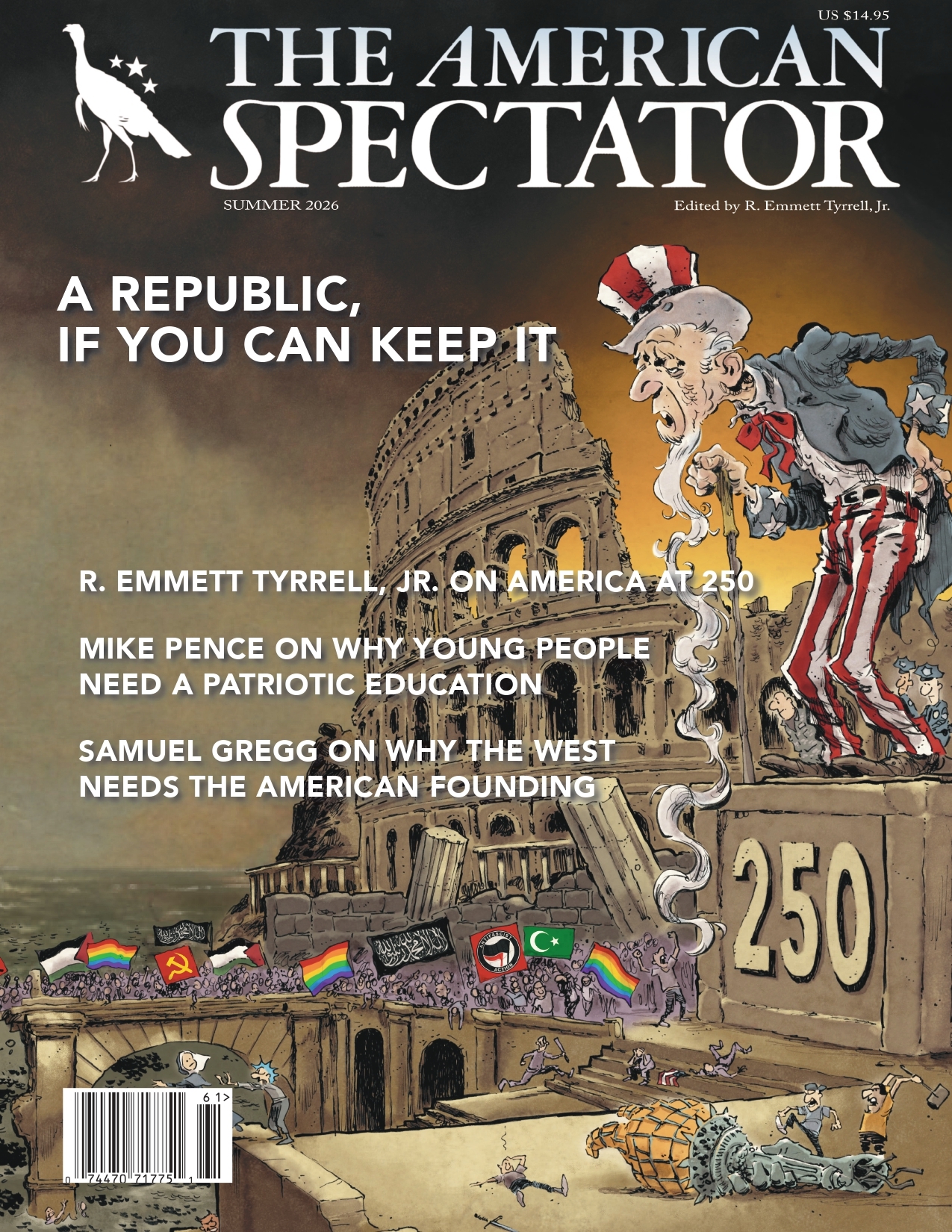
Subscribe to The American Spectator to receive our summer 2026 print magazine.
But no more. A progressive organization known as One Fair Wage has been pursuing the elimination of the tipped-wage credit across America. Ground zero has been Washington, D.C., which passed a voter initiative to repeal its tip credit in 2022. Prior to the elimination of the tip credit, the minimum wage for tipped occupations in the District was $5.35. The initiative’s passage ushered in an increase to just over $16 an hour.
While it sounds great on paper, Economics 101 intervenes with cold, hard reality. Whenever the minimum wage is increased, it can be expected to raise wages for those workers who keep their jobs, but it simultaneously pushes other workers out of the market altogether — thereby effectively reducing their wage to $0. Sure enough, D.C. saw a nearly 5 percent decline in full-service restaurant jobs after the initiative’s passage.
Worse yet, total tipped worker earnings in the District fell by almost $12 million, while the average waiter lost over $1,800 in annual take-home compensation. Waiters reported a reduction in tipping under the new system, along with their hours being cut. In other words, even those waiters who did keep their jobs often fared worse.
Customers also bore the cost, as D.C. restaurants began tacking 10–20 percent “service fees” onto bills in an effort to offset the higher labor costs. The economic fallout grew so grim that the progressive D.C. city council voted to partially repeal the 2022 initiative, while Mayor Muriel Bowser — hardly a free market champion — expressed a desire to return all the way back to a sub-$6 wage.
Chicago had a similar experience. In 2023, the Windy City passed its “One Fair Wage Ordinance” to eliminate the tipped-wage credit. Afterwards, restaurants began raising prices to offset the cost of the enhanced wage. According to the Illinois Restaurant Association, 89 percent of restaurants have raised prices and 79 percent have cut worker hours. Local restaurant owners have even openly raised the prospect of replacing waiters with more QR-code ordering.
Following D.C.’s lead, Chicago’s highly progressive city council recently voted to freeze another pending wage hike that was part of the phased elimination of the tip credit, only to be met with a veto by Mayor Brandon Johnson. One Fair Wage’s anti-tip-credit campaign is destined to spread beyond Chicago, too. In recent years, blue states such as Connecticut, New York, and Illinois have also considered legislation to eliminate the tipped-wage credit.
One final overlooked economic reality is that we now live in a “No Taxes on Tips” new normal after passage of the One Big Beautiful Bill Act in 2025. Given that Census Bureau research has found that tips drop by about $1 for every $1 increase in the minimum wage for tipped workers, this has the effect of substituting more traditional taxed wage compensation for tax-free tipped compensation. The result is that, in many scenarios, tipped employees will see even further declines in their take-home pay if the tip credit is scrapped.
In the end, the tipping system has been a bedrock of the American restaurant and hospitality industry for decades. The progressive push to eliminate it is hurting both diners and restaurant workers. That makes for One Unfair Wage.
Jarrett Dieterle is a legal policy fellow at the Manhattan Institute.
Subscribe to The American Spectator to receive our summer 2026 print magazine.




















