

The top player in the men’s draw was felled by an untypical heat wave.
The top player in the women’s draw was flummoxed by unusually strong winds. She got so mad that she said she was quitting tennis.
The No. 2 top gentleman player and defending champion was out with a busted wrist.
The No. 2 top lady player was knocked out early. The defending ladies’ champion was knocked out slightly less early, as was the most recent multiple trophy lady winner.
Teen phenoms — the possible futures of the sport — played fantastically, then shattered against veterans of deeper experience and steadier nerves.
Low-ranked prodigies stepped up and made deep runs, but one — the guy — was struck by a virus and could barely find the strength to concede the match that might have taken him to the final, and the other — the doll — stayed calm and healthy but met her match in the last match. Neither looked like Marlon Brando and Jeanne Simmons, but both made wonderful stars while they lasted.
For all the upsets and weird weather and surprises, it was by all reports a terrific fortnight, and it brought some cheer to French minds wearied by their awful politics. If the president of the Republic, or any of his low-scheming enemies, made an appearance, it was scarcely mentioned, though he favors the sport and is reputed to have some game. He is arguably the most unpopular man in France at the moment, which, just between ourselves, may be a badge of honor, but that is neither here nor there.
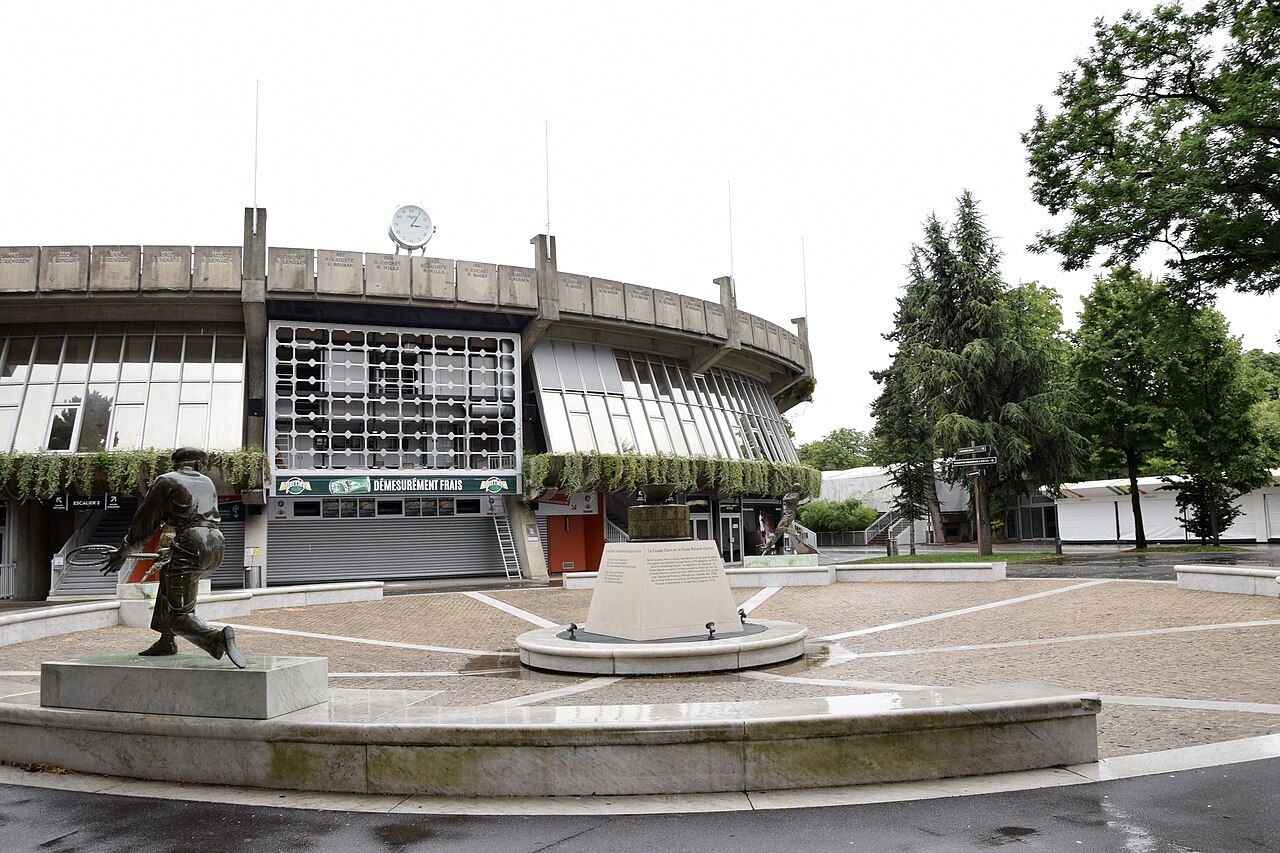
The honor of American tennis — let us not forget that the stadium, Stade Roland-Garros, where this legendary tournament took place, was built to host Americans, and it is located on an avenue named for a beloved (or at least notorious) American — was saved by a victory in the women’s doubles draw. This was one case where there were neither shocks nor surprises: the American-Czech team of Taylor Townsend and Katerina Siniakova is No. 1 in the world and top seeds. If they win the U.S. Open at season’s end, they will have achieved the career grand slam in their draw.
In fact, order in the end prevailed. In all the doubles draws, the number one seeds prevailed. And in men’s and women’s singles, it was not quite but close to that.
Indeed, it was the No. 3, Alexander Zverev, who took the men’s Coupe des Mousquetaires, and the women’s Coupe Suzanne Lenglen went to a top 10, Mirra Andreeva. No flukes there.
Few if any of the 128 starters in the men’s singles were more deserving than Zverev, who has been a contender for the better part of a decade. And Matteo Arnaldi — the fellow who was struck down by disease just prior to the semis — was likewise a known quantity, and was low-ranked only because of absences due to injuries. His tenacity and inventive skill made him worthy of the motto at Roland-Garros stadium, La victoire appartient au plus opiniatre, which is in the same register, though different, from the quote from Rudyard Kipling, “If you can meet with Triumph and Disaster/And treat those two impostors just the same…” that visitors see as they enter the All-England Club at Wimbledon.
Victory, the line high up in Chatrier stadium states, belongs to the one with the most tenacity. To be stubborn and to have a deep sense of “how you play the game is more important than winning” are different qualities, of course. But to really be defiant of disaster and unimpressed by triumph (not the same as unappreciative), you require a special kind of tenacity.
Philippe Chatrier was a juniors champion and a leading tennis player — he reached early rounds at Slams several times — during the pre-Open years and then was much involved in creating Open tennis, as well as restoring tennis to the Olympics. Tennis was one of the original Olympic sports, but a dispute with the International Tennis Federation caused a rupture for several decades. He was also a serious sportswriter and sports magazine editor, then a long-serving president of the French tennis federation. So, they named the center court (as it was called until the present century) stadium for him. Note that Arthur Ashe, too, was much involved in the development and growth of the sport, in addition to being one of the game’s immortals.
One expects Chatrier was tenacious, but, at least apocryphally, the quote at Roland-Garros’s center court is from Napoleon (the first, not the third). The aviator Roland Garros, for whom the whole stade (we would say tennis or sports center) is named, inscribed the phrase on the propeller of his flying machine; he developed a way to affix his machine gun to fire through the propeller. An ace, he went down in flames in October 1918.
The most opiniatre French tennis player was Rene Lacoste, one of the legendary four musketeers who conquered the mighty Americans led by Bill Tilden in Philadelphia to bring the Davis Cup to France in 1927. The stadium was built to host their successful defense the following year. Nicknamed the crocodile, Lacoste’s idea of match play was to hit the last ball over the net, wearing the other guy out. Possibly during one of these long rallies, he got to musing about haberdashery, but I am of the belief he kept his eye on the ball and his full attention on where to hit it.
In addition to creating the first polo shirts, he also invented the metallic racquets that supplanted wood. I do not mean to get pedantic here, but Lacoste’s brilliant design led to the Wilson T that Jimmy Connors used in his glorious career. It was made of steel. Howard Head developed an aluminum racquet that was favored by Arthur Ashe. Both have been largely supplanted by graphite and carbon fiber. All you really need to know is that at this point, technology is getting in the way of those very attitudes, tenacity, and sportsmanship that once ruled the game. They ruled the game but were breached by some.
The mousquetaires were all musketeers, one for all and all for one. That was also the attitude of the “new musketeers,” as the cohort of around 2000 was dubbed by the French press. They fell short in terms of winning in singles at Roland-Garros (or any other major), but they represented a mighty force in tennis for two decades. Gael Monfils, who was given an emotional and heartfelt farewell when he lost in the first round of what he said would be his last French Open, was perhaps the one most like the most dashing of the original crew, Jean Borotra, the “leaping” or “bounding” Basque. He won every major except the U.S. Nationals, singles and doubles, and helped France keep the Davis Cup several years running.
Borotra was, it may be remembered, an engineer (graduate of the Ecole Polytechnique, the French MIT). He argued against professionalization in sports, which he regarded as subversive of their character-building value. The sports minister, after the French defeat in 1940, soon “entered the Resistance” as he realized what the Nazis and the Vichy regime represented. Surviving prison and concentration camps, he returned to a rewarding career in sport administration.
Alexander Zverev has done well, with an Olympic Gold medal in singles and two ATP Finals wins. He has won many tournaments, including two, 2017 and ’18, at the Washington Open (called Citi Open for many years and currently Mubadala Open, go figure what that says, if anything, about international money), but he kept falling short at the majors. Most painful was a loss at the U.S. Open when he was up two sets to zero and at the French Open, playing in the semis against Rafael Nadal, an ankle injury that could have ended his career. He came back and persisted, and there is no doubt he was in charge against Italy’s Flavio Cobolli, and an elegant and exciting risk taker also known to Washington fans (lost in a recent final to Sebastian Korba). He exhausted himself trying to break through Zverev’s steady power, relentless winners from the baseline, and command of the net, where his height is an advantage. Cobolli extended the match by taking the thrilling fourth set in a tiebreak, but that also used up what reserves he still had. (Zverev def. Cobolli 6-1, 4-6, 6-4, 6-7, 6-1)
Order was thus maintained, and the same happened in the women’s draw, wherein despite all the upsets a high-seeded 19-year-old, Mirra Andreeva ended the fabulous run of a low-key, modest, intelligent, wry, charming Polish lass, Maja Chwalinska, by disallowing her shrewd tactics that had taken her, as a qualifier, through three weeks and taking command with her precise high-velocity down the line winners. They both deserved it, each with her own Cinderella story — the very young Russian and the very persevering Pole who had lost some time but came back.
They were both gracious and candid. Miss Chwalinska was delighted to have made it so far after her absence, and joked with Miss Andreeva for being “so young.” It was a friendly jibe and perhaps shrewder than many realized. The prodigy, after thanking all the usual suspects as is customary at the trophy ceremonies, from the tournament organizers to the fans and the ballboys and ballgirls and her parents and her coach and her team and her psychologist, she did not forget to thank… herself.
Well, at any rate, these were first-time winners at the storied Internationaux de France. From where they are watching, Roland Garros and Jean Borotra must be happy to see the sport’s evolution, though perhaps they also worry at times about the perils of success. And maybe Borotra smiles wryly as he muses, What would d’Artagnan say?
Et bien, quand meme, les temps changent, la France demeure.
READ MORE from Roger Kaplan:
Image licensed under Attribution-ShareAlike 4.0 International.