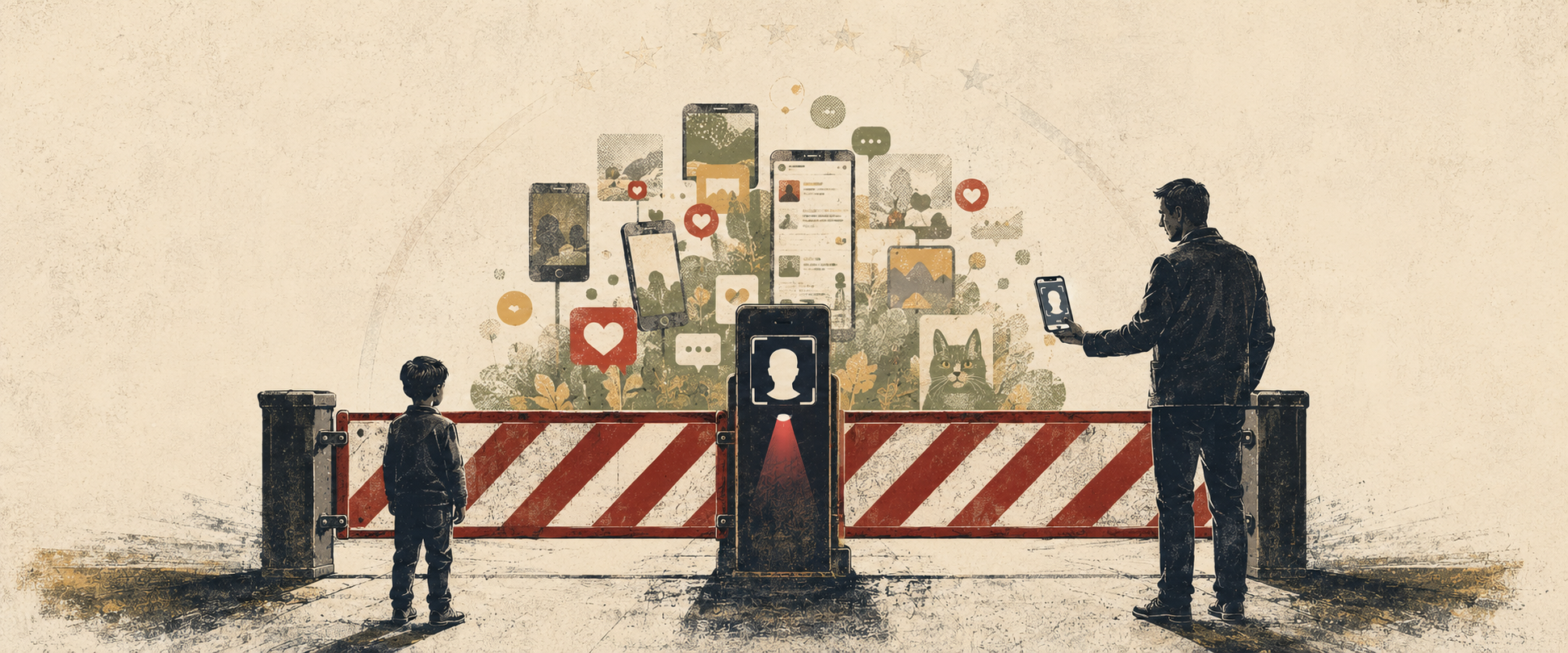


On July 21, France became the first European Union country to pass a blanket social media ban for children under 15. The legislation is one of the last major measures of French President Emmanuel Macron’s term before he leaves office next year. If the bill is determined to comply with the French Constitution, then the law will come into effect at the start of the new school year in September. New under-15 accounts will be prohibited, and platforms will have four months to close existing underage accounts.
Britain announced a similar measure in June to ban social media for all under-16s, although the restrictions are not expected to take effect until spring 2027 in order to review and debate the methods of restriction. Studies to gauge the impact on children’s sleep, family life, schoolwork, and mental health play a role in the year-long delay before implementation. (RELATED: Britain Moves to Ban Children From Social Media)
Concern worldwide over the harmful effects of digital content on child development and mental health has been growing for years. Several families in France have sued TikTok over teen suicides allegedly linked to harmful content — such as suicide methods, disordered eating, and depression — on the app, and to the promotion of such content by the app’s algorithm. (RELATED: Don’t Sue the Mirror)
France is leading the proverbial pack on the continent by passing the first of these social media bans for children, but several European countries are pursuing comparable restrictions.
Many of these proposals broadly resemble a nonbinding recommendation from the European Parliament for 16 to be the default age for access, permitting access from 13 to 15 with parental consent, and barring under-13s entirely.
Countries like Spain, Greece, and Norway are planning similar under-15 or under-16 restrictions more broadly. Others such as Germany, Denmark, and Portugal are seeking explicit parental consent and controls for children 13 to 15 to access social media. A commonality across most of Europe, however, is an emphasis on making the companies themselves responsible for upholding the stricter age verification terms.
As most Gen Z-aged people who have made accounts in the last 10 years are aware, social media has long had “age limits.” In America, users generally must be 13 to open a Facebook or Instagram account. But when the extent of enforcement is a date-of-birth wheel selector, that “limit” is comparable to tissue paper in effectiveness.
So how will these European countries actually enforce their new or soon-to-be laws?
There are several possible methods, each requiring a tradeoff between accuracy and privacy. Platforms can estimate age from account activity or a facial scan, but stronger systems being considered may require a government identification card or banking credentials like a credit card to prove a user is of age.
The European Commission has already developed a “mini-wallet” that would allow users to prove that they exceed an age threshold without disclosing their full identity. The “mini-wallet” is, however, built on the same technology as the European Digital Identity Wallets scheduled to debut across the EU by the end of 2026.
As well-intentioned as it appears, the “mini-wallet” would effectively put in place a gate to internet access, like one might use to contain a child or unruly pet. A gate designed to keep children out, but also one that every adult must pass.
Australia, which implemented the world’s first under-16 social media ban in December, demonstrates the practical difficulty of the task. Although platforms initially restricted 4.7 million accounts, a study found that more than 85 percent of surveyed under-16s continued using prohibited platforms three months later. Millions of deleted accounts can look like an impressive statistic, but they do not necessarily mean millions of children have left social media.
There are legitimate safety, developmental, and health reasons to protect children from platforms designed to capture their attention. You would be hard-pressed to find many who disagree. But the difficulty for France and other countries is determining whether they can verify children’s ages without making every adult a digitally credentialed user.
Europe’s new digital age of majority may succeed in protecting childhood or it may not. Its effect on adult anonymity that internet users have taken for granted for decades could prove far more permanent.
READ MORE from Henry Zavalick:
Women’s International Sports Return to Biological Reality