

Many of the reforms of the Second Vatican Council, begun in 1962 under Pope St. John XXIII and concluded in 1965 under Pope St. Paul VI, were considered controversial at the time — and many are still considered controversial today. The implementation of the Novus Ordo Mass and the abrogation of the Tridentine Mass, also known as the Traditional Latin Mass (TLM) or the Extraordinary Form of the Mass, was particularly concerning for many Catholics, especially converts to the Faith.
English author Evelyn Waugh, for example, who converted to Catholicism in 1930 and proceeded to become one of the Catholic Church’s most devout and vocal defenders in the English-speaking world of the 20th century, entered into a lengthy correspondence with his bishop, Cardinal John Carmel Heenan of the Archdiocese of Westminster, on the subject. While Waugh voiced some criticisms of what were then merely proposals for the new form of the Mass, he spoke more forcefully in defense of the Tridentine Mass, begging Heenan to intercede with Pope Paul on behalf of faithful Catholics devoted to the Tridentine Mass.
Some years after Waugh’s death in 1966, a host of authors, poets, artists, musicians, architects, academics, and others (most of them non-Catholics) wrote a letter to Pope Paul, affirming the cultural and aesthetic significance of the Tridentine Mass to the Western World, especially Britain, and asking the pontiff to allow its continued celebration, instead of abrogating it entirely. Pope Paul subsequently offered an “indult,” allowing bishops to approve the celebration of the Tridentine Mass within their dioceses. Heenan brought the petition to the pontiff, who is reported to have exclaimed, “Ah, Agatha Christie!” upon seeing the English detective novelist’s name affixed as one of the signatories. The indult thus became known as “The Agatha Christie Indult.”
In the late 1960s and early 1970s, Pope Paul granted a number of permissions for the celebration of the Tridentine Mass, especially amongst communities deeply devoted to the old form of the liturgy. However, with the rise of the Society of St. Pius X (SSPX), the pontiff became increasingly hesitant to liberalize the celebration of the Tridentine Mass, believing that dissidents and schismatics were attempting to weaponize the beloved old liturgy against the theological positions of the Second Vatican Council, threatening a rupture within the Church.
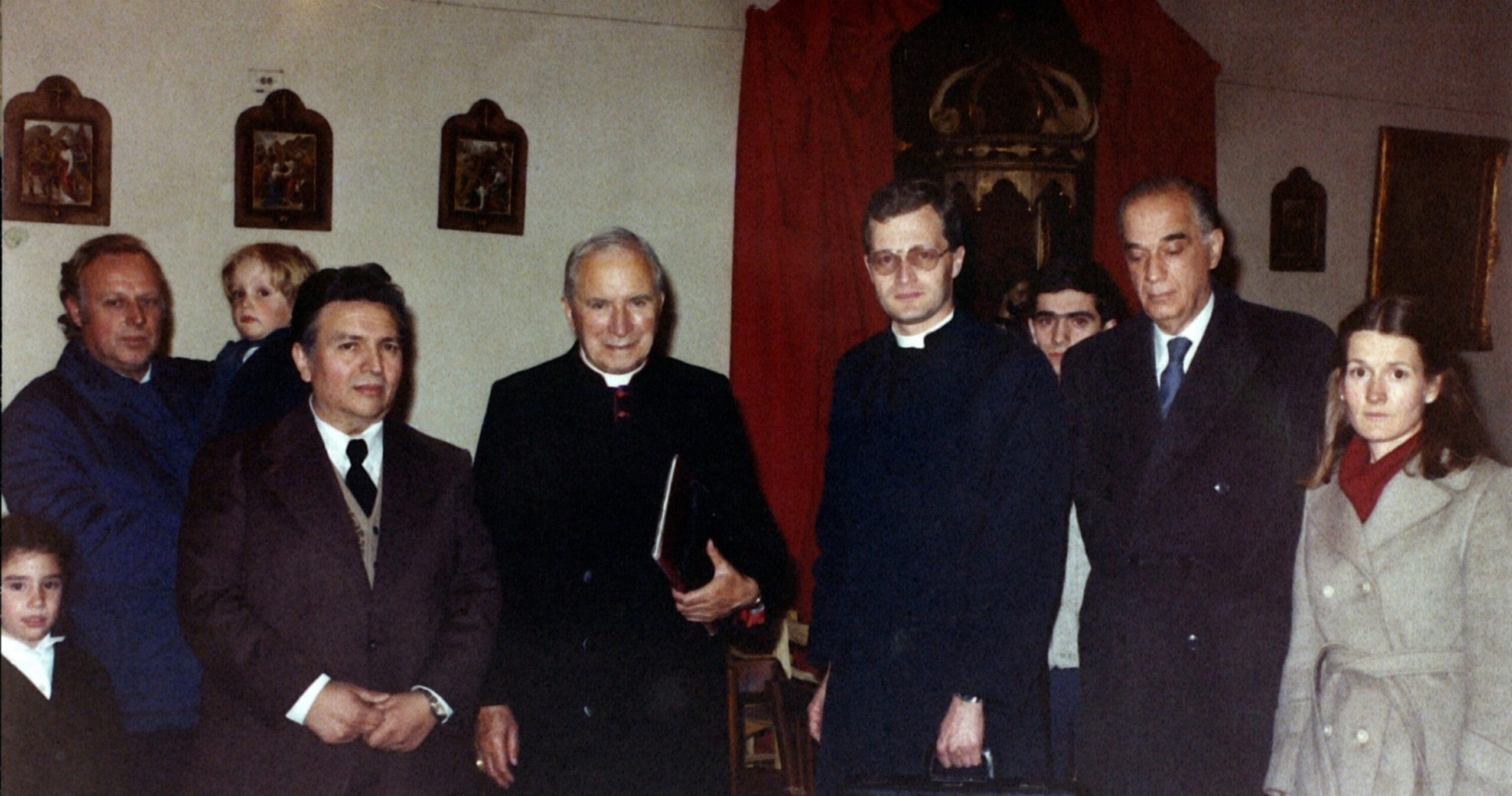
French Archbishop Marcel Lefebvre of the Archdiocese of Dakar in French-speaking Africa founded the SSPX in 1970, ostensibly to continue the celebration of the Tridentine Mass, but Lefebvre further contradicted many of the theological proclamations of the Second Vatican Council and adopted an increasingly hostile position towards the Vatican and the pontiff, casting them as enemies of the Church. While Pope Paul treated the SSPX with surprising deference, the conflict between the Vatican and the SSPX came to a head in 1988, when Lefebvre defied the orders of Pope St. John Paul II and proceeded to consecrate four new bishops without Vatican approval.
[F]aithful Catholics must be careful not to mistake the dissident sect’s disobedience to the Vatican as some sort of heroic defense of ancient or traditional teachings.
The act of insubordination prompted Pope John Paul to excommunicate Lefebvre and the four men he had consecrated, although the pope’s deputy and the chief of the Vatican’s doctrine office, Cardinal Joseph Ratzinger, advocated for less stringent canonical penalties and in favor of continued dialogue with the dissident leaders of the SSPX. When Ratzinger became Pope Benedict XVI, he lifted the excommunications in a bid to further dialogue with the SSPX. In his landmark 2007 motu proprio Summorum Pontificum, the late Pope Benedict also broadly liberalized the celebration of the Tridentine Mass, which he dubbed the Extraordinary Form of the Mass within the Latin Rite.
While Pope John Paul excommunicated Lefebvre and the four men he defiantly consecrated as bishops, he also established a means of bringing traditionalist priests into full communion with the Church, establishing the Fraternal Society of St. Peter (FSSP) for priests who wished to leave the SSPX and fully reunite with Rome and the Pontifical Commission Ecclesia Dei, which brought additional traditionalist groups into full communion with Rome, like the Brazil-based Priestly Union of St. Jean-Marie Vianney, and oversaw the creation of additional traditionalist societies which were founded fully in communion with Rome, like the Institute of Christ the King Sovereign Priest (ICKSP). Therefore, for the past nearly-40 years, the Vatican has permitted, promoted, and protected a veritable host of traditionalist Catholic societies dedicated to the celebration of the Extraordinary Form of the Mass.
Yet the SSPX has still eschewed entering into full communion with Rome, and is now on the brink of full-blown schism. When Lefebvre moved to consecrate new bishops in 1988, the situation was something of a novelty, and it fell to Pope John Paul and Ratzinger to pioneer the theological and canonical response the Church would adopt. Now, however, the SSPX is preparing to consecrate new bishops yet again, scheduled for July 1, 2026. Knowing full well that the act will no doubt carry with it the penalty of excommunication, and in the face of repeated warnings from the Vatican and the Church’s foremost doctrine officers that the consecrations will plunge the SSPX headlong into schism, the insistence on proceeding with the consecrations can be nothing other than open defiance of the authority of the pope and a rejection of the Catholic Church.
Despite the trite proclamations of many of the defenders and devotees of the SSPX, the society’s animosity towards the Vatican and the Second Vatican Council, in particular, has nothing to do with the liturgy. Instead, the traditionalist sect’s opposition to the Vatican is rooted largely in (seemingly willful) misinterpretations of the theological positions of the Second Vatican Council, especially the council’s declarations Nostra Aetate, regulating the Church’s relationship with Judaism, and Dignitatis Humanae, defending the right to religious liberty.
In a recent interview with Catholic World Report, Cardinal Gerhard Ludwig Müller, Ratzinger’s eventual successor as the Prefect of the Congregation for the Doctrine of the Faith and himself a vocal proponent and defender of theological and moral orthodoxy, explained that the SSPX sees in the Second Vatican Council “a deviation from the Catholic belief that the Catholic Church alone proclaims and presents for belief the fullness of God’s revelation in Christ.”
The SSPX “interprets religious freedom in the spirit of 19th-century relativistic liberalism, which rejects revelation and turned religion into a matter of taste and subjective feeling rather than a quest for truth,” Müller said. “In contrast, according to the [SSPX], the Catholic state has a duty to promote the Catholic religion as the only true one and to deny error any right to existence in the public sphere.” However, the Second Vatican Council was careful to note the distinction “between religious freedom as a natural human right and the freedom of the human person to respond to the revealed Word of God with reason and freedom and to recognize in Christ the fullness of the truth of God and of humanity,” the cardinal noted. He continued:
Under today’s conditions of a pluralistic society, and especially in anti-religious socialist or radical Islamist states, however, we can be glad if public authority does not interfere in religion and morality. Invoking freedom of religion and conscience, Catholics — especially within [Europe], which unfortunately tends to be hostile towards Christianity — can exercise their right to reject abortion, euthanasia, and the relativization of marriage between a man and a woman. To still speak here of Catholic states that are supposed to use state measures to socially enforce the still-valid doctrine of the Catholic Church’s necessity for salvation seems rather anachronistic.
Müller suggested that the SSPX’s objections to the declarations of the Second Vatican Council on religious liberty and inter-religious dialogue “miss the point of the resolutions of Vatican II.” The council did not “call into question the uniqueness of the Church of Christ,” he said, but did aim to open methods of dialogue with non-Catholic Christians and with non-Catholics in an attempt to affirm the truths which others observe and utilize those truths as a foundation for entering into the fullness of the Catholic Faith. (For clarification, this does not mean affirming as truth those precepts or theological positions which the Catholic Church does not uphold as truth.) The fact that certain progressive bishops and priests have deviated from the standards of the Church and abused the proclamations of the Second Vatican Council in order to advance what amounts to a sort of amorphous pantheism or an implicit denial of the divinity of Christ and the singularly unique nature of the Church which He founded has only fueled the SSPX’s dissident rhetoric and been erroneously cited as a vindication of the society’s claims.
All of this is to say, as the SSPX careens headlong toward full schism, that faithful Catholics must be careful not to mistake the dissident sect’s disobedience to the Vatican as some sort of heroic defense of ancient or traditional teachings. It is, instead, a symptom of hubris and pride, petulantly declaring oneself a higher authority than the authority established by Christ Jesus Himself while personally present on this earth.
“I shall never, pray God, apostatize but churchgoing is now a bitter trial,” Waugh wrote of the loss of the Tridentine Mass in the 1960s. Yet, following in the footsteps of Christ, he suffered that bitter trial, shouldered that cross, even unto his death. Perhaps the SSPX and other traditionalists of the more dissident stripe might learn a lesson from Waugh and his example.
READ MORE from S.A. McCarthy:
One Way or Another: The Insanely Easy Choice Facing America on Immigration