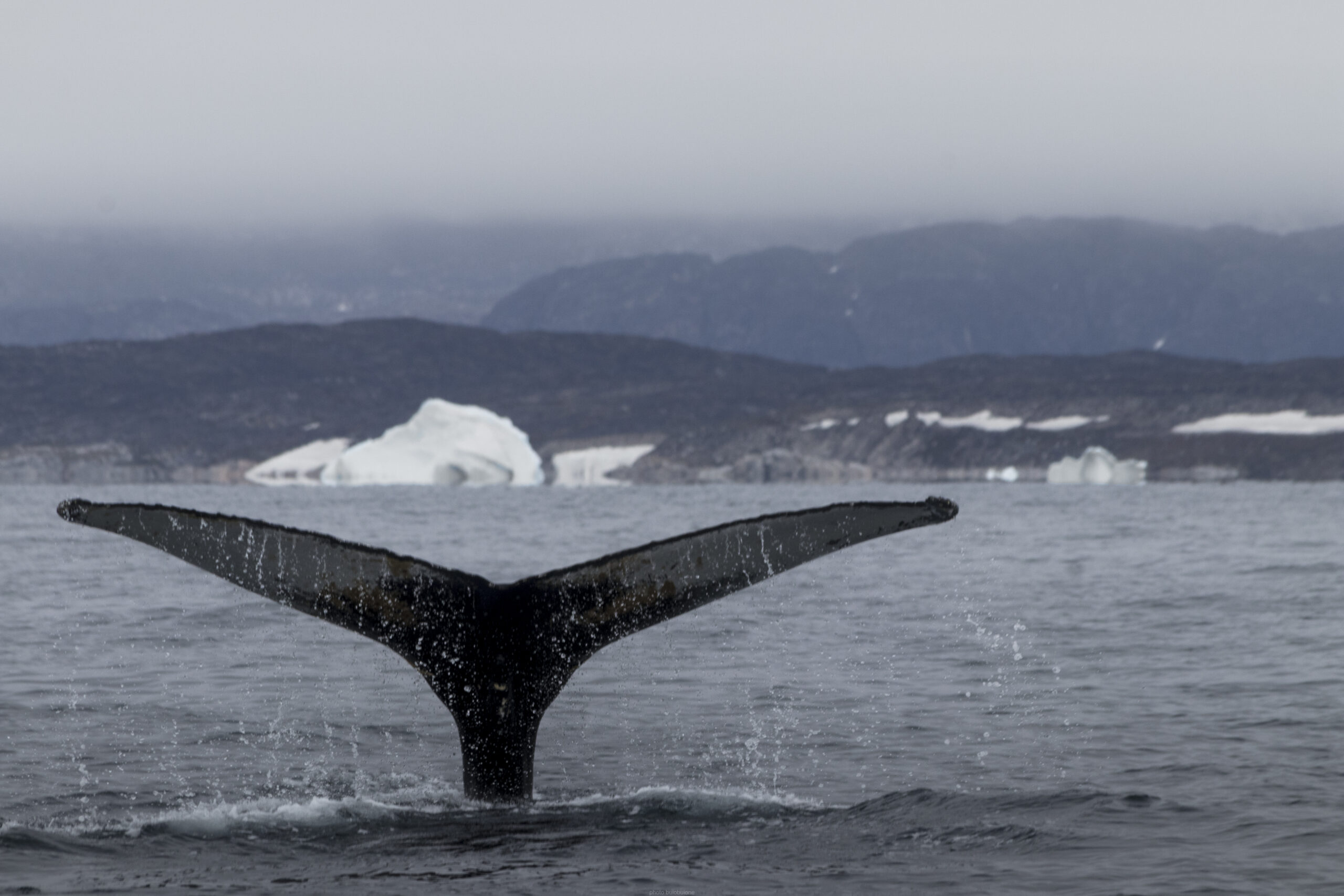


In my day-to-day life, I do my best to avoid angering large groups of people. Sometimes, though, this needs to be done. In those rare cases, there must be an overwhelmingly compelling reason for doing so.
No such reason exists when it comes to the U.S. acquiring Greenland, peacefully or otherwise.
President Trump’s latest push to acquire the world’s largest island has caused a storm on both sides of the aisle and the Atlantic. Whatever one’s stance is on the administration’s economic policies, the case that the president has made for acquiring Greenland just doesn’t add up.
The Economic Case
With a population of about 57,000 people, Greenland is tiny. To put this in perspective, Texas A&M University, as of fall 2025, is educating 81,354 students. They’re not the only college campus with more people than Greenland: The University of Central Florida, the University of Michigan, Ohio State University, the University of Florida, Arizona State University, and plenty more college campuses across the country all boast more students than Greenland has people.
The latest figures we have on Greenland’s economy put its GDP at about $3.3 billion. That’s not a typo; it really is in “billions.” With a B, not the T for trillions that we in the US are so accustomed to seeing. The last time the U.S. GDP was below a trillion dollars was in 1969. Last September, Forbes calculated President Trump’s net worth to be $7.3 billion. In other words, President Trump’s personal net worth is more than double that of the entire island of Greenland.
Even more troubling is the economic makeup of Greenland. Its economy “depends largely upon the fishing industry as well as Danish subsidies,” with the fishing industry comprising 23 percent of its economy and the Danish government providing another 20 percent of its economy through subsidies. If we were to acquire Greenland, would American taxpayers be willing to take on that obligation?
The economic argument for acquiring Greenland is nonexistent.
National Security
However, the president has frequently pointed to another argument for why we “need” Greenland: national security. With its location, it sits in a near-perfect position for the U.S. to intercept any type of long-range missile or attack coming from, for example, Russia and China. From this standpoint, there exists a clear and present need for the U.S. to have the ability to place critical defense equipment on the island in order to keep America safe from attack.
Interestingly enough, this year marks the 75th anniversary of the 1951 Defense of Greenland Agreement between the United States and Denmark. This agreement was just reaffirmed in 2004 and expanded upon in 2023. The treaty, which is still in effect today and has been reaffirmed since, gives us incredibly broad latitude to establish, operate, and expand military bases on the island for purposes of national defense.
The agreement allows American military personnel unrestricted freedom of movement throughout all of Greenland’s territory, including the waters surrounding the island. It permits the construction of new defense installations if NATO agrees that such steps are necessary. And, importantly, we can do all of this without paying rent to Denmark (or Greenland) for the land that our military bases occupy. Mikkel Runge Olesen, a senior research fellow at the Danish Institute for International Studies in Copenhagen, put it best by saying, “This agreement is very generous, it’s very open… The U.S. would be able to achieve almost any security goal that you can imagine under that agreement.”
At present, the U.S. operates Pituffik Space Base, formerly known as Thule Air Base, located in northern Greenland and perfectly positioned to monitor potential Russian or Chinese missile threats coming over the Arctic. We can already expand that, including adding radar installations, building new facilities, and stationing more troops, if we want to under the existing treaty without owning the island.
Acquiring the island for national defense purposes would be like acquiring a 24-hour fitness center that already charges you no membership dues in case you want to walk on the treadmill at 2:00 in the morning. You can already do that. Why acquire the gym, taking on all the immense responsibilities that come with that, when you can already use the gym for free whenever you want?
Mineral Rights?
But perhaps this is more about rights to minerals, particularly the crucial rare-earth minerals, which will prove essential toward maintaining national security in the future. Here, too, the argument fails the sniff test.
Consider the fact that most of Greenland’s rare-earth minerals are located north of the Arctic Circle. As such, they are buried not just underground, but under a polar ice sheet that is one mile thick. Then, we need to realize that because they are north of the Arctic Circle, the location is one that is plunged into the dark of night for most of the year. Finally, it must be pointed out that because there are so few people on the island, its infrastructure is almost nonexistent. According to a 2022 report from the Wilson Center, there are 96 miles of roads in all of Greenland, 56 of which are paved. No two communities in Greenland are connected by a road, and the only two stoplights on the entire island are located in the capital. Even pouring concrete and asphalt can be difficult because of the harsh weather, and that’s in the southern part of the island, where most people live and where it is warmer. In the northern part, the challenge becomes borderline impossible.
Indeed, as Malte Humpert, the founder and senior fellow at the Arctic Institute, said, “The idea of turning Greenland into America’s rare-earth factory is science fiction. It’s just completely bonkers… You might as well mine on the moon. In some respects, it’s worse than the moon.”
The simple fact is that Greenland’s minerals exist there now because it is far too expensive to extract them from the earth. If it weren’t, private companies would be doing so already, and Greenland’s economy would reflect this. That it does not is evidence that the costs are just too great to make mining worthwhile.
It would be far easier and more cost-effective to increase our efforts at mining these minerals domestically, which the president has already started exploring and is expected to continue doing in 2026.
Who Actually Wants This?
Finally, as the United States gets ready to celebrate its 250th birthday, we must reflect on our founding and why our forefathers fought for independence from Britain. Our very own Declaration of Independence should serve as a lodestar: the legitimacy of any government exercising dominion is contingent upon the “consent of the governed.” Greenland is not merely some piece of land — it is home to 57,000 people, each of which have thoughts, feelings, and values. They have established their own government that lets them determine their own policies and how to handle collective concerns.
Last year, Verian polled Greenlanders on whether they wished to become part of the United States. Eighty-five percent said no, with only 6 percent saying “yes.” Their poll went further and asked, “Do you want Greenland to be independent?” Fifty-six percent said they do. In other words, Greenlanders don’t really want to be Danish, but it’s very clear that they do not want to be American, either.
When Americans were polled on whether to acquire Greenland, the results were similarly clear. A Reuters/Ipsos poll finds that just 17 percent of Americans approve of acquiring Greenland. Quinnipiac University finds that 86 percent of Americans oppose acquiring Greenland through military means.
The case for acquiring Greenland fails on every metric that should matter to a free society. The economics do not work. The security benefits are already there and have been for 75 years. The minerals remain inaccessible under a mile of ice and for good reason. Finally, neither Americans nor Greenlanders actually want this.
Our nation was founded on the principle that a legitimate government requires the consent of the governed. Americans in 1776 were not attempting to “go viral” or “start trending” with this phrase. It was the animating idea that distinguished the American experiment from the empires that preceded it. It motivated “a bunch of farmers” to take on the most powerful military in the world in a fight for independence… and win. As we look to celebrate our semiquincentennial, that principle still matters and is worth preserving.
READ MORE from David Hebert:
Washington’s Reverse Midas Touch
The New H-1B Tax: An Exercise in Crony Capitalism
Tariffs Have Created the Monster We Feared
Image licensed under CC BY-SA 4.0.