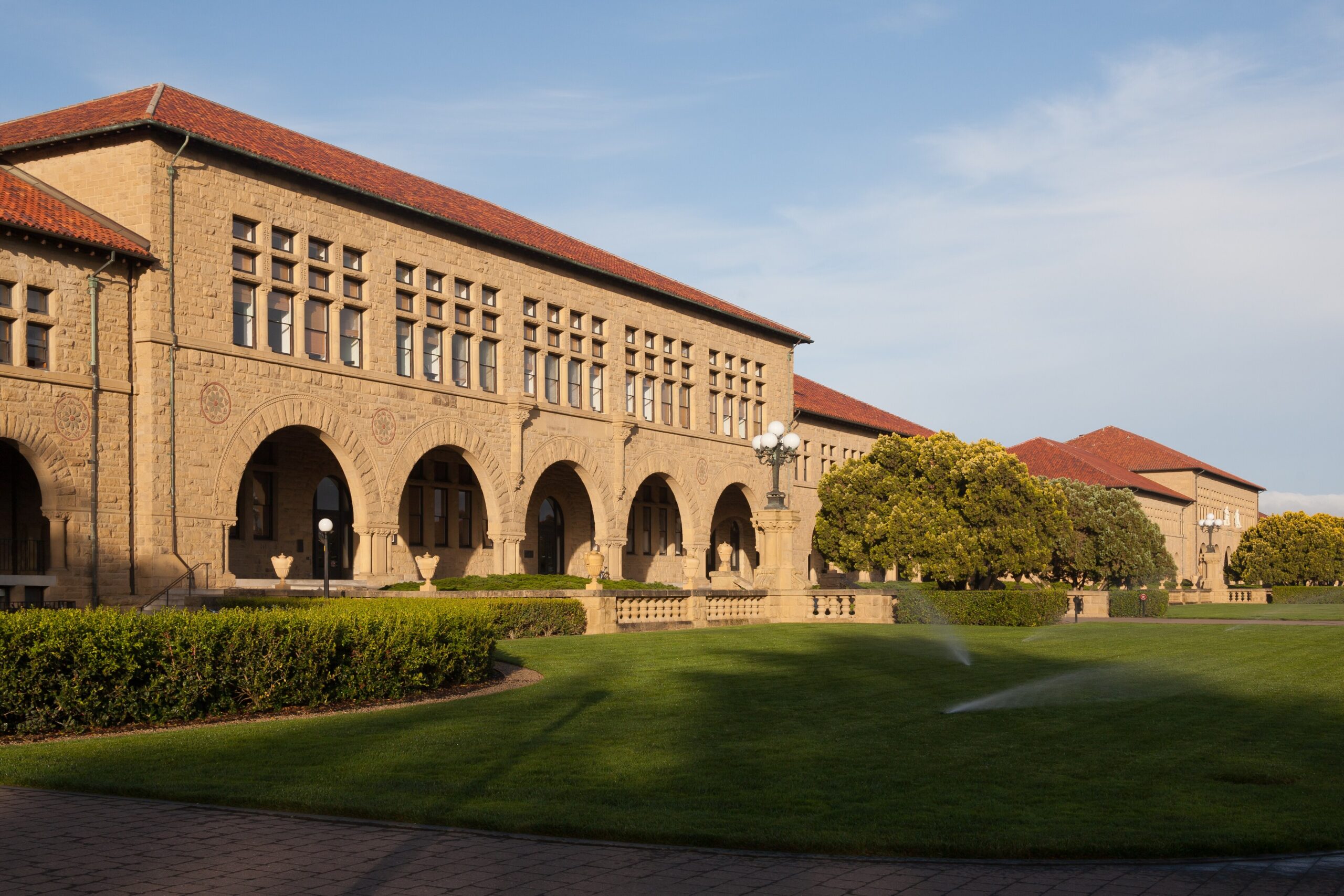


CCP-linked institutions and individuals have provided funding to Stanford University, according to a recent bombshell investigation.
Such donations include at least $3 million as a “restricted gift” from an individual disclosed by Stanford as “Chen Yuan,” whose “…name, nationality, and the financial capacity implied by the gift most closely match Chen Yuan, the chairman of the China Association for International Friendly Contact (CAIFC)….” CAIFC functions under China’s Liaison Bureau of the Political Work Department of the Central Military Commission, which is an overseas intelligence, political warfare, and propaganda arm of the CCP. According to the investigation, such “restricted gifts” go to specific researchers or projects of the Hoover Institution think tank, rather than Stanford University more broadly.
Among U.S. universities, Stanford University is the third largest recipient of money from both mainland China and Hong Kong combined ($446.2M as of January), and the greatest recipient of money from Macao ($427.9K). According to the U.S. House of Representatives Select Committee on China, as of January, the top three recipients of money from mainland China were New York University, Harvard University, and Stanford University, while the top three recipients of money from Hong Kong were Harvard, Yale University, and Stanford.
But China’s influence on U.S. universities runs much deeper. Section 117 of the Higher Education Act of 1965 (HEA) requires institutions of higher education to disclose gifts and contracts valued at $250,000 or more, and the Department of Education (DOE) is then required to release this information to the public. According to the DOE, at the time of this writing, of the $72.1B total disclosed, compiled from 134,780 reports and 559 institutions, China was the second-largest source of such funds [Qatar was number one], with a staggering $6.8B across 10,903 transactions.
And at least tens of millions of these funds are problematic in some way. In a Department of Education compiled list, out of the foreign entities on U.S. government lists funding U.S. universities, nine of the top 10 are Chinese entities: Beijing Institute of Technology, Zhuhai (number two, with $44.0M); Air China, Ltd. (number three, $32.6M); Huawei Technologies Co., Ltd. (number four, $22.7M); Ocean University of China (number five, $20.1M); Georgia Tech Shenzhen Institute, Tianjin University (number 6, $17.0M); The First Affiliated Hospital, Sun Yat-sen University (number 7, $15.2M); Qingdao National Laboratory for Marine Science and Technology (number 8, $14M); FutureWei Technologies, Inc. (number nine, $12.5M); and Sun Yat-sen University (number 10, $12.4M).
Additionally, on the Department of Ed’s list of top universities by total value of transactions with counterparties located in countries of concern, entities in China account for the highest contributors of such transactions for Harvard ($630.1M); New York University ($458.2M); Stanford ($446.2M); The University of Chicago ($255.6M); Columbia University in the City of New York ($242.4M); and the University of California, Berkeley ($224.5M); and the second highest for Massachusetts Institute of Technology ($368.6M); Yale ($411.0M); University of Southern California ($214.4M); and University of Pennsylvania ($211.1M).
In part thanks to the recent reporting by the Department of Ed, Congress is starting to address concerns of CCP influence. In May, the Chairman of the Select Committee on China, John Moolenaar (R-MI), and Senator Jim Banks (R-IN) introduced the Securing Innovation and Research from Adversaries Act, legislation aimed at safeguarding federally funded research from exploitation by China and other foreign adversaries. The bill broadly defines “research collaboration” to include joint research projects, co-authorship, data sharing, personnel exchanges, and other forms of cooperation, ensuring that all avenues of potential technology transfer are covered. It applies to all recipients of federal research funding, including universities, national laboratories, and private entities.
Also in May, Chairman Moolenaar, Chairman Bill Cassidy (R-LA) of the Senate Health, Education, Labor, and Pensions (HELP) Committee, Chairman Tim Walberg (R-MI) of the House Education and Workforce Committee, and Senator Banks sent letters to Bryant University, University of Texas at Arlington, University of Arizona, Georgia Institute of Technology, University of California – Berkeley, Massachusetts Institute of Technology, Portland State University, University of Minnesota – Twin Cities, and University of California – Irvine, asking for clarification on how they handle foreign financial gifts and research collaborations with countries of concern.
In March, Chairman Moolenaar sent a letter to the National Science Foundation demanding that they suspend award funding for Texas A&M and the University of Washington after the Committee found these universities had several “high-risk partnerships” with CCP-adjacent companies spanning biotech, deep learning/data fusion, GPS data, nanostructures, and digital imaging with military applications. This followed a letter sent by Chairman Moolenaar in January asking the NSF to immediately revoke Chinese entities’ access to the Advanced Cyberinfrastructure Coordination Ecosystem: Services & Support (ACCESS) program.
Also in March, Chairman Moolenaar, House Foreign Affairs Committee Chairman Brian Mast (R-FL), and House Education and Workforce Committee Chairman Walberg (R-MI) asked Secretary of State Marco Rubio to designate the Chinese Students and Scholars Association as a foreign mission of China’s government. The letter cites the Southwest Chinese Students and Scholars Association (SWCSSA), a registered 501(c)(3) organization that covers 42 American universities, which expressly indicates that it operates under the oversight of the Chinese consulate.
In February, Moolenaar and Chairman Chuck Grassley (R-IA) of the Senate Judiciary Committee sent letters to NASA Administrator Jared Isaacman and FBI Director Kash Patel alerting them to CCP-linked research funded by American taxpayers. The letter cited another Stanford case as an example:
One of the case studies in the report showed that Stanford Professor Wendy Mao, while conducting research on a DOE-funded award, concurrently held a position at the Center for High Pressure Science and Technology Advanced Research (HPSTAR) — an organization within the Chinese Academy of Engineering Physics (CAEP), which has been listed on the U.S. Department of Commerce’s Bureau of Industry and Security (BIS) Entity List since 1997.
And in July 2025, the Department of Education initiated a foreign funding investigation of the University of Michigan, after the Select Committee on China found the research from the two decades long relationship between the University and Shanghai Jiao Tong University (a relationship that University of Michigan ended in January 2025) could be used to build the CCP’s “most sensitive defense programs, including nuclear weapons … and fighter jets,” and criminal charges by the Department of Justice in June 2025 against multiple Chinese nationals amid allegations that they smuggled dangerous biological materials, potentially for agroterrorism, into the United States for use at University of Michigan’s laboratories. (In November 2025, one of those defendants was sentenced.)
The latest news from Stanford is one of many examples of China’s influence on U.S. universities. Hopefully, recent disclosures from the Department of Education and the work of the Select Committee on China and the Department of Justice will contribute to the elimination of CCP-adjacent funding of education in the U.S.
READ MORE from Steve Postal:
Trump Administration Reinvigorates War on Drugs
UAE Leaves OPEC, Continues to Champion US Interests
Californian Medicare Hospice Hustle Meets the Long Arm of the Law
Image licensed under Creative Commons Attribution 3.0 Unported.