

Like most patriotic Americanos,I was appalled to read of that small group of wingnuts who planned to disrupt Donald Trump’s UFC birthday party on the South Lawn with guns, drones, heat-seeking missiles, and death rays in a hair-brained attempt to kill everyone above the rank of lance corporal in the Trump administration. One of these burnouts, 19 year-old TycenProper of Ohio, was reported to have spent $3,000 of his “graduation money” on guns and tactical gear.
Graduation money? Clearly something that was invented after my college days. All I received upon graduation from The University of South Florida in Tampa was a letter from my draft board informing me that I had been re-classified 1-A and strongly suggesting that I not make any plans for the next couple of years.
When Nehru jackets were still popular, disco was just coming on the scene, and I forsook legitimate work for journalism, newspapers made money.
After college for me there followed an honorable tour as a member of the defense team and just enough graduate work to make it clear to me that I didn’t want to be a scholar and spend my working days around college professors (with a few fine exceptions, a rum lot). Happily, I soon found my metier and vocational satisfaction as a mild-mannered newspaper reporter. This is why our Paul Kengor’s recent lament on the disappearance of newspapers saddened me, but also brought up old and pleasant memories of covering cops and robbers, city council and zoning board deliberations (some of these could get pyrotechnic), local, state, and national elections, as well as other catastrophes. I managed to do this without ever having to shout questions at public figure while chasing them down a street with other reporters, looking like a pack of jackals chasing a pork chop.
My rookie reporter days took place in the gaudy and glorious time for newspapers, back before Tricky Dick stepped in his own mess kit in the Watergate cover-up and allowed such as The Washington Pest and three hostile TV networks to drive him from office. Almost everyone then subscribed to at least one newspaper. Most big and even medium sized cities had two dailies, one morning and another evening. (The morning Tampa Tribune and the Tamp Times after work constituted the totality of my father’s reading.) Small towns had their weeklies.
The first newspaper I worked for, with a circulation of about 55K, was the largest publication in a county about 30 miles east of Tampa. It was more rural and more culturally Southern than Florida’s coastal cities there, so I was obliged to keep an eye on the local Klan. These guys could have been a nuisance had they not been so inept. One night I watched a large cross-burning in a field belonging to one of the members. Pretty impressive sight from a distance. But when I got close to one of the tall members under his bed sheet I could see it was the zit-faced kid who pumped gas at the local Texaco station, attempting to pump some meaning into his life. (His mom was probably pretty sore about what he did with his bedsheet.)
This bunch never tried to cause trouble in the black section of town, knowing if they did they’d have their butts handed to them. So they mainly just met, complained about the world, and burned the odd cross on their own land. Locals considered them figures of fun rather than a threat. With apologies to the late Jimmy Breslin, they were the gang that couldn’t hate straight.
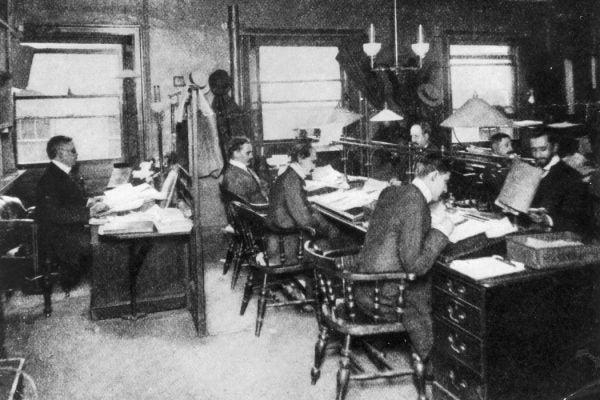
When Nehru jackets were still popular, disco was just coming on the scene, and I forsook legitimate work for journalism, newspapers made money. They couldn’t help making money as there were far fewer places for advertisers to hawk their wares back then. Car dealerships, super markets, furniture stores, et al, lined up to buy large amounts of page space, making it possible for The River City Daily Bugle and Thunderstorm to land on front steps every morning or evening. For most newspapers of the time, more than 70 percent of their revenue came from advertising, both display and classified. Newspapers competed with each other for readers and advertisers.
No more. The business model of the daily newspaper no longer works. There are many more rifle-shot ways advertisers can reach their potential buyers now rather than relying on the shot-gun approach of newspaper advertising, where few of the newspaper’s readers would have any interest in the product or service in question. Much cheaper for local super markets to mail a circular to residents in their area hawking their specials than buying pricy ads in newspapers. And while the advertisers have been going elsewhere, the cost of ink, newsprint, labor, and everything else associated with putting out The East Overshoe Ransacker every day have gone through the roof. No wonder that nearly 3,500 newspapers have gone belly-up since 2005. Most still operating have cut back on staff, cover less, even on the days they publish, but are still circling the drain.
To complicate matters, very few young people have taken up the newspaper habit as I and so many others did back in the day. Too many of today’s 20-year olds have the attention span of gnats on meth and have lost any interest in public affairs. They live with their heads up their apps and don’t attend to anything that takes more than a half minute to read. The newspaper reader is an endangered species, soon to go the way of the dodo and the dinosaur.
Paul and I regret the loss of this bit of Americana, even though in recent decades there has been more and more journalistic malpractice in newsrooms. Too many newspaper writers, like their legacy TV news counterparts, are taking as their mission left-wing activism rather than reporting, influencing rather than informing. A majority of reporters a half century back may have been personally liberal. But at most publications the wall between news and opinion still stood. In happier newspaper days, when news was news and opinions were opinions, the latter were largely ignored by readers more interested in what was on special that weekend at their local supermarket.
I’m thankful for my newspaper days of chasing the truth with nothing more than a note pad, a pen, and persistence. I had the vanity fair of the human enterprise before me daily, with all its chaos, cruelties, and its kindnesses. It was a daily education in the complex and curious ways of the human animal, far better than that available at universities, at most seminaries, or on the therapist’s couch. I regret this educational opportunity is no longer available. An imperfect institution, the newspaper, as all institutions are. But one with many charms and uses. It’s disappearance is a great loss.
READ MORE from Larry Thornberry:
Futbol: The Beautiful Game, Allegedly