

U.S. Vice President JD Vance and Iran’s parliament speaker Mohammad Bagher Ghalibaf met in Burgenstock, Switzerland, on Sunday, June 21, with mediators from Pakistan and Qatar to inaugurate a sixty-day negotiating period aimed at finalizing the preliminary U.S.-Iran memorandum (MOU) and to flesh out the fate of Iran’s nuclear program.
The talks were initially scheduled for June 19 but were postponed to Sunday after deadly clashes erupted on Friday in southern Lebanon between the Israeli Defense Forces (IDF) and Hezbollah. Iran called this outburst a violation of the MOU and threatened to back out of the deal with a retaliatory closure of the Strait of Hormuz. (RELATED: Why Republican Politicians Fought Public Opinion in Fighting Iran)
Although Vance reported that Sunday’s talks had made “good progress,” the clashes between Israel and Hezbollah over the weekend revealed just how much the unresolved war in Lebanon could derail the U.S.-Iran deal at any moment. Reaffirming Tehran’s position, Iran’s Foreign Ministry spokesman Esmaeil Baghaei posted on X on Saturday that it’s impossible to enter any final negotiating phase with the U.S. unless there is an end to the war in Lebanon.
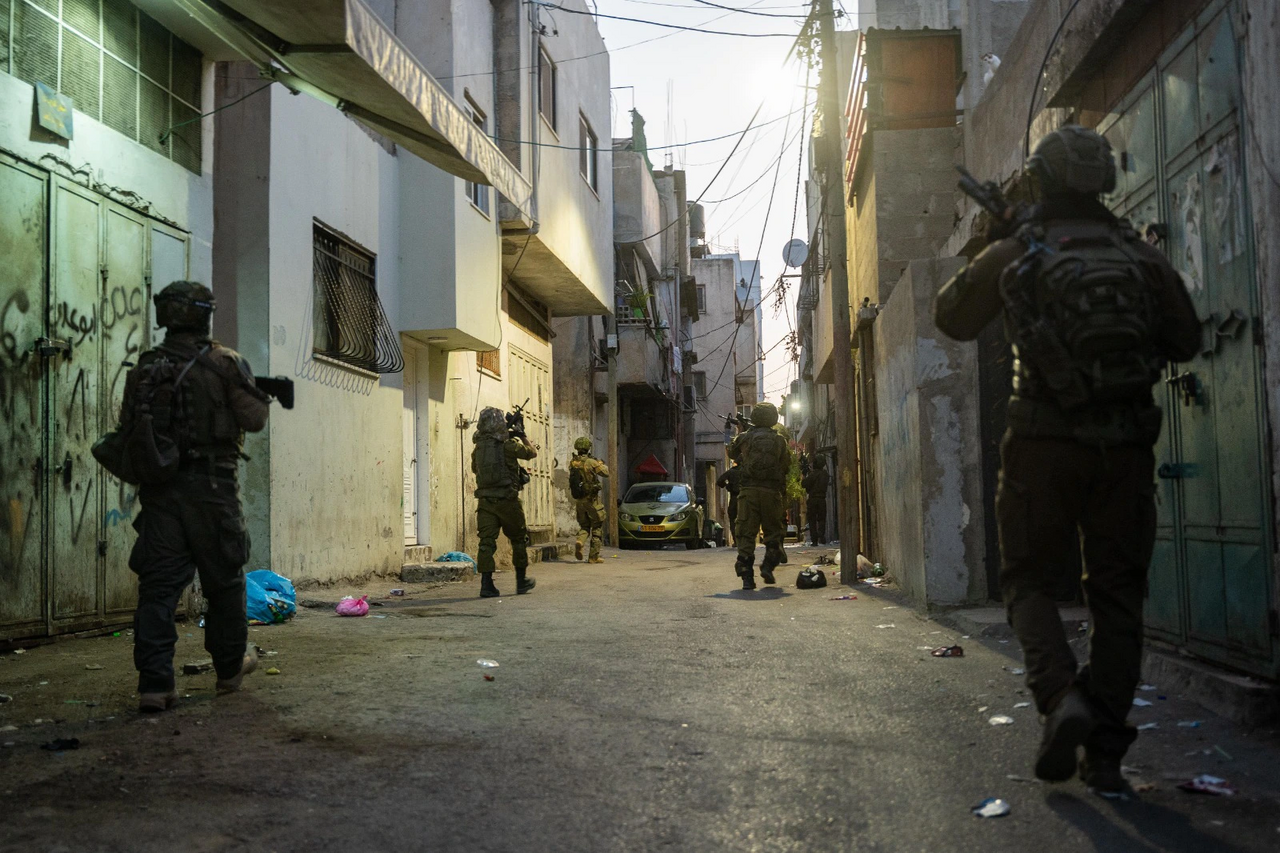
The clashes that delayed the Switzerland talks erupted on Friday when Hezbollah launched a guided-missile ambush on an IDF tank platoon near the village of Kfar Tebnit. The assault was allegedly coordinated from newly established Hezbollah surveillance networks used to track IDF troop movements and carry out recent drone and rocket strikes on northern Israeli villages. The ambush on Friday killed a four-man IDF tank crew, and erupted into an intense ground battle that prompted Israel to carry out additional air strikes on Hezbollah positions in southern Lebanon throughout the weekend.
Iran claimed that the flare-up on Friday was instigated by the IDF presence in Lebanon, which constituted a violation of Point One in the US-Iran MOU signed the previous week. Point One states: “The United States of America and the Islamic Republic of Iran and their allies in the current war, by signing this MOU, declare the immediate and permanent termination of military operations on all fronts, including in Lebanon, and undertake from now on not to initiate any war or any military operation against each other, and ensure the territorial integrity and sovereignty of Lebanon.”
Since the U.S. and Iran are the only signatories to the MOU, the inclusion of their “allies” in the language of the terms raises several questions. Who exactly are these allies, and are they bound by the stipulations?
Israeli officials, in particular, have expressed opposition to any U.S.-brokered peace deal with Iran, and yet Israel’s strong alliance with the U.S. seems to have found its way into the language of the MOU, which Jerusalem did not sign. It appears that the U.S. negotiators are trying to leverage their alliance with Israel into grouping the conflicts in Gaza, Lebanon, and perhaps eventually the West Bank, into a packaged regional peace deal. If so, coercing Israel to withdraw from its security buffer zone in southern Lebanon and forcing a premature ceasefire in Gaza and Lebanon while Hamas and Hezbollah militants remain active, grants Iran a symbolic concession and allows its proxy terrorist network to remain intact along Israel’s borders.
Iran’s network of allies must also be considered — from its proxy terrorists in Gaza, Lebanon, the West Bank, and Yemen, to back-door channels with Russia and China that keep Tehran’s missile arsenal stocked and nuclear infrastructure supplied. Any negotiating framework that includes “allies,” with or without their consent, will, intentionally or not, make the stipulations of the U.S.-Iran deal and the culpability of violations applicable to a wider network of non-signatory actors. (RELATED: The Mullahs’ Political Judo)
Israeli Defense Minister Israel Katz reiterated over the weekend that Israel is not bound by the U.S.-Iran MOU, and there is no restriction on Israeli soldiers in Lebanon. As Vance, Ghalibaf, and company rendezvoused in Burgenstock on Sunday, Israeli Prime Minister Benjamin Netanyahu instructed the IDF to “hold its fire” but insisted that troops would stay inside the security buffer zone in southern Lebanon, despite whatever deal is being worked out.
Nearly all 14 points in the U.S.-Iran MOU undermine Israel’s ultimate war objectives against Iran, which seeks to halt the development of long-range missiles, dismantle its nuclear program, and sever its sponsorship of terrorist proxy groups in Lebanon, Gaza, and Yemen.
Linking the war against Hezbollah in Lebanon to the peace framework with Iran is just one of several points that deterred Israeli officials from participating in the current negotiations in Switzerland. Another repulsive stipulation is Point Six, which states: “The United States of America undertakes with regional partners to develop a definitive, mutually agreed plan with at least $300 billion for the reconstruction and economic development of the Islamic Republic of Iran.”
Other financial arrangements in Point Eleven make previously frozen Iranian assets available for immediate use and “made fully usable for payment to any ultimate beneficiary.”
On a symbolic but no less significant level, the handing over of large amounts of cash and the release of frozen funds embolden Iran as the perceived victor of its recent wars against the U.S. and Israel. Allotting funds for “reconstruction and economic development” might sound like rebuilding a defeated nation, as in the reconstruction of the South after the Civil War, or of Germany after WWII. But this rings in the ears of Iranian officials as reparations, which, according to prevailing international legal conventions, entitle victorious nations in a war to claim from the vanquished side.
On a moral level, President Trump’s negotiating team in Switzerland is embarking down the same disastrous path forged by Obama in 2015 — handing over cold, hard cash to an untrustworthy regime bent on using the funds to covertly advance its aggressive military capabilities. There is no wording in the MOU about a regime change in Tehran, which Trump vocally advocated only a few months ago when Iranian demonstrators were being massacred on the streets of major cities by the Ayatollah’s regime. Rather, the cold, hard cash is being handed over to the predecessors of this same regime, whose track record includes sponsoring global terror and developing a ballistic, cluster-warhead missile program capable of reaching Israel and Europe.
The purpose of the 60-day negotiations between Vance and Ghalibaf is to seal into law the stipulations of the current MOU and negotiate Iran out of its current nuclear program. So far, the Iranian negotiators have been compliant on the nuclear front, telling Vance’s team exactly what they want to hear, such as allowing U.N. nuclear inspectors into the country. Perhaps the regime in Tehran is realizing that the concessions they will receive — such as the resources necessary to continue developing its advanced long-range missile program, control over Gulf shipping and oil sales, and the ability to dictate the foreign wars of its proxies in Lebanon — are worth paying lip service to the demands on its nuclear program.
What Iran will not give up, however, is its power to dictate affairs in Lebanon, just as Israel is unwilling to withdraw its troops from Lebanon as long as Hezbollah remains empowered. It is the tides of this conflict, which Iran has strategically managed to squeeze into the MOU framework, that will determine whether negotiators return for the next round of talks.
READ MORE from Bennett Tucker:
Missiles Fired at Northern Israel Break the Iranian Ceasefire
Iranian Missiles Challenge Israel’s Defense Systems
Image licensed under Attribution-ShareAlike 3.0 Unported.