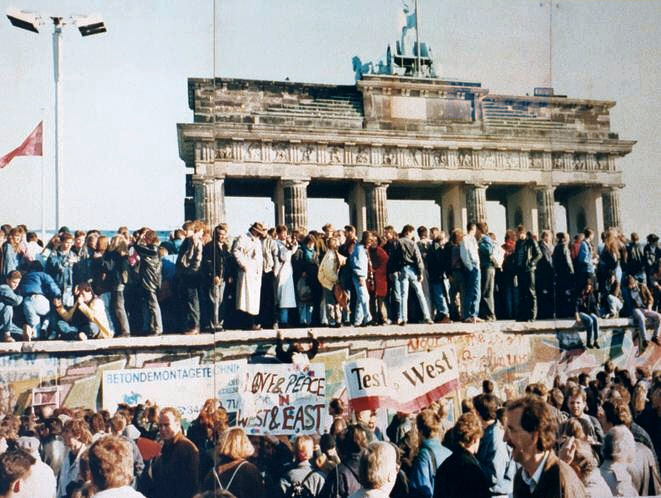


“Mr. Gorbachev, tear down this wall!”
President Ronald Reagan’s famous 1987 speech at the Berlin Wall is, for better or worse, where the contemporary American understanding of Russia begins and ends. That’s a shame because we have much to learn from Russia in the present moment. While Mikhail Gorbachev, then-general secretary of the Soviet Union, did not tear down the barrier between East and West Germany — protesters did in November 1989 — Gorbachev, after years of pushing political reform via his perestroika movement, resigned on Christmas Day 1991 amid the Soviet Union’s collapse.
This article is from The American Spectator’s summer 2026 print magazine. Subscribe to The American Spectator to receive the magazine.
“Eastern Europe is free,” said then-President George H. W. Bush in an address to the nation. “The Soviet Union itself is no more. This is a victory for democracy and freedom. It’s a victory for the moral force of our values. Every American can take pride in this victory.”
The hope that Bush expressed was not unfounded. The evils of the Soviet Union at its peak were undeniable: Stalinist repression, gulags, families turned against one another by the state, bans on books and film and speech, dissidents thrown into psychiatric wards, and all other forms of communist tyranny. And yet, nearly thirty-five years after the dissolution of the USSR, it is difficult to look at Bush’s words with anything but a profound sense of sadness for what could have been — especially given the state of Eastern Europe, which is today plagued by war and corruption.
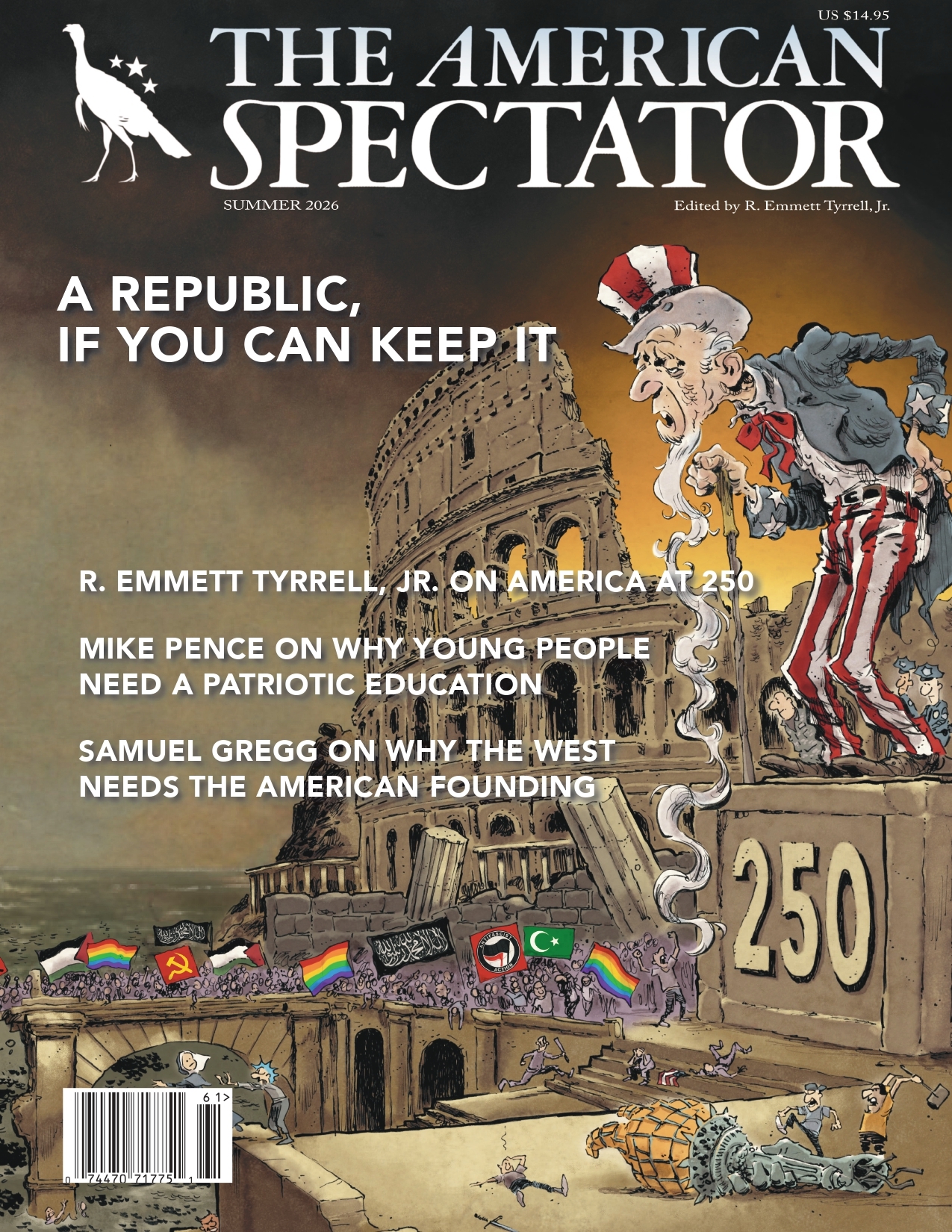
Subscribe to The American Spectator to receive our summer 2026 print magazine.
“We had faith in Gorbachev like we’ll never have faith in anyone ever again,” one Russian citizen told Belarusian Nobel laureate Svetlana Alexevich in her oral history of the collapse of the Soviet Union, Secondhand Time: The Last of the Soviets. “There was so much joy in the air! We thought that we’d tear down these barracks and build something new in their place.” Unfortunately, what was built in place of the old barracks, so to speak, was largely oligarchy and a material deterioration in quality of life for the average former Soviet citizen.
It is either ironic or poetic (I can’t quite decide which) that the United States defeated the Soviet Union only to speedrun its seven-and-a-half-decade trajectory into about thirteen years — say, from around President Barack Obama’s second victory in 2012 through Inauguration Day 2025. To be clear, there was no definitive revolution, no takeover, no American equivalent of Lenin. Thank heavens, there were also no gulags.
What we had instead was what we now derisively call “wokeness” — a term that today sounds like unserious meme language from garish culture-war headlines, obscuring just how repressive and dangerous its peak truly was to our republic. As we move beyond the woke moment and chart a new course as a nation, we must be careful not to repeat Gorbachev’s mistakes, lest we replace one bad system with another that the average American judges, rightly or wrongly, is worse.
Ernest Hemingway’s famous observation that bankruptcy happens “gradually, then suddenly” applies both to the rise of wokeness and to its unraveling. The creeping, quasi-religious moral framework that silently began to take over every mainstream American institution during the Obama years was initially concentrated among the elites, even as it started to trickle downward. Anyone who claimed victimhood — except, of course, those deemed by their very nature oppressors (white men, billionaires, etc.) — was heralded by a social media mob composed of ordinary citizens as well as journalists, academics, and policymakers at prominent institutions.
Naturally, wokeness quickly reached the highest levels of American governance. The Black Lives Matter riots may have broken out in 2020, but it was seven years earlier, in 2013, when the president of the United States told the nation that “Trayvon Martin could have been my son” — a spurious allegation of racism made with absolutely no regard for the fact that the man who shot Martin was Hispanic and was later found by the courts to have acted in self-defense. The Department of Education released guidance in 2014 that politicized school discipline policies and suggested that schools where racial minorities received higher rates of detentions or suspensions — whether or not those were warranted — might be acting in violation of federal civil rights law and at risk of losing funding. The Department of Health and Human Services began inserting gender ideology via Section 1557 of the Affordable Care Act in 2016, years before it became a constant topic in the culture wars.
Thanks to the first Trump administration, the disastrous education guidance that had left schools unsafe was repealed, as were the Obama administration’s rules that gutted due process on campuses and conflated sex with so-called gender identity. But the people who promoted these and other disasters remained powerful, thanks to the federal administrative state, which further expanded its influence during the COVID-19 pandemic. The Biden administration, which was advertised to voters as a “return to normal,” quickly devolved into an authoritarian panopticon, one that hit the wallets of ordinary citizens while insulting their capacity for common sense. It was one thing to deny the reality of inflation; it was another thing altogether to deny the reality of inflation and decree that men could become women simply by saying so.
The 2024 election — which was the first popular-vote victory for Republicans in twenty years and the result of a rightward shift in all fifty states and the District of Columbia — was a referendum not only on inflation, but also on the government-mandated and institutionally sanctioned insanity of the early 2020s. The universities, the medical associations, the administrative state: they were all at fault for using the public’s tax dollars to push blatant lies and falsehoods. The second Trump administration’s choice to hit these institutions where it hurts — revoking the public funding they’ve taken for granted all these years — is a natural response to their betrayal of the public and a necessary stop to taxpayer-subsidized ideological enforcement. That alone is cause for celebration for all sane Americans.
For that reason, it is worth considering how the Soviet Union attempted and failed to achieve many of the same goals. Gorbachev took power in 1985, after decades of stagnation. In his 1987 book Perestroika: New Thinking for Our Country and Our World, Gorbachev wrote that the Soviet people “could not make full use … of their right to take a real part in the administration of state affairs” because the Soviet Union’s bureaucracy had “acquired too great an influence in all state, administrative and even public affairs.” This closely mirrors Elon Musk’s assessment of the administrative state in the U.S., as well as his own reform efforts through DOGE: “All we’re really trying to do here is restore the will of the people through the president and what we’re finding is there’s an unelected bureaucracy.… If the will of the president is not implemented, and the president is representative of the people, that means that, well, the will of the people is not being implemented and that means we don’t live in a democracy, we live in a bureaucracy.”
Gorbachev’s reforms ultimately failed to create tangible improvements for regular people: within a few years, the economies of the post-Soviet states collapsed, and hyperinflation — exceeding 2,000 percent in the early 1990s — wiped out people’s savings. Anyone who could leave the former Soviet Union did. Those who could not were largely stuck under the thumbs of oligarchs, most of whom had been insiders to the old bureaucracy — Vladimir Putin himself, for example, was a former KGB agent. Upending the entire system without concurrently creating better institutions created power vacuums that made communism feel nostalgic compared with the anarchy that replaced it.
This is not to say that we are the Soviet Union — thank goodness, we can safely say we are not — nor is it to say that we are doomed to repeat its exact mistakes. We should, however, keep in mind that our current moment is precarious and can go wrong in ways we do not anticipate. A little over a year into the second Trump administration, on the heels of yet another assassination attempt of the president, we should recognize that the institutional reforms we are pursuing must account for the fact that many of our institutions are not easily replaced.
No matter how ideologically captured the medical profession may be, we cannot do without doctors, medical schools, or accreditation boards. Denying them funding over their anti-white and anti-male discrimination (among other civil rights violations) is good and justified, but if we do not affirmatively replace wokeness with something better, the bureaucrats and apparatchiks of old could easily return to power the next time an administration changes, this time hardened and hellbent on doubling down on their authority.
This raises the natural question: What should we replace woke with, exactly? That, of course, is the difficulty. In the past, conservatives have been guilty of urging sane people to withdraw from the institutions altogether, but, in doing so, we have abdicated power where it naturally resides. At minimum, encouraging sane, talented people to enter elite institutions — including the federal bureaucracy — and building pipelines that prioritize merit over ideological compliance would be a good place to start.
Beyond that, we are not tasked with creating a republic from scratch, but with stabilizing a country that has veered from its Founding principles. This is one advantage we have over Russia, which had never known democracy prior to communism. Beneath the rubble lies a better America — if only we choose to rediscover it.
Neeraja Deshpande is a policy analyst at the Independent Women’s Forum.
Subscribe to The American Spectator to receive our summer 2026 print magazine.
Image licensed under CC BY-SA 3.0.