
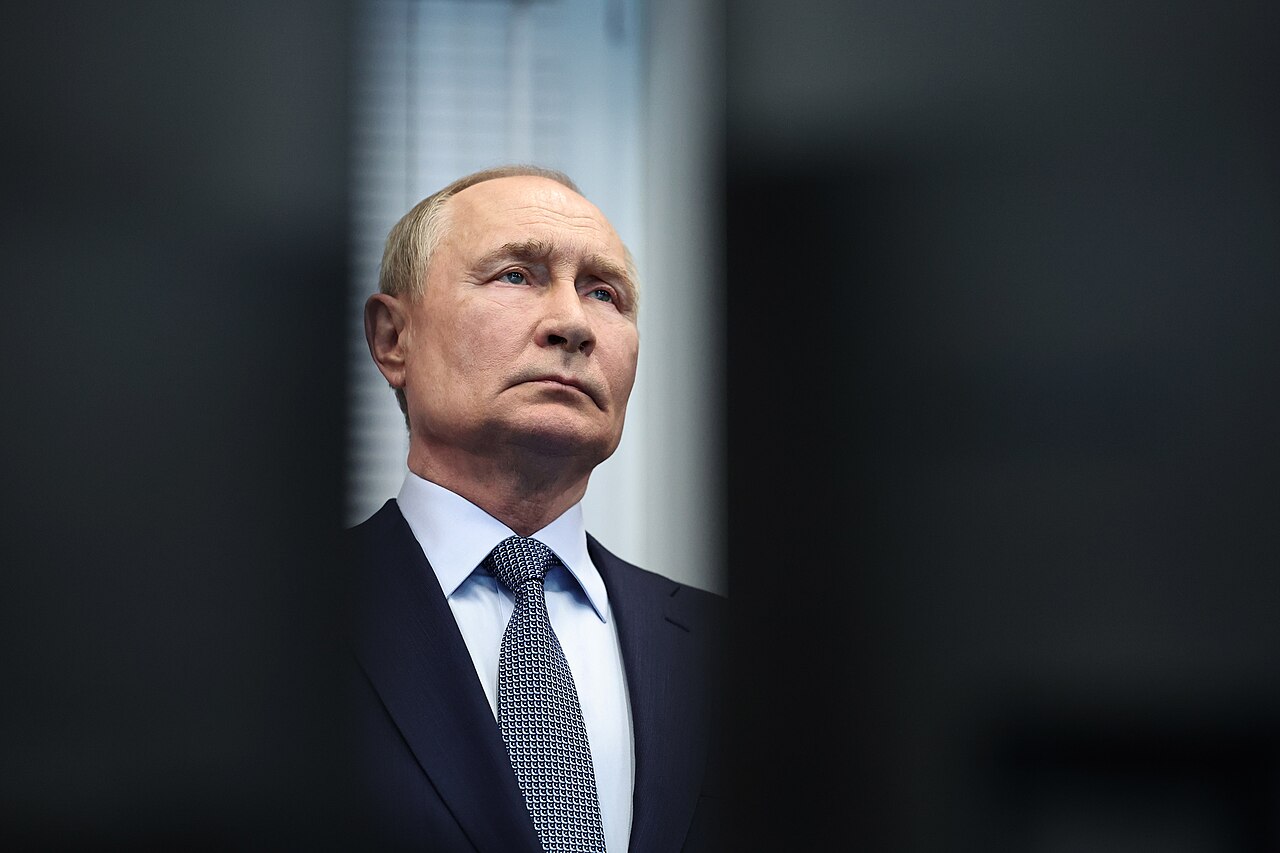


With two-thirds of Ukraine’s power grid destroyed by months of Russian missile barrages, which have left much of the population without electricity, heat, or water during a freezing winter, President Zelenskyy is following Trump’s advice of seeking peace with the Kremlin through U.S.-mediated talks, which started last Sunday in Abu Dhabi.
He has dropped demands for a pre-agreed ceasefire, recognizing that European governments that have encouraged maximalist positions at the detriment of his relations with the Trump administration can’t put their money or arms where their mouth is.
“Europe loves to discuss the future, but avoids taking action today.”
“Europe loves to discuss the future, but avoids taking action today,” Zelenskyy said in last week’s speech before the WEF in Davos. He complained that the EU failed to turn over $300 billion in frozen Russian assets to Ukraine as promised and that Germany sent air defense systems with no missiles. “There can be no security guarantees without the U.S.,” Zelenskyy concluded. (RELATED: The European Political Collapse That Never Ended)
Putin is also being dragged by Trump into negotiating from an increasingly weak position. Russia’s declining oil revenues and falling arms production as U.S. sanctions bite into its strategic industries threaten the capacity of its war machine. Its geopolitical position is eroding with the loss of Venezuela and Syria. Key allies in Iran also face possible obliteration. Most importantly, Russia’s ground offensive in eastern Ukraine seems bogged down in a costly stalemate, falling short of key objectives and suffering reversals.
The outcomes of any peace negotiations are usually decided by conditions on the battlefield, and as long anticipated by The American Spectator, it’s that which is now driving Putin’s desire to talk. If Ukraine’s fortified industrial triangle in Donetsk, encompassing the cities of Kramatorsk, Sloviansk, and Konstantinovka, continues holding on, Putin’s hand diminishes. (RELATED: Putin Caught in an Expanding Spiderweb)
Ukraine has been fortifying the Donetsk industrial belt with extensive underground bunker complexes, minefields, and tactically deployed elite units to plug Russian breakthroughs where they occur. The elaborate defensive strategy appears to be working. (RELATED: On the Frontlines of the War That Will Change Europe)
In the days prior to joining last Sunday’s first round of peace talks, Russia launched an “extraordinarily high volume of attacks in Pokrovsk,” a town that lies about 50 miles south of Kramatorsk, controlling a highway that leads into the industrial triangle. Capturing the artery would allow the Russians to outflank Ukraine’s main defenses in the region.
Russia has persistently tried to encircle Pokrovsk’s garrison and sever its lines of communication with Kramatorsk for over a year. While the Russians have captured the southern part of Pokrovsk and some surrounding villages, the northern sector that connects with the strategic highway has remained stubbornly defended by the Ukrainians, who showed their mettle again last week.
After mobilizing reserves of tanks and infantry for the renewed push on Pokrovsk — a difficult task under constant observation and harassment by Ukrainian drone swarms — Russia launched 42 separate attacks on the sector within a period of 48 hours, indicating a “high degree of desperation,” according to Ukrainian military officials. On Jan. 24, the Ukrainians counterattacked with air assault troops and drone-directed artillery strikes, pushing the Russians out of newly occupied positions.
In that one day of fighting in Pokrovsk, Russia lost 1,020 soldiers, 115 tanks and armored vehicles, 32 artillery systems, and 850 drones. Ukrainian sources say it was a “rout,” pointing out that the Russians weren’t able to evacuate their wounded under the shock of Ukraine’s lightning assaults, artillery, and drone strikes. Hundreds of injured have been found freezing on streets and open fields beside blown-out trenches and gutted vehicles, according to Ukrainian accounts.
On the evening of the next day, Russia’s peace delegation landed in Abu Dhabi, following a week in which some U.S. diplomats were nervous about a possible no-show. Heading the team that finally sat down with the Ukrainians the next morning was Gen. Igor Kostyukov, director of Russia’s military intelligence service, GRU, some grades above the low echelon apparatchiks that Putin sent to previous talks with the Ukrainians in Istanbul.
Russia’s latest mauling in Pokrovsk is illustrative of the general situation along the Donetsk front, where its army has failed to capitalize on gains made in the early part of last year. Operating from positions occupied last year in Toretsk, some 60 miles north of Pokrovsk, the Russians have failed to make much progress on taking Kostiantynivka (Konstantinovka), just 20 miles west of Toretsk, which would put them within reach of Kramatorsk.
Neither has Russia gained much advantage from clearing the heights of Chasiv Yar (which took them about two years to take), dominating the Donetsk valley containing Kramatorsk and the other two cities. There are reasons. Artillery or troops emplaced along the heights would now be highly vulnerable to Ukraine’s rapidly growing fleet of attack drones and recently delivered F-16s armed with American high-precision ERAM missiles whose 250-mile range would allow Ukraine’s two or three elite fighter squadrons to minimize exposure to Russian air defenses while delivering devastating attacks.
Russia’s slow attritional tactics have actually given Ukraine precious time to recover from last year’s disastrous fiasco in Kursk, reorganize its defenses, get reinforced with new NATO equipment, and develop a domestic military industry which now supplies about 50 percent of battlefield armaments, including armored vehicles, artillery, munitions, cruise missiles, and, most prolifically, drones. Ukraine is producing 1,000 combat drones a day, innovating highly advanced AI types that hunt targets autonomously.
Putin has clearly decided that it’s in his best interest to engage in the U.S.-sponsored negotiations imposed by the strong diplomacy and geopolitical strategy of President Trump.
Russia’s war production, on the other hand, is lagging. Its factories can barely turn out a fraction of the tanks needed to replace massive battlefield losses in armored vehicles, amounting to well above 11,000 since the war started in 2022, a factor that is seriously hampering the capability of its forces to take new ground. Russia has also lost 36,000 pieces of artillery and close to one and a half million men, according to the British Ministry of Defense.
Russia’s drone production matches Ukraine’s rate of a thousand per day, of which about 10 percent are highly lethal explosives-packed Shahed variants or Geran-2 being used to great effect against Ukraine’s civilian infrastructure. Missile production has increased with technological support from China, but given the volume used up in bludgeoning Ukraine’s urban centers on a daily basis, stocks of cruise and ballistic missiles could also be running low. The recent use of Zircon and Kh-22 anti-ship missiles in attacks against Ukraine’s power stations might indicate that naval stocks are needed to supplant diminishing air force and army rocket force missile systems, according to Ukrainian intelligence analysts.
One thing is certain. The Russians will be turning up for a second round of talks with Ukraine this Sunday, in which special committees will be formed to deal with various specific issues. Putin has clearly decided that it’s in his best interest to engage in the U.S.-sponsored negotiations imposed by the strong diplomacy and geopolitical strategy of President Trump.
The Russian leader may realize that time is no longer necessarily on his side. While the Kremlin insists that it must have all of Donetsk to sign a deal, the growing difficulties for its army, as well as that of its shadow fleet of oil tankers, increasingly exposed to U.S. naval interceptions, may ultimately force Russia to settle for less. Russian acceptance of a “demilitarized zone” in the industrial triangle of Donetsk, as proposed by America’s peace plan, may come sooner than expected, and talks will probably go on from there.
READ MORE from Martin Arostegui:
The Delusional Policies of the EU Nomenklatura
Image licensed under Creative Commons Attribution 4.0 International.



















