

What is it that we stand for? What is it that we try to conserve?
The rabbis of old are famous for developing scholarship, dialectic, and searching investigation. They also realized that all those wide-ranging explorations need to be anchored from and empowered by core insights, fundamentals that can be grasped by non-experts.
That simplicity is present in these words in Deuteronomy:
These words which I command you today shall be upon your hearts. You shall teach them to your children, and you shall speak of them while dwelling in your house, while going about on your way, when you lie down, and when you rise up.
Speak of laws to children? This is a clean break with the ways of Egypt, and of most tyrannies, who know that knowledge is powerful and imagine that to share it would diminish the power they had. But that in God’s kingdom, everyone was to engage, starting with the children.
If we are made by God and in His image, then we can love well and truly, and our law will express that.
We are only beginning to realize what happens when we no longer engage our children and ourselves in the deepest things. We wonder why our language is turned back upon itself and we cannot make our core values understood or heard. We are finding the resolve to teach.
Essential to that task are both the multi-faceted depth of the expert and the clear summary all can understand.
Rabbi Schneur Zalman of Liadi, was a great Jewish scholar and leader who was a younger contemporary of George Washington. He was a prodigy, an expert in law, and a very deep theologian, developing a powerful system of meditative study and prayer that though sophisticated, has touched even the simplest of lives.
In his most famous work, The Book of the People in the Middle, he notes that a number of times in the Talmud there are instances in which the greatest and most scholarly rabbis are stumped by questions posed by unlearned people. How could that be? he asks.
He answers that when the matter really touches a person, it touches the deep wisdom manifest in his or her soul, and that wisdom is from above, and not the sort of thing acquired from books. All our souls are rooted in this wisdom, and we all are meant to access it to govern ourselves well in our pursuit of happiness.
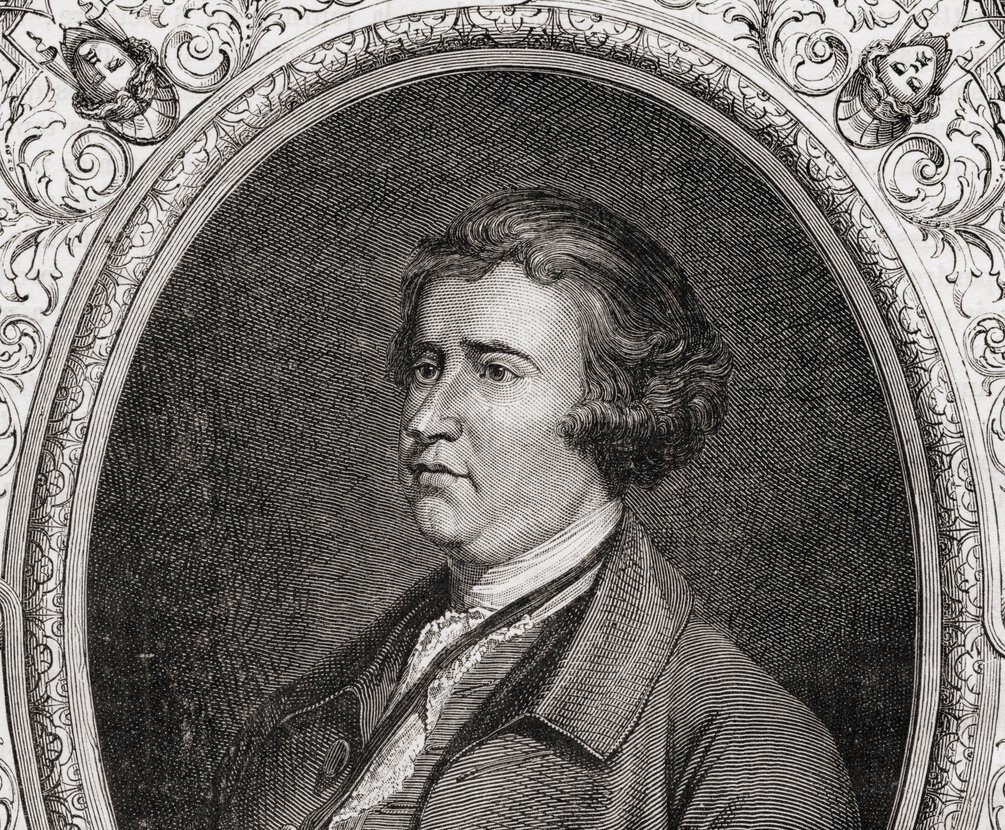
When our education is all about obtaining specific competencies, and not at all about that kind of wisdom, we are not using wisdom to employ the power our competency gives us. And when we have the liberty to act but without the wisdom to govern our new power, the results are good only by chance. This is exactly what one of the first modern conservatives, Edmund Burke, criticized in the French Revolution that unfolded shortly after our own:
The effect of liberty to individuals is that they may do what they please; we ought to see what it will please them to do, before we risk congratulations which may be soon turned into complaints.
Burke lived at the same time as Rabbi Schneur Zalman and George Washington, and as a leader of the Parliamentary Opposition, supported the cause of the American colonists against the North government that tried to crush them. Burke suggested a way to test the moral worth of a nation’s liberty:
I should, therefore, suspend my congratulations on the new liberty of France until I was informed how it had been combined with government, with public force, with the discipline and obedience of armies, with the collection of an effective and well-distributed revenue, with morality and religion, with the solidity of property, with peace and order, with civil and social manners.
In other words, liberty is a mere abstraction and so practically meaningless until we see its effect in the particulars of real life and its defining network of relations of every sort. In his citing of morality and religion, Burke is on the same page as John Adams, who wrote a few years after Burke:
Because We have no Government armed with Power capable of contending with human Passions unbridled by morality and Religion, Avarice, Ambition, Revenge or Gallantry, would break the strongest Cords of our Constitution as a Whale goes through a Net. Our Constitution was made only for a moral and religious people. It is wholly inadequate to the government of any other.
The morality Adams spoke of was at harmony with Christianity and with Judaism, about which he remarked in a letter (Nov. 14, 1813) to Jefferson that the vast rabbinic library contained many teachings that have already brought light to the understanding of Christian texts.
But is the message of religion graspable enough for a country committed to self-governance? In this same letter, Adams remarks on the impossibility of mastering the entire rabbinic corpus. If not Adams, then who? The more one is an expert, the more one knows the limits of expertise.
Rabbinic texts themselves ask the same question, and for the same reason. If people are to study the holy teachings, they must be able to understand enough to guide their lives towards personal and societal wholeness and peace. A jumble of undigested imperatives would be incoherent and its results chaotic. Realizing this, a number of teachers engage in the effort of finding among the many teachings a key imperative that brings the others into harmony and coherence.
One important text on this topic dates from about the year 100. It is included in the book Sifra, which explores the meaning of Leviticus.
You shall love your neighbor as yourself — Rabbi Akiva says: This is an all-embracing principle of the Torah. Ben Azzai says: This is the story of the generations of Adam — This is an even greater principle.
Ben Azzai was a student of Rabbi Akiva, brilliant and devoted. The text he refers to is in Genesis 5:1. He cites only half the verse, but he relied on the familiarity of its conclusion: When God created man, He made him in the likeness of God.
The point of Rabbi Akiva was that Law cannot be understood properly without seeing it through the prism of love. Without that, law can become an instrument of oppression, no matter which group is in charge.
Ben Azzai does not criticize that point. Instead, he addresses the nature of the love that can serve as that principle. What if a person chooses for himself a nihilistic life of anger and resentment? Such a person loves to get revenge, to bring down others more than to build himself. Think of Marx and Foucault, or of Goebbels and Streicher. To be the organizing principle of Biblical teaching, the love needs to be generated by a far deeper thought. If we are made by God and in His image, then we can love well and truly, and our law will express that.
In loving God who is our very life, we see that just as God includes all within His love and in that love governs us, so too we are capable and must include our neighbors within the same loving law that infuses our own life with inexhaustible value.
Here we are at the core of covenantal America, the land we love. That love can — and must — lead to a renewal, each day, of that American covenant.
READ MORE from Shmuel Klatzkin: