


While researching my doctoral dissertation on the origins of the Nazi political police, the Gestapo, I had occasion to review a sampling of investigative case files from one of the major offices, the Gestapostelle Wurzburg, the Gestapo office that covered the major German city of Wurzburg and its environs. Many Gestapo files had been burned in the final days of World War II, as the Nazi enforcers belatedly tried to cover their tracks, but, fortunately for my research, the Wurzburg files had escaped the bonfires.
One can only hope that freedom of speech may prevail, once and for all, and not only in Germany.
We usually associate the Gestapo with mass actions, the roundup of Jews or gypsies or communists, but its core functions included building prosecutable cases against ordinary citizens involving the commission of political crimes. Many of these crimes involved criminalized speech, a vast and ever-expanding category during the Nazi years. The Wurzburg files allowed a rare glimpse into such cases.
One such case has haunted me down through the years. A young workman had been reported to the Gestapo for repeatedly making jokes about Hitler and other prominent members of the regime. The young man didn’t belong to any of the usual suspect classifications and worked at an armaments factory, so, instead of simply being tossed into jail, his case was actually investigated. The two Gestapo officers who took on the case quickly became skeptical. The young man had just dumped his girlfriend for another woman, and the girlfriend’s mother was the source of the complaint. In other words, an obvious case of using the system for payback.
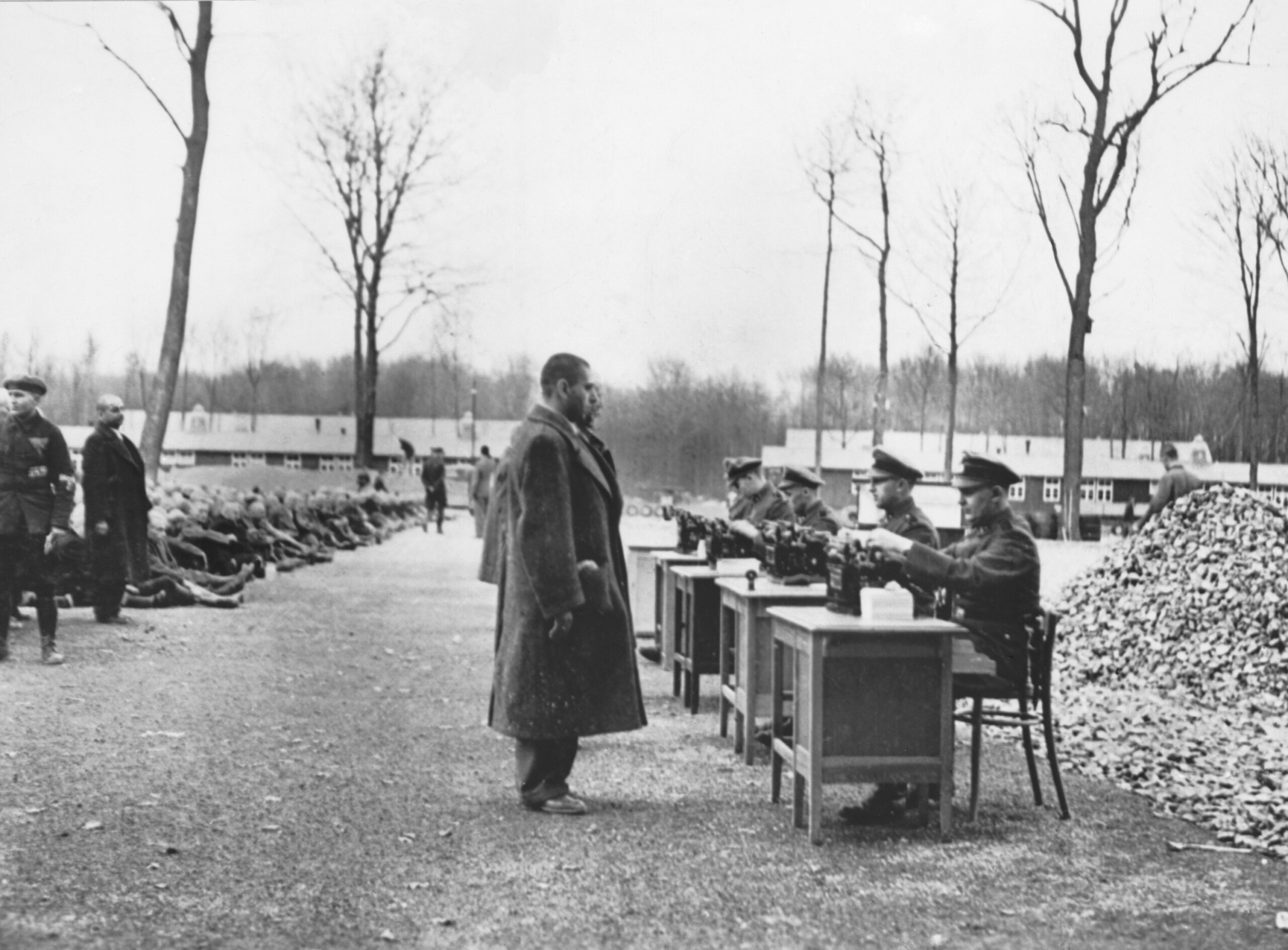
The Gestapo men were, in fact, veteran criminal investigators who’d joined the Gestapo as a means of getting ahead, a not uncommon career move among police officers under Nazism. Their file notations indicated a real aversion to pursuing the case, so much so that, after interrogating the young man, the girlfriend, and the mother-in-law, they considered dismissing the case. But they, too, were prisoners of the system they had chosen to serve. So long as the mother-in-law persisted in her complaint, they had no alternative but to take the young man into custody. And in this case, because their superior happened to be a Nazi Party fanatic, custody meant sending the young man to a concentration camp.
I’ve often wondered what became of that young man — his story ended in the files when he was sent away. And this week I’ve found myself thinking more and more about this and other such cases that I researched during my time in Germany. JD Vance’s speech to the Munich Security Conference last week, with its forthright insistence that “free speech” means exactly that, has provoked violent pushback, particularly from German politicians who saw themselves as Vance’s direct targets, but also from the other usual suspects, both across Europe, in the U.K., and here in the U.S. This high-toned outrage demonstrated just how clearly Vance’s remarks had hit their target.
But the outrage machine quickly met its match. Not only did Vance fail to back down — quite the contrary — but many others emerged to ratify his point, that, if we are going to defend freedom, then that defense begins not along some distant battle lines, but first and foremost at home.
One of the most poignant defenses of Vance’s position appeared some days ago here at The American Spectator, in a “Letter to the Editor” from a German reader, Mika Seifert. Seifert details all the many ways in which the German establishment, so proud of its “democratic” and “progressive” credentials,” so adamant in its insistence that it represents the good Germany created from the ashes of Nazism, has in fact become quite totalitarian in protecting its power — particularly against the emergent populism of the AfD, the “Alternativ fur Deutschland.” (READ MORE: Letter to the Editor: A Report From Germany — Censorship and Hope, Vance’s Speech in Munich)
Seifert catalogs multiple abuses, the heavy-handed response to derogatory comments aimed at mainstream politicians, the outright persecution now seeks to stifle discourse outside of establishment norms. But the passage that truly appalled me, and called to mind the Wurzburg Gestapo files, read as follows: “This past year, so-called Meldeportale (reporting portals) have been established online to make it easier for citizens to tattle on each other, erected for the expressly stated purpose of reporting misdemeanors below the penalty limit, that is, for misconduct so harmless that the law would not normally pursue the case.” Seifert goes on to draw parallels to the methods of the East German political police, the STASI, concluding that “intimidation is the name of the game.”
As Vice President Vance correctly noted, this kind of thing isn’t simply a German phenomenon, but instead one found wherever the left, even the so-called “moderate left,” has gained control of the instruments of power. When individuals can be arrested in the U.K. for publicly criticizing the transgender madness or here at home for praying outside abortion clinics, we can only conclude, with due horror, that freedom of speech has increasingly become “freedom for me, but not for thee.”
Tellingly, Mr. Seifert evokes the term “gleichschaltung” to describe the extent to which the “progressive” establishment, including the supposedly conservative parties, has taken absolute control of the German media narrative. Having experienced Germany years ago, at a time when the back and forth of public discourse was lively across a broad spectrum of beliefs, I found this particularly depressing.
The German Left’s “March Through the Institutions”
But more, I found it frightening. I recently examined the history and meaning of the term gleichschaltung in these pages, explaining how it applied to the Nazi takeover of power in 1933 and how it now applies to the left’s takeover of our institutions during the last decade. That Mr. Seifert sees fit to employ it tells us all we need to know about all that’s gone horribly wrong in Germany. (READ MORE: Suppressing Speech in Germany: 1933 vs. 2025)
It makes me very sad. As a young scholar, studying in depth the horror that was Nazi Germany, I came to love the country it seemed to have finally become, after making a great effort to overcome its past. I spent several very happy years living and working in Munich and elsewhere. I’ve wanted to believe that the Germans had left the worst behind, and that, perhaps, the very fact of this awful history had inoculated them against its repetition.
How ironic then that tools such as the “reporting portals,” instruments redolent of this Nazi past, should now be deployed ostensibly in defense of democracy. If we haven’t quite come full circle to how a poor young Wurzburg workman found himself thrown in a concentration camp, perhaps we’re closer than we’d like to think.
It’s heartening, though, to read that many Germans have harkened to JD Vance’s bracing message. One can only hope that freedom of speech may prevail, once and for all, and not only in Germany.
READ MORE from James H. McGee:
Trump, Zelenskyy, and Ukraine: A Tale of Frustration
Letters of Marque and Reprisal: Old Idea, New Purpose
James H. McGee retired in 2018 after nearly four decades as a national security and counter-terrorism professional, working primarily in the nuclear security field. Since retiring, he’s begun a second career as a thriller writer. His recent novel, Letter of Reprisal, tells the tale of a desperate mission to destroy a Chinese bioweapon facility hidden in the heart of the central African conflict region. A forthcoming sequel finds the Reprisal team fighting against terrorists who’ve infiltrated our southern border in a conspiracy that ranges across the globe. You can find Letter of Reprisal on Amazon in both Kindle and paperback editions, and on Kindle Unlimited.



















