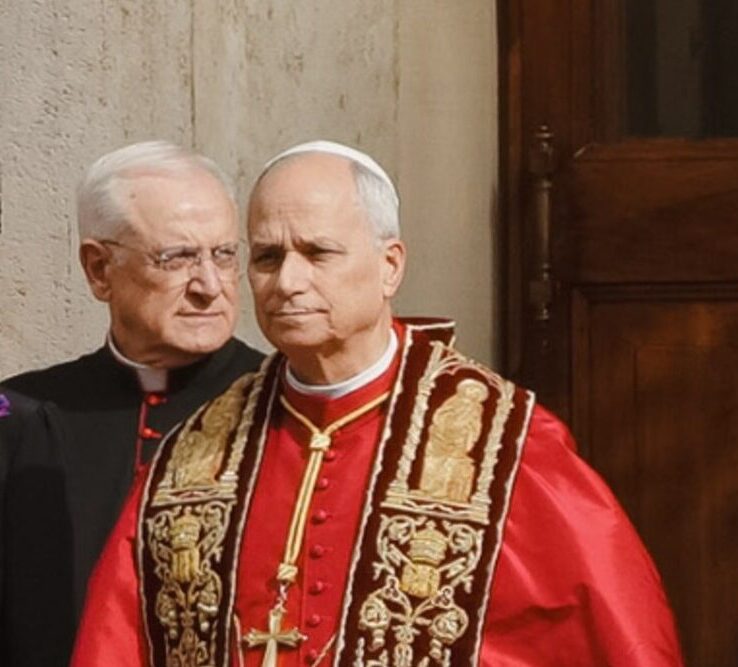


“I have no fear … of the Trump administration,” said Pope Leo XIV, adding that he also has no fear of speaking out loudly about the message of the Gospel: “That’s what I believe I am called to do and what the Church is called to do. Weʼre not politicians. Weʼre not looking to make foreign policy, as [Trump] calls it, with the same perspective that he might understand it.”
This article is from The American Spectator’s summer 2026 print magazine. Subscribe to The American Spectator to receive the magazine.
Donald Trump did not like that. In his April 12 Truth Social post against the pope, Trump fumed: “Pope Leo is WEAK on Crime, and terrible for Foreign Policy. He talks about ‘fear’ of the Trump Administration, but doesn’t mention the FEAR that the Catholic Church, and all other Christian Organizations, had during COVID when they were arresting priests, ministers, and everybody else, for holding Church Services, even when going outside.”
Of course, Leo wasn’t pope during COVID. At the time of Trump’s post, the American had been pontiff for eleven months. Nonetheless, Trump let him have it.
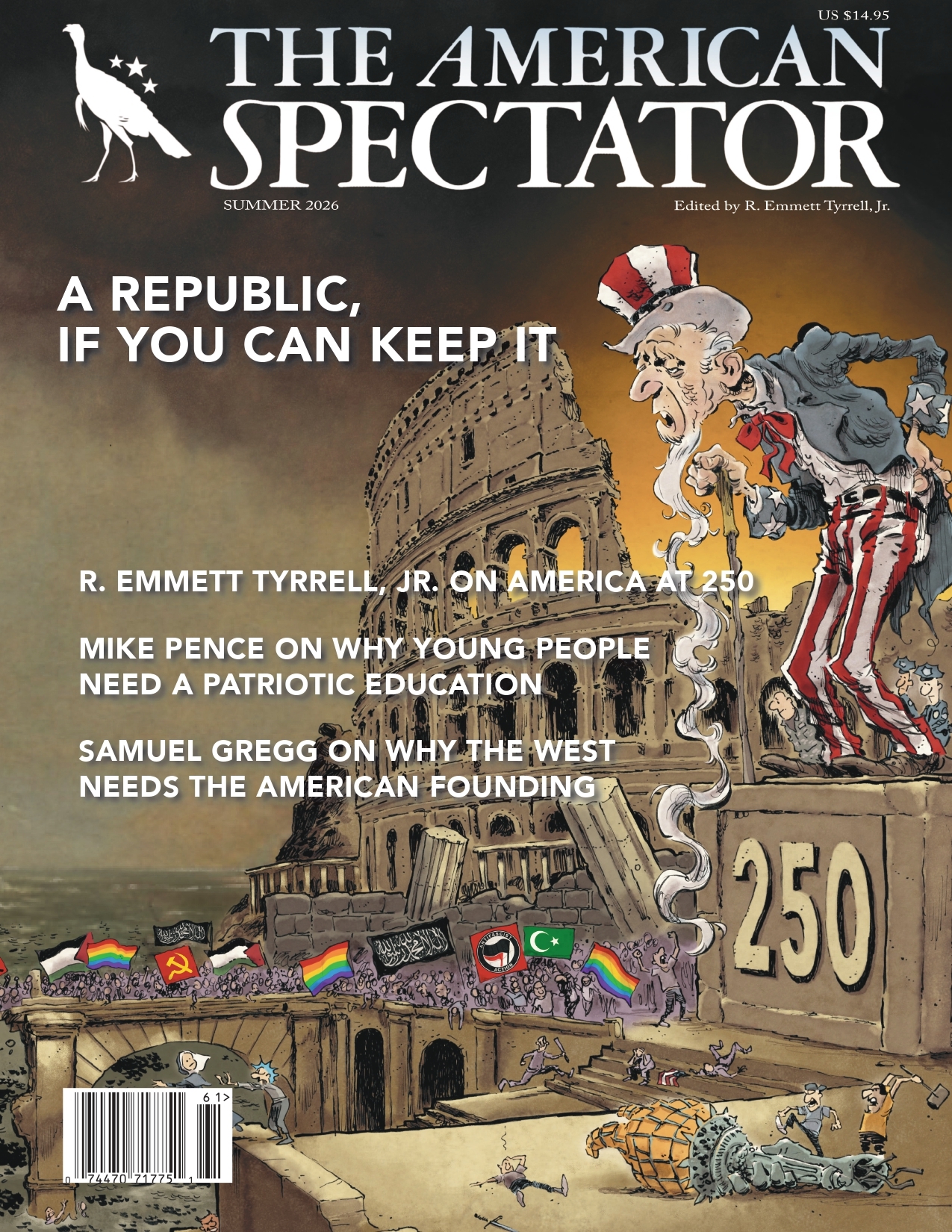
Subscribe to The American Spectator to receive our summer 2026 print magazine.
In this unprecedented statement in the long history of presidential-papal relations, Trump asserted: “I like his brother Louis much better than I like him, because Louis is all MAGA.”
Trump likes Lou better. He might like Leo, too — if Leo agreed with him.
But alas for Donald Trump, the American pontiff doesn’t appear to agree with the American president’s war policy with Iran. And Trump doesn’t take kindly to people who disagree with him. He can be downright ugly to those not on his side. Even popes.
As for Leo, he’s unafraid. He sees his job as preaching the Gospel fearlessly, and he said so from the very outset of his papacy. What he said ought to inspire and uplift all of us at a time when so much else in the world seems to be falling apart.
Arms Outstretched
The pope is the successor to St. Peter.
It was Simon Peter whom Christ identified as the rock for building His church. “You are Peter,” proclaimed Christ, “and on this rock I will build my church, and the gates of Hell will not prevail against it.” (Matthew 16:18)
To the early Christians, Peter was the head of their Church — the first in a long line of 267 pontiffs from the first century A.D. to our current day.
And like Christ himself, the first pope was destined to become a martyr.
Christ had signaled as much. He told his Apostles that if they truly wanted to follow Him, they needed to pick up their cross. As for Peter specifically, Jesus had forewarned him after the Resurrection: “Very truly I tell you, when you were younger you dressed yourself and went where you wanted; but when you are old you will stretch out your hands, and someone else will dress you and lead you where you do not want to go.” According to John’s Gospel (21:15–19), “Jesus said this to indicate the kind of death by which Peter would glorify God. And when He had said this, He said to him, ‘Follow me.’”
It was the Emperor Nero, one of history’s worst cretins, a vulgarian of a man, and very much the first pope’s lesser, who ensured just that. He had Peter flogged and scourged. Though historians don’t know every detail of his final hours, Peter likely carried upon his shoulders the crossbeam to which he would be nailed. He was then crucified like Christ, but also distinctly unlike Christ. It is said that Peter asked his executioners to crucify him upside down, deeming himself unworthy to die in the same manner as his Lord.
That was how Peter perished. Mourning Christians rushed to his corpse and buried it. Peter’s body is still in Rome to this day. St. Peter’s Basilica is built above his body. It is truly St. Peter’s church.
Like Peter, every pope since has been called to be willing to give his life for his flock, up through the Medieval period to modern times.
During World War II, Hitler’s goons were in Rome and outside the Vatican gates. The Führer had a plan, a plot, to kidnap Pope Pius XII. Some urged the pope to flee. He refused. “This is where Christ told Peter the Church should be built,” said Pius. “And here is where the Pope will remain.”
Pius XII was unafraid.
A few decades later, the Soviets had a plot to kill the pope, which commenced on May 13, 1981, the Feast Day of Our Lady of Fatima, as communists from Bulgaria and Turkey conspired with Moscow to assassinate Pope John Paul II in St. Peter’s Square, right by that ancient obelisk where Peter was scourged. They did not kill John Paul II, whose unofficial papal motto was those words that ring throughout the New Testament, from the Angel Gabriel’s words to Mary at the Annunciation to those of Christ himself: Be not afraid.
Pope Leo, too, has invoked those words from the outset of his papacy.
“You Have Called Me to Carry That Cross”
On May 8, 2025, 69-year-old Robert Francis Prevost stepped out onto the Loggia with a new name and mission: he was now Pope Leo XIV. His first word was peace. He said in Italian, “La pace sia con tutti voi.” Translation: “Peace be with all of you.” The American spoke also in Latin, the language of the Church.
It was the next morning, May 9, that the new pope publicly uttered his first words in his native American tongue. And there, at the Sistine Chapel, under the shadow of Michelangelo’s Last Judgment, the Holy Father keenly identified with Peter’s sacrifice.
“I will begin with a word in English, and the rest is in Italian,” the Chicago native began his homily. “My brother Cardinals, as we celebrate this morning, I invite you to recognize the marvels that the Lord has done, the blessings that the Lord continues to pour out on all of us through the Ministry of Peter. You have called me to carry that cross, and to be blessed with that mission.”
That’s the mission of carrying the cross, perhaps even with arms outstretched to where he doesn’t want to go.
Thereafter, the Bishop of Rome switched to the tongue of his fellow Romans. He took his flock back 2,000 years to Rome. He gave a powerful homily that included some harrowing words from not only the martyred St. Peter but the martyred St. Ignatius of Antioch.
Circa 107/110 A.D., Ignatius was captured and transported across the Mediterranean to Rome — to be publicly devoured by lions in the amphitheater. And yet, he was carried to his death with a sense not of foreboding but of joy. His epistle to the Romans is extraordinary. He prayed that no one would intervene to spare him, wanting to become “a meal for the beasts, for it is they who can provide my way to God. I am His wheat, ground fine by the lions’ teeth to be made purest bread for Christ.” He hoped: “let them not leave the smallest scrap of my flesh, so that I need not be a burden to anyone after I fall asleep. When there is no trace of my body left for the world to see, then I shall truly be Jesus Christ’s disciple.”
As Pope Leo would make clear, those words are not to be taken lightly 2,000 years later, made safer by the distant passage of time, including for every pope. Leo said of Ignatius: “I say this first of all for myself, as the Successor of Peter, as I begin my mission as Bishop of the Church in Rome, called to preside in charity over the universal Church, according to the famous expression of Saint Ignatius of Antioch.” Leo recounted Ignatius’ courage: “Led in chains to this city, the place of his imminent sacrifice, he wrote to the Christians who were there: ‘Then I shall truly be a disciple of Jesus Christ, when the world does not see my body.’ He was referring to being devoured by wild beasts in the circus — and so it happened.”
As the new pope put it, Ignatius’ actions “recall in a more general sense an indispensable commitment for anyone in the Church exercising a ministry of authority: to disappear so that Christ remains, to make himself small so that he may be known and glorified (cf. John 3:30), to expend oneself to the end so that no one lacks the opportunity to know and love him.” Leo XIV closed: “May God give me this grace, today and always.”
That was the message in the first homily of Pope Leo XIV. Like Ignatius of Antioch, he must be willing to give his life for Christ. The shepherd must be willing to die for his flock.
Pope Leo soon further drove home that message at a revealing moment. He would not officially become pontiff for another week and a half, namely at his official installation ceremony on May 18 at the Vatican.
The rite of installation began inside St. Peter’s Basilica. Before the heir to the Chair of Peter journeys to the square for Mass, he visits Peter. He descends the stairs under the main altar, downward to the crypt where Peter’s bones have lain for 2,000 years.
There, after Peter met Peter, Leo ventured outside to St. Peter’s Square for the formal installation, where he would receive the Fisherman’s Ring. The ring is an ever-present, visible symbol of the Holy Father’s papacy, worn always, never removed, until his death. It invokes St. Peter’s trade as a fisherman, and much more. Jesus told the Galilean fisherman to push out into the deep and lower his nets. He also called on Peter and the Apostles to become “fishers of men.”
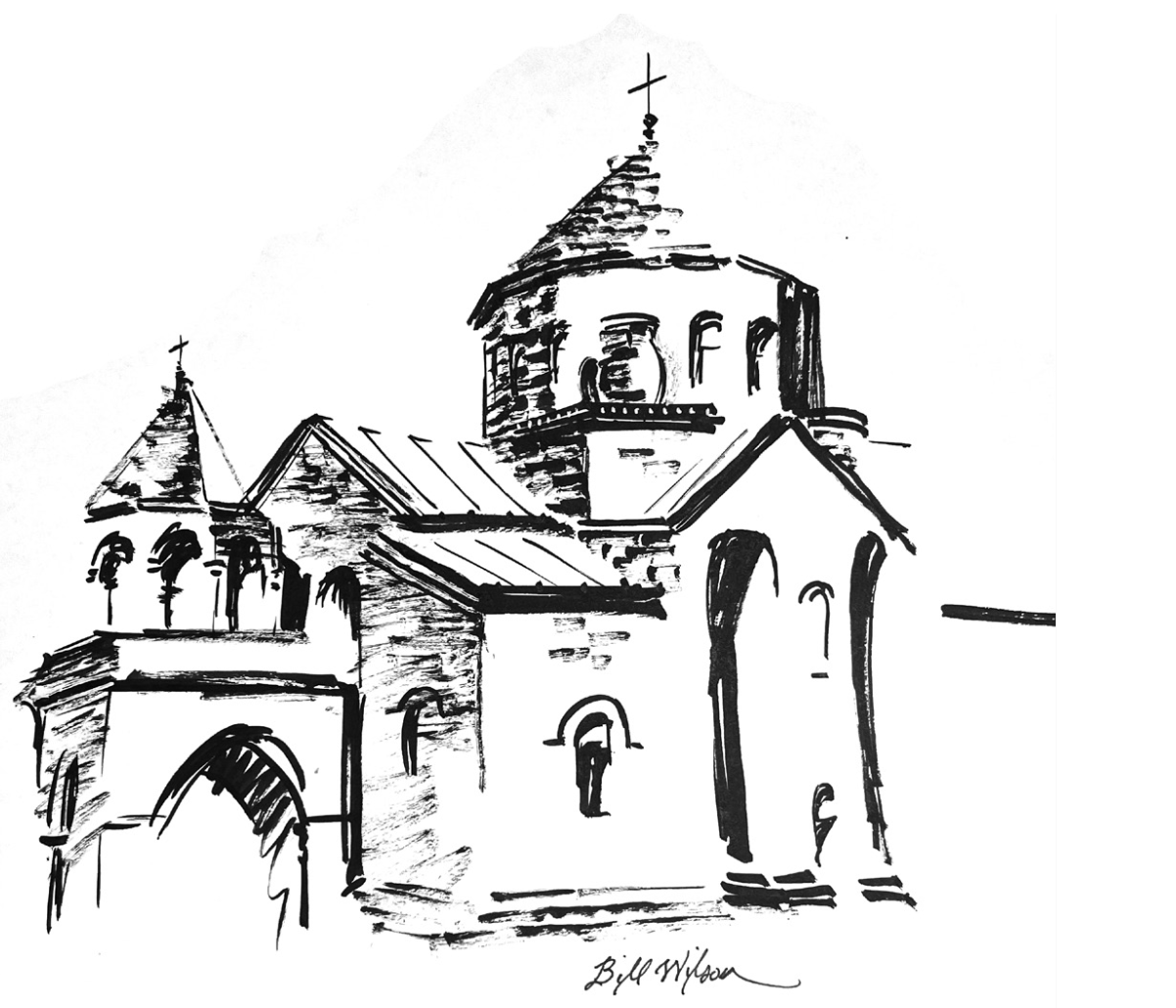
Art by Bill Wilson
As Leo prepared to receive the ring that day, May 18, the faithful gathered in St. Peter’s Square to hear those exact verses from Peter, “I am going fishing,” and from Jesus, “I will make you fishers of men.” Particularly meaningfully, the flock contemplated Jesus’ thrice-repeated question to Peter, “Do you love me?” and then Jesus’ prophetic warning to the fisherman that he ultimately would be led “arms outstretched” to places he would not desire to go.
The meaning was obviously significant. The Vatican’s Office of Liturgical Celebrations explained the exchanges as intended for the new pope to make “the connection with the Apostle Peter and his martyrdom.”
*****
All this history and pageantry and tradition is deep, moving, touching. I recount it here to underscore a crucial point: the pope is called to die for his flock. He is called to martyrdom. In this mission, he should not be afraid. He should not fear any mortal, whether an emperor or a president.
When Pope Leo XIV said he did not fear the Trump administration, he was being true to himself and his mission as heir to the Chair of St. Peter. His statement might have bothered Donald Trump. It surely does not inspire Trump. But it ought to inspire the rest of us. Mere men we should fear not.
At a time when the whole world seems to be going to hell in a handbasket, the Bishop of Rome, the new American pontiff — the successor of St. Peter — is reminding and inspiring us to have courage, to be not afraid. That’s a message some 2,000 years old, taken to Calvary by the Lord Jesus himself in the year 33 A.D.
Today, in the Year of Our Lord 2026, with much of the world falling apart, that’s something to hold on to, perhaps a cross to carry. The new pope is calling us, too.
Subscribe to The American Spectator to receive our summer 2026 print magazine.