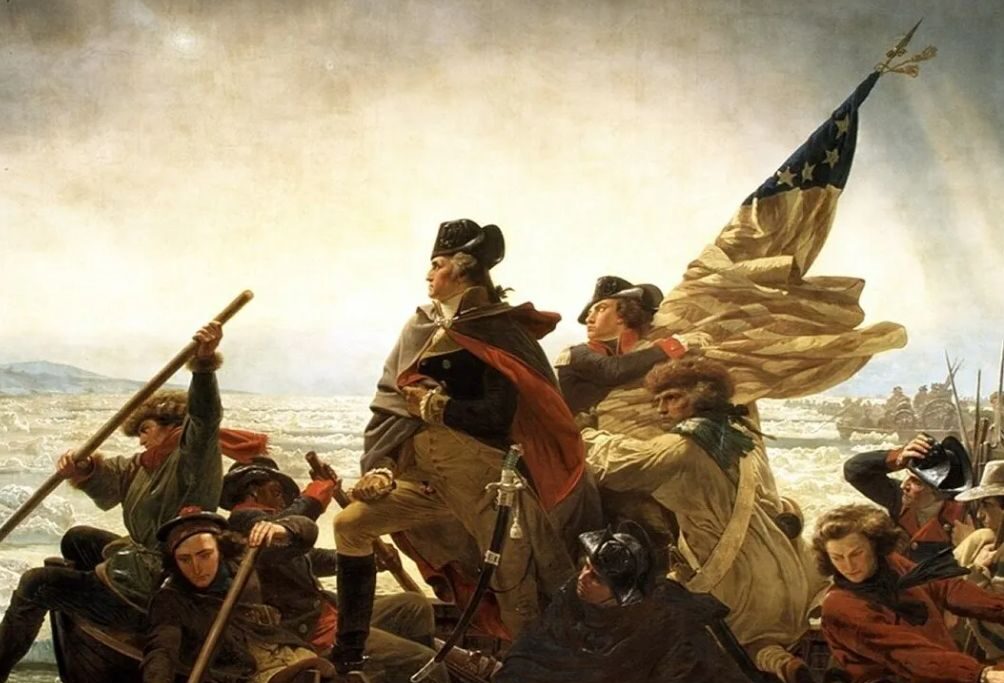


American Exceptionalism has become one of the most misunderstood — and unfairly maligned — ideas in modern political discourse. To its critics, it represents arrogance. To generations of Americans, from both political parties, it meant something entirely different: gratitude for a nation that, despite its imperfections, has done more than any other to advance constitutional liberty, scientific innovation, economic opportunity, and human freedom.
America has never been a perfect nation, nor should we pretend otherwise. We enslaved millions before fighting the bloodiest war in our history to abolish slavery. We repeatedly broke promises to Native American tribes. We tolerated discrimination and endured bitter political division. These chapters deserve honest study — not because America is uniquely guilty, but because every generation has an obligation to learn from its failures.
China, Russia, Iran, and other authoritarian regimes invest heavily in propaganda, cyber campaigns, and social media designed to amplify division and erode civic confidence.
Yet those failures tell only part of the American story.
American Exceptionalism does not claim that America is morally perfect. It recognizes that no nation has done more to advance constitutional government, individual liberty, free enterprise, scientific discovery, and the defense of freedom. It is not an expression of arrogance. It is an expression of gratitude for an extraordinary inheritance and a determination to preserve it.
No nation has contributed more to constitutional liberty, scientific innovation, medical discovery, humanitarian relief, and global security than the United States. Our Constitution remains history’s most enduring blueprint for constitutional self-government. Alongside our Allies, we liberated millions from fascism during World War II and helped rebuild former enemies rather than conquer them. We forged postwar alliances that preserved peace among the great powers for generations. American scientists, physicians, engineers, entrepreneurs, and workers transformed modern life. From the airplane and the microchip to the internet, GPS, biotechnology, and companies such as Apple, Google, Tesla, and Meta, American innovation has reshaped how humanity communicates, travels, heals, and creates wealth. Millions continue to pursue legal immigration because they believe America still offers opportunities and freedoms unavailable in much of the world.
America’s greatness has never rested on perfection. It has rested on something rarer: the ability to confront our failures, correct them, and continue striving toward our founding ideals.
Unfortunately, many younger Americans increasingly encounter a version of our history that emphasizes America’s failures far more than its achievements. They learn about slavery, but often too little about the abolitionists who fought to end it and the Civil War that finally abolished it. They learn about discrimination, but less about the extraordinary expansion of civil rights and individual liberty that followed. They study injustice, yet too seldom the Constitution, the Bill of Rights, the Marshall Plan, the defeat of fascism and communism, or America’s unparalleled contributions to science, medicine, innovation, and human freedom.
Honest history is indispensable.
Selective history is dangerous.
A generation taught primarily why America deserves condemnation will understandably find it harder to appreciate why America is worth preserving.
That loss of perspective has consequences extending far beyond the classroom. A people who gradually lose confidence in their nation become less willing to defend it, sacrifice for it, or accept the temporary hardships that preserving freedom sometimes requires.
America’s adversaries understand this. China, Russia, Iran, and other authoritarian regimes invest heavily in propaganda, cyber campaigns, and social media designed to amplify division and erode civic confidence. Their goal is not merely to spread misinformation; it is to weaken the self-confidence that has long distinguished the United States.
Unfortunately, too much of our public discourse — including influential voices within progressive politics, academia, entertainment, and much of the mainstream media — reinforces that trend by emphasizing America’s shortcomings while giving comparatively little attention to the principles, achievements, and institutions that made this nation worth defending. Whatever the motivation, the result is the same: America’s adversaries benefit when Americans lose faith in their own country.
Gratitude is not blind nationalism, and patriotism is not the denial of history. American Exceptionalism is not the claim that America has never failed. It is the recognition that, despite our failures, no nation has contributed more to the advancement of liberty, constitutional self-government, innovation, and human flourishing — and that preserving those achievements is both our privilege and our responsibility.
History teaches that free societies rarely collapse because they are conquered from without before they weaken from within. They decline when they lose confidence in their founding ideals, forget the sacrifices that secured their freedom, and cease believing their civilization is worth preserving.
That is why restoring serious civics education should become a national priority. Every student should graduate with a working knowledge of the Declaration of Independence, the Constitution, the Bill of Rights, the separation of powers, basic economics, the responsibilities of citizenship, and the remarkable story of how America continually struggled to move closer to its founding ideals.
Our children should learn about slavery, segregation, and the injustices suffered by Native Americans. They should also learn about the abolitionists, the Civil War, the civil rights movement, the Marshall Plan, the defeat of fascism and communism, and the generations of Americans whose sacrifice preserved liberty at home and abroad.
A nation that teaches only its failures raises citizens who question whether it deserves to endure. A nation that teaches only its triumphs raises citizens who fail to learn from history.
America must teach both.
That is not propaganda.
That is education.
American Exceptionalism is not a boast about who we are. It is a promise about who we strive to be. If we stop teaching that promise to the next generation, we should not be surprised when they stop believing America is worth preserving.
READ MORE from Marc Weisman:
The Trump Peace Plan: Promise, Pause, or Illusion
Israel’s Moment of Decision on Hamas
READ MORE: