

In 1790, the Hebrew Congregation of Newport, Rhode Island wrote to President George Washington with words that carried the weight of centuries of persecution: “Deprived as we heretofore have been of the invaluable rights of citizens, we now behold a government which gives to bigotry no sanction, to persecution no assistance.”
Washington’s letter to the Hebrew Congregation is one of the most remarkable documents in American history, not for its eloquence alone, but for what it rejected. The new republic, Washington insisted, would not merely tolerate its religious minorities. It would guarantee their rights. Every American, he promised, “shall sit in safety under his own Vine and Figtree, and there shall be none to make him afraid.”
Americans possess an inalienable right to live out their faith that no city zoning code can extinguish.
Two hundred and thirty-six years later, the town of University Heights, Ohio, failed to live up to that promise for one of its Jewish residents. Daniel Grand is an Orthodox Jew. His faith requires him to pray three times a day, preferably with a minyan, a quorum of at least 10 men. On the Sabbath and High Holidays, when driving is forbidden, that means gathering on foot within walking distance of home. In January 2021, Grand sent an email to about a dozen neighbors, inviting them to pray together at his house. One neighbor informed the mayor.
The next day the city’s law director sent Grand a cease-and-desist order. The letter warned Grand that if he held his planned prayer meeting at his home, his residence would be transformed into “place of religious assembly,” prohibited by the town’s zoning laws. If he wanted to pray with friends, he would need to apply for a special-use permit.
What followed was a systematic campaign of civic harassment. When Grand applied for the permit, the hearing was converted to a “quasi-judicial” format that locked the record and prevented him from submitting supporting evidence. Neighbors sent letters of protest, including one that read, “I do not want our neighborhood labeled as Jewish.” When Grand withdrew his application, the mayor doubled down, publicly declaring that the cease-and-desist remained in full force and urging neighbors to report any signs of religious gathering at Grand’s home to city authorities. Police began conducting drive-bys, and the city withheld Grand’s certificate of occupancy and tax abatements, costing him thousands of dollars. Sanitation workers stopped collecting his trash.
Grand sued, but the federal district court dismissed the case on procedural grounds as he hadn’t completed the permit process, they said, so his claims weren’t “ripe” for review. The Sixth Circuit affirmed, and in February 2026, Grand petitioned the Supreme Court. Last week, the Court agreed to hear his case. The legal question before the Court is a technical one about First Amendment application. But the deeper question Grand v. City of University Heights raises is one Washington already answered in 1790.
Before the American founding, the English tradition offered religious minorities what legal historians call “mere toleration,” a grudging minimum, not a right. England’s Conventicle Acts of 1664 and 1670 criminalized religious gatherings of five or more people outside the household, but tolerated quiet private worship at home. The logic was Blackstonian. The state would condescend to indulge private acts of conscience in one’s own dwelling so long as it posed no public inconvenience. But the state would suppress any public gathering of religious minorities for worship.
When George Mason drafted the religious liberty clause of the Virginia Bill of Rights, he used the word “toleration.” James Madison objected. Toleration, Madison argued, implies an act of legislative grace; permission bestowed by those in power and revocable at will. He substituted “the free exercise” of religion instead. That substitution was the American founding’s decisive break from the English past. As Tench Coxe put it in 1794, “mere toleration is a doctrine exploded by our general constitution.”
University Heights, on the other hand, sought to provide Grand with less religious liberty than the pre-constitutional English model the founders believed was totally inadequate for a free nation. Permitting private gatherings only at the city’s discretion and setting neighbors to spy on his home, University Heights sought to force Grand’s religious exercise out of his home and into a public place. In some ways, that is less than mere toleration, and it was directed at the very community Washington had promised would live without fear.
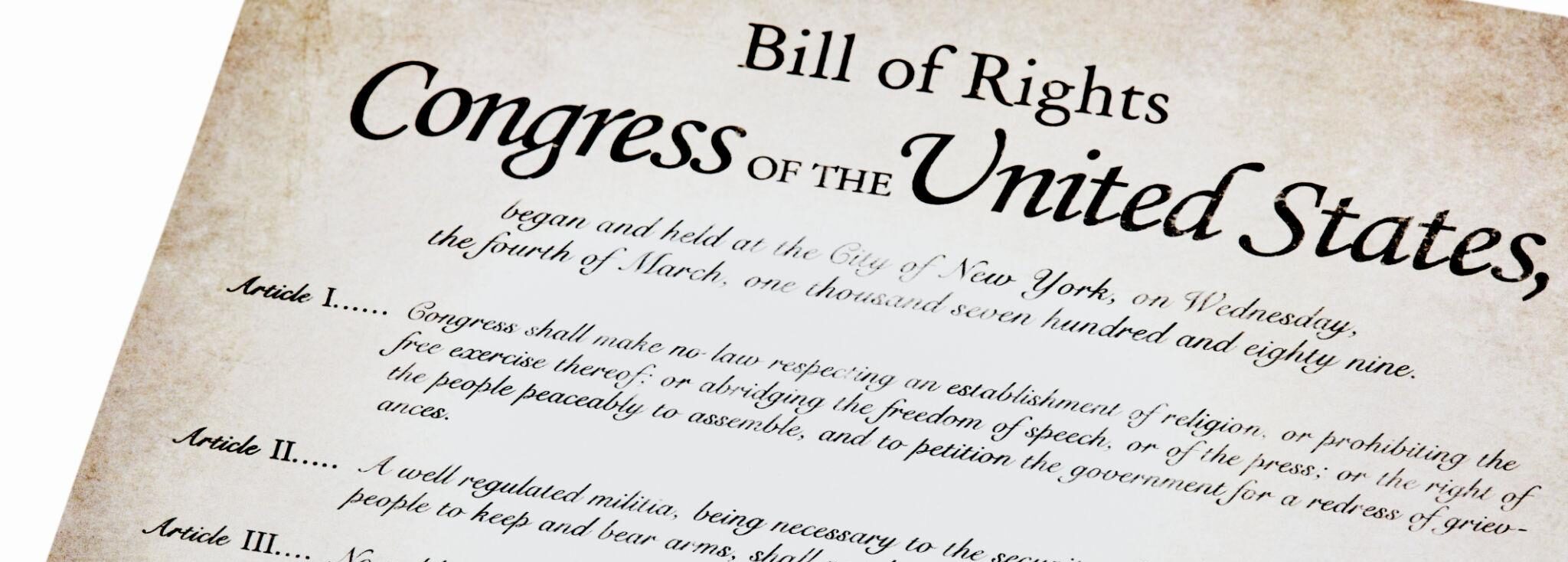
The Supreme Court should make clear that the First Amendment means what it meant in 1791: that Americans possess an inalienable right to live out their faith that no city zoning code can extinguish. Home worship, Bible study, prayer groups, and Sabbath minyan, should not require a permit. Daniel Grand asked for nothing more than what George Washington and the First Amendment promise. The Supreme Court should make good on that promise.
READ MORE:
What Google Finds, the Government Sees
A Victory for Women’s Sports: West Virginia v. B. P. J. and Little v. Hecox
Is the Supreme Court the Final Word on the Constitution?
Marc Wheat is General Counsel for Advancing American Freedom. Mitchell Bahnsen is an Intern for Advancing American Freedom.