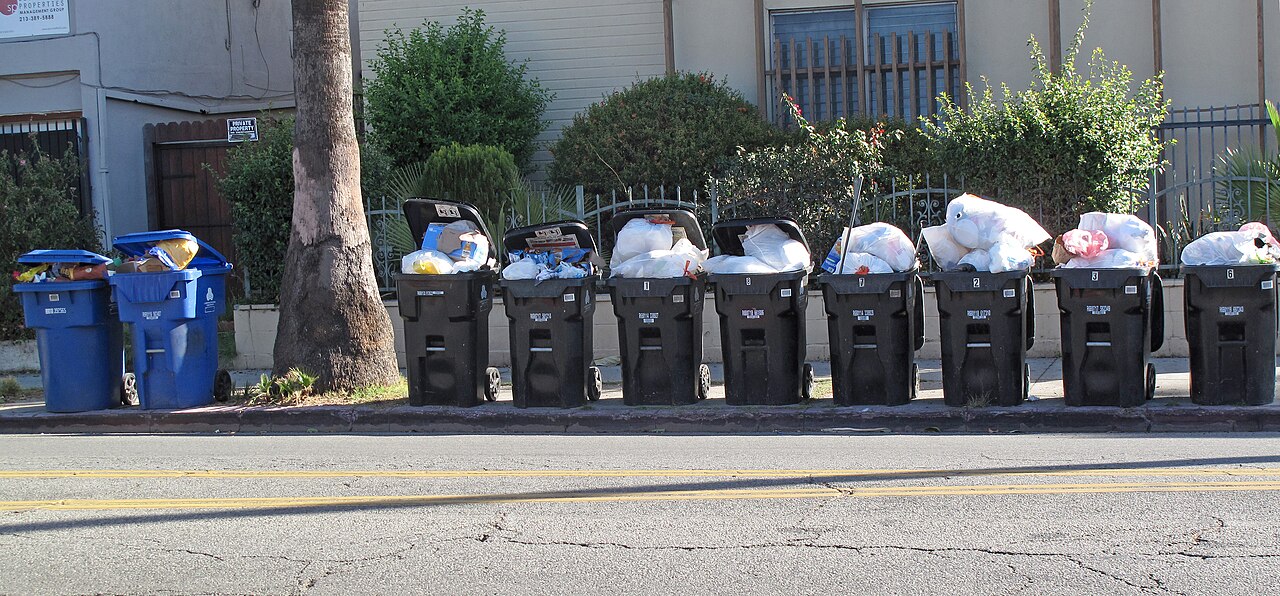


SACRAMENTO, California — California’s state recycling agency, CalRecycle, boasts that “California is building a circular economy that can recycle all waste by reducing how much trash we make [and] creating responsible recycling markets.” There’s nothing wrong with recycling, of course. My latest trip to the county landfill reminded me of just how much waste we all produce. We see it in the stacks of delivery boxes that magically accumulate in our garage after just a handful of Amazon deliveries. If the state can reach its 75 percent recycling goals by bolstering these markets, then we’re all better off for it.
But instead of chipping away at the landfill mountain, the state is heading in the opposite direction. That same CalRecycle document tracks the state’s, er, progress. In 2014, California recycled 50 percent of its waste. By 2019, that number fell to 37 percent. There’s been an uptick since then, but the rate is now 42 percent, which is roughly the same as in 2020 and lower than some other states. Redemption centers have long been shuttering, leaving consumers with few places to redeem state-mandated deposit fees on bottles and cans. That’s just one of many practical and economic explanations for the reduction.
California has — as it typically does — taken a command-and-control, government-centric approach toward recycling. Some of its recent recycling policies have been counterproductive. As the San Francisco Chronicle reminded us, “When the original plastic bag ban went into effect in California in 2014, many companies switched to thicker ‘reusable’ plastic bags, making the problem arguably worse.” The state recently banned those thicker bags, but now we’re stuck using thick paper bags that prompted the switch to the thin plastic bags in the first place.
Amid the sea of mandates, bans and fines — e.g., my local trash district recently sent us a letter noting that it will be checking bins for compliance — California officials keep forgetting the most important economic law regarding these matters: Incentives and markets offer the best hope for creating that so-called circular economy. The latest legislative fixation involves labeling. Lawmakers are upset at the way that companies account for and advertise the percentage of recycled products in various types of containers and packaging. And so the nannies are at it again.
Assembly Bill 2253 is the proposed solution. It passed the full Assembly in May and in early July passed out of the Senate Environmental Quality Committee. The legislation “[r]equires that recycled content claims be based on the actual physical recycled content in a product without the use of credit-based mass balance accounting … or similar approaches that are not based on the actual physical recycled content in the product.” That’s an amazing amount of jargon to determine when a product can be deemed “recycled.”
As the bill’s author, Assembly member Tasha Boerner, D-Encinitas, explains, “Currently, companies can utilize accounting to obscure the actual recycled content of their products. This practice of greenwashing means that Californians who think they are making better choices for the environment actually aren’t.” Greenwashing refers to companies that make deceptive claims about the environmental benefits of their products. That sounds egregious, but in this case the labeling issue is complicated and benign.
Mass-balance accounting simply “measures the amount of plastic building block materials made from advanced recycling that are being mixed with traditional materials to create new products,”
per America’s Plastic Makers. The trade group quotes the Rainforest Alliance: “All major international sustainability initiatives use mass balance in one form or another.” It’s not some conspiracy, but a means to promote more recycling by coming up with a reasonable way to account for recycled content given the complexities of modern manufacturing.
“Should coffee beans from a certified sustainable farm be physically separated from all other beans throughout every step of processing, storage, transportation and roasting? Should recycled aluminum from a particular collection program be physically tracked through every smelter and factory until it reaches a specific soda can?” asks Bill Shireman, who co-wrote California’s original bottle bill. He fears AB 2253 would “make recycling more expensive, make sustainable products harder to produce, increase pollution overseas, worsen the affordability crisis and slow progress toward a circular economy.”
That’s a legitimate concern that should resonate with environmentalists. The recycling industry and broader business communities are likewise sounding the alarms. An April letter to the Legislature from a coalition including the California Chamber of Commerce, the California Retailers Association and the American Chemistry Council argues that if the bill passes, “manufacturers lose the ability to track and verify recycled content through blended production processes …. The result: less recycling, higher consumer costs and a regulated community set up to fail.”
There are indeed examples of companies that misrepresent their products as having been recycled. But, as Shireman added, that can be addressed through a transparent system that includes third-party audits. Unfortunately, California officials often target entire industries rather than the handful of bad actors within them.
Practically speaking, California’s efforts to micromanage the labeling of recycled products haven’t gone very well to date. On July 14, the U.S. District Court for the Southern District of California blocked enforcement of the state’s Truth-in-Recycling law (Senate Bill 343). It declares that “claims related to the recyclability of a product or packaging be truthful and that consumers deserve accurate and useful information related to how to properly handle the end of life of a product or packaging.” Sounds great, but it lets the state determine the meaning of truthful and accurate information.
According to a report in The National Law Review, the court found the statute “unconstitutionally vague” because businesses cannot possibly know the entire life cycle of feedstock. In issuing its preliminary injunction, the court cited First Amendment issues — concluding that California had not yet justified its restrictions on limiting “potentially misleading” speech.
Lawmakers might want to pay careful attention to that decision, as it could spark yet another fruitless legal battle over labeling minutiae rather than some needed soul-searching about the depths of the state’s recycling challenges. AB 2253 raises an obvious question: Do California lawmakers want to reverse dismal recycling trends, or are they more interested in their usual bouts of corporate bashing and virtue signaling?
READ MORE from Steven Greenhut:
California Wants to Make it Easier to Sue Businesses
What’s Next for California’s Battered Insurance Markets?
Democrats on Affordability: Oh, Never Mind
Steven Greenhut is Western region director for the R Street Institute. Write to him at [email protected].
Image licensed under Attribution-ShareAlike 4.0 International.