


Chaos is frightening.
We live by identifying patterns that repeat. Those patterns spare us the costly effort of total alertness that a totally unpredictable situation requires. When dangers are not recognizable yet surely present, our drive to survive pushes us into this supremely stressful mode.
Total awareness is overwhelming. Even more overwhelming is the need to choose a course of action. Among so many possibilities, how do we find the right path to choose? In the chaos, we cannot even know the nature of the threats well enough to set up triage, let alone a more deeply considered analysis leading to a proper setting of priorities. Chaos conceals the path to the best possible result.
Chaos without resonates with chaos within. When no clear path to reducing the chaos is evident, its burden terrifies us.
One solution to chaos is to deaden ourselves. If we do not care whether we live or die, then the urgency to preserve our life recedes along with the pain that indicates to us, like a hand on a hot stove, that our continued thriving requires action. Some choose chemical help and one can see the results of that choice all around the landscape, and in particular in large urban areas (though this plague is everywhere, it is more easily visible on city streets).
Another is substituting a philosophy that operates like an opioid — some version of nihilism that denies meaning to anything in the world or beyond it. Preservation of life no longer serves as a clarifying moral anchor. Rather, progress is measured by the removal of boundaries that preserve life. This has been most obvious in the removal of those barriers around the beginning of life. By this, humans devalue their own lives, delinking themselves from the chain of life from which each person has sprung. This leaves each person’s humanity incomprehensible to themselves. Disconnected, the fragmented ego cannot stretch itself towards wholeness and community but turns in on its disconnected sense of self. Seeing themselves as utterly unique, and thus alone and unsupported, death becomes by default such a person’s organizing reality — that at least is real.
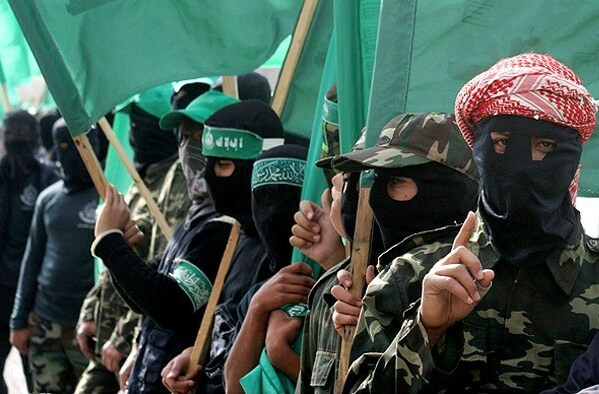
It is a small step then to recommending death indiscriminately to others. It may seem at the beginning very distant from the final stop, put into words by a man who consummated the love of which he spoke, Hezbollah’s Hassan Nasrallah: “We are going to win, because they love life and we love death.” But as anyone can see after October 8, that love of death was fervently applauded by many who had no resistance to its narcotic message.
[O]nly by grasping our part in the whole of providential reality do we find true meaning.
Of course, very few of the useful idiots following the KGB/Khomeini/Nasrallah line would ever dream of strapping on a suicide vest. But they streamed like lemmings to the moral cliff of being unable to distinguish the reality of genocide, practiced publicly with orgiastic joy on the previous day, and the cynical accusation of genocide leveled as the final humiliation against the real genocide’s victims.
Inability to perceive moral reality follows on conversion to the religion of death. All is staked on death and moral chaos. Like the bankrupt gambling addict who stakes all he has borrowed on one last toss of the dice, he hopes that his bet on death and chaos will bring a mighty jackpot of meaning. Like the person who gave up his job because of the thrill of the dice, his inner bankruptcy is self-imposed, he spurns the daily reality of moral choice and connection, seeing the life of the community only through the distorting spectacles of nihilism. Through that prism, Hamas’ deliberate placing of their own people where they must be killed if the Jews would defend themselves seems consistent, even brave. Death, more death, forever death — that is the faith they have joined.
That is the logic that is working itself out in our schools, in our media, in the purveyors of culture, and around the world. More audacity, in maximizing chaos, in the cause of the love of death — enough chaos will break what the death-eaters believe to be the illusions of a constitutional republic carried forward by a broad community of moral and religious people in solemn covenant.
They see no meaning in this covenant, only in how they can game it. They believe that the constitutional covenant constrains its believers to predictable and manipulatable behaviors. They believe they can game it. Accepting no restrictions on themselves, except by compulsion, they view self-governance as does a sociopath — a map of weaknesses by which the lover of life can be mastered, rendered helpless, and be forced to convert to the cause of death or to die. They welcome either, though the true death worshipper has a powerful predilection for the latter. And so many find it sexually attractive, like the throngs of rapists among the October 7 murderers — or the would-be-groupie response to Luigi Mangione among so many of the new converts to the worship of death.
In Last Full Measure, a historical novel of Grant’s year-and-a-month campaign against Lee, author Jeff Shaara imagines a conversation taking place between Grant and his wife, Julia. She asks her husband what he would say to someone whose husband is not coming home. Grant replies:
I try not to think about that. It is part of my job. I make widows. I could not do that very well, talk to them, see the hurt, the tears. I must not do that. The war cannot have a face or a name. I hear about people I have known … men I have served with. I hear that they are dead and it shocks me how hard that hits me … How can I order men to their deaths if every death causes so much pain?
In Shaara’s imagining, Julia answers:
Because it is who you are. It is why God put you here. If you did not believe that, then you would not end the war. If the deaths of so many did not bother you, you would not care if it ended.
There is a complexity here that has the ring of truth about it. The world does not conform easily to our wants or our ideologies. We can indeed cut loose from the real and embrace chaos as if it carried salvific meaning. But chaos will remain chaos. Love of death will perpetuate death and end only in its own death. Thus, the logic of the suicide of Hitler, Goering, Himmler, and Goebbels, after they tried their best to immolate Germany along with themselves, leaving vast piles of rubble, demolished lives, and ravished women.
Thus, the logic of the deliberate sacrifice of the children and the civilians of Gaza in order to win publicity for the genocide libel of the actual practitioners of genocide. Thus, the organized work of grooming of American activists to increase tension and, a la Gaza, perhaps to gain the coveted publicity attendant on a devoutly wished-for death for the cause.
Paralyze the people devoted to order with a vision of chaos that will never end, so that their only response will be submission. Their love is weak and exploitable.
So many have given in. So many are persuaded by the simplicity of the mantra the worshippers of chaos and death require them to take.
It is the crippling simplicity of modern-day idolatry.
Idols are our own work. We persuade ourselves that they give us control over a complex and difficult world. Who needs devotion, apprenticeship, study, work. With one mighty swing of the ideological sword, we cut the Gordian knot. We have power! We do not need knowledge and the humility needed to gain it and the love to which the deepest knowledge leads. We need build nothing, only slander, deride, and destroy. We turn away from anything deep, unwilling to recognize the mystery and the irreducibility of Creation and the reality that underlies, sustains, and vivifies it constantly.
Isaiah tells the great imperialist of his day, Cyrus, that God “fashions light and creates darkness” — both. Just as God Himself is irreducible to any duality, so too is God’s world and our role in it similarly and inevitably complex.
Yet within that complexity, we find a gracious simplicity in the line of loving duty. As Julia Grant told her husband, only by grasping our part in the whole of providential reality do we find true meaning. In Grant’s case, it was that of the rightness of the cause of freedom and of constitutional covenant. He could wield mighty force, lethal force, and not be polluted or degraded by it. He could master chaos and death by a victory delivering the republic whole, renascent, and rededicated to its majestic founding Declaration. He grasped the whole of God’s complex reality for a cause of sublime and majestic humanity. He used death itself to end the killing of war and the living death of slavery.
Isaiah declared to Cyrus of Persia Lo tohu bera’a — God did not create the world for chaos. Tohu may indeed be the starting point of creation, but it is not its endpoint. That endpoint, Isaiah made clear, was lashevet bera’a — the world is meant to be ordered and settled.
He did not mean by that the oversimplistic idolatry of order so dear to the tyrannical mind. He meant a world that is constantly aware of the divine starting point of complete freedom — chaos — and of the human role to infuse it with an order that is equally divine, an order God gives us to know if only we embrace it.
Ordered liberty. A beginning and an end linked together, achieving dignity and purpose, joining together the infinite and the finite in the wondrous vessel that is human life, created in the Creator’s own image. That is the vision that underlies our republic. That is the vision that underlies life itself.
READ MORE from Shmuel Klatzkin:
Constitutional Clarity v. International Ambiguity
Dancing in the Street, Listening for God




















