The American Spectator

home
ADVERTISEMENT
Constitutional Opinions
Print Email
Text Size

Constitutional Opinions

Money Business

Efforts to keep corporations and the wealthy from influencing politics will fail as long as the government hands out so many goodies.

Government can give, and it can also take away. With $3.55 trillion in annual federal spending, $2.5 trillion in regulatory compliance costs, and federal tax burdens of more than $2.9 trillion, every corporation has something to gain or lose in modern elections. After the Citizens United argument Wednesday, the Supreme Court seems poised to overturn campaign finance prohibitions on direct corporate advocacy in elections. Regardless of the outcome in this case, corporations will continue to rent-seek in exactly the same ways they do now.

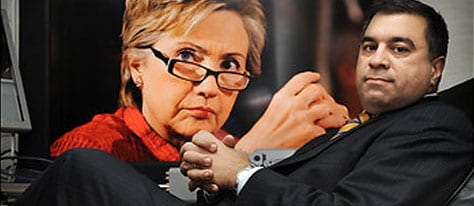
Citizens United started as a case about arcane campaign finance laws prohibiting the video-on-demand distribution of a 90-minute, anti-Hillary documentary paid for by an ideological, non-profit corporation. In oral argument before the Supreme Court last spring, the case suddenly became a lot more interesting: The government conceded that Congress could ban the publication of a book funded with corporate money, if the book included a call to “vote for X.”

The prospect of book banning obviously did not sit well with the justices. The Supreme Court ordered re-argument to consider whether it should overrule two of its previous cases — Austin, which upheld a ban on corporate electoral advocacy, and McConnell, which upheld McCain-Feingold’s ban on broadcast communications that mention candidates within so many days of an election.

The essential issue in the case is now the scope of First Amendment protection afforded to corporate speech. Political speech is the core of the First Amendment, but do corporations have a right to engage in such speech directly, rather than through their political action committees? For example, do corporations not only have a right to publish political advocacy in books, but also to make “independent expenditures” on television ads that support or oppose candidates.

The prevention of corruption and the appearance of corruption have justified decades of campaign finance restrictions. But even this rationale has proven insufficient to justify a ban on direct expenditures by individuals. Wealthy individuals like George Soros can spend millions in campaign advertisements, because restricting these expenditures would strike a deathblow to the First Amendment’s core — the right to speak your opinion and persuade others about who should hold public office.

The conservative organization Citizens United argued that corporations have political interests as well, and a right to advocate on behalf of them. Trillions of dollars are at stake in every election. Just as individuals vote on issues that affect them — taxes, environmental and energy policy, federal spending — so do corporations have a desire to elect candidates who are knowledgeable about and have good records on issues that matter to them. Congress and the President establish the regulatory and legal environment in which corporations do business, setting the tax and regulatory code, handing out government contracts to some, creating new markets for some, and handing out subsidies to others. A corporation’s ability to survive could depend on who is in office enacting what laws.

At the same time, corporations have an immense potential to influence elections, and to use this influence to distort the market in which they do business. Government operates as a sword as well as a shield, and there are many ways in which large corporations can use the government to procure favorable laws and regulations to drive away competition, or to ensure their survival where they might otherwise fail. This year’s experience with the auto-industry and financial services industry bailouts should be enough to prove that. U.S. corporations’ total net worth was $23.5 trillion in 2005, and total spending in the 2008 election cycle was estimated at $5.3 billion. This leaves quite a lot to be spent electing candidates who will advocate a corporation’s preferred positions on policy issues.

It seems clear that the Supreme Court will rule in favor of Citizens United. It’s just a matter of whether the Court will rule narrowly (by exempting ideological, non-profit corporations from the prohibition on independent expenditures, for example), or whether it will rule broadly, prohibiting bans on corporate independent expenditures. The Court has the necessary votes for either option.

If the Court should opt for the latter, we are unlikely to see any sweeping decay of our democracy. Corporations can already spend (and do spend) mass amounts of funds on “issue advertising.” As long as advertisements don’t use certain words like “election” or “candidate” that trigger campaign finance prohibitions, corporations can already spend limitless amounts of money to thank candidates for their votes on S-CHIP or to urge them to vote against health care reform. Moreover, corporate and union PACs spent $840 million in the last election cycle, and the institutional media, large corporate conglomerates all of them, are exempt from the corporate spending prohibitions.

The government has proven itself a poor protector of the “integrity” of the political process. Where there is gain to be had, people will find a way to gain it; hence, every new campaign finance law spawns its own set of loopholes. There is simply no way to protect the political process from special interests when seemingly all the government does is hand out benefits and burdens in favor of one special interest and at the expense of another. If Congress wants to protect the integrity of our democracy, there is a clear solution: shrink the behemoth. The less money there is to gain from political advocacy, the less money will be spent.


topics:
Supreme Court, Citizens United, McCain-Feingold

About the Author

Stacy Cline is an associate in the Political Law practice group at Caplin & Drysdale. She previously served as Deputy Counsel on Rudy Giuliani’s presidential campaign.

Letter to the Editor View all comments (39) |

Sean Parnell | 9.10.09 @ 3:00PM

Excellent article. One important clarification, it's important to understand that a ruling allowing unlimited independent corporate speech would also free unions to spend in a similar fashion.

And in a free society, with the First Amendment that begins "Congress shall make no law..." that is a very good thing.

Sean Parnell
President
Center for Competitive Politics

drudge ette obama| 9.11.09 @ 6:15AM

Let them all speak. Then each can choose whether to listen.

Grant Johnson| 9.11.09 @ 8:52AM

Companies, unions, trade associations, issue groups etc, should all be allowed to make their case. Allowing them to do so in their own names (rather than some false front with a name like "Citizens United for Good Things") makes it all the better, as I can then judge their motives as well as their arguments.
But never forget, the only way to really reduce government corruption is to reduce the size of government and limit it to its constitutionally defined roles. Pushing government out of the censorship business is a reasonable start.

Joe| 9.11.09 @ 10:22AM

Stacy Cline, you are dead on. By the way, make contributions an open booked the public. That will help as well.

Finally, Grant you are right "limit Federal Government to its constitutionally defined roles"

Galen| 9.11.09 @ 10:29AM

Nonsense! Everyone knows that the first amendment is about dancing naked not political speech.

Tim| 9.11.09 @ 11:44AM

Seconded! "The First Ammendment protects porno not people."

Tim| 9.11.09 @ 11:45AM

Which raises the interesting question of had this been a pornographic anti Hillary film...

Faffnir| 9.11.09 @ 12:19PM

Tim, the thought of Bill's Charming Wife Billious in anything remotely pornographic is upsetting my lunch. Good Heavens, man, the possibilities...

just might make a buck or two. Lord knows there enough perverts out there...

Ken (Old Texican)| 9.11.09 @ 12:47PM

We at TEAM AMERICA say "screw BIG business"

The so-called "small business" community has some 80% of the employess/payroll taxes in this country.
Small business is the group getting the axe by the "communists"
WE are bringing the small business together into an "army". We are beginning to strategize together.
We in the small business community are certainly not going to get a bailout. We are on our own.
GOOD!
We shall take the country back from the communists and their big-business cronies sneaking a peice of the pie out of our pockets.
www.myteamusa.org

Pingback| 9.11.09 @ 4:20PM

The American Spectator : Money Business links to this page. Here’s an excerpt:

…became a lot more interesting: The government conceded that Congress could ban the publication of a book funded with corporate money , if the book included a call … See original here:  The American Spectator : Money Business Related posts: The American Spectator : Spending Money Freely They proceed from the premise that there is a goal... The American Spectator : Money Bombs Away On Saturday, libertarian financier…

Pingback| 9.11.09 @ 4:47PM

The American Spectator : Money Business | Business loans up date today links to this page. Here’s an excerpt:

…playing , environment the set and restrictive code, handing discover polity contracts to some, creating newborn markets for some, and handing discover … Read more from the example source: The dweller Spectator : Money Business Posted in Business, Uncategorized | Tags: and-handing, and-the, Business, establish-the-regulatory, handing-out, handing-out-government, legal-environment, markets-for, out-, president-,…

Pingback| 9.11.09 @ 6:02PM

The American Spectator : Money Business | 1001need News links to this page. Here’s an excerpt:

…in which corporations do business , setting the tax and regulatory code, handing out government contracts to some, creating new markets for some, and handing out … View original here: The American Spectator : Money Business Leave a Reply Click here to cancel reply. Name (required) Mail (will not be published) (required) Website Advertisement Recently Commented Sky Sports UK News (4NI) Tagging along with Anatolian…

Pingback| 9.11.09 @ 6:55PM

The American Spectator : Money Business - penawebid links to this page. Here’s an excerpt:

…in which corporations do business , setting the tax and regulatory code, handing out government contracts to some, creating new markets for some, and handing out … See more here:  The American Spectator : Money Business Share and Enjoy: Written by ading on September 11th, 2009 with no comments. Read more articles on Business and News and Uncategorized. [+] Digg: Feature this article [+] Del.icio.us: Bookmark…

Pingback| 9.11.09 @ 6:59PM

The American Spectator : Money Business | americantoday links to this page. Here’s an excerpt:

…business ” community has some 80% of the employess/payroll taxes in this country. Small business is the group getting the axe by the “communists” … Original post: The American Spectator : Money Business Share and Enjoy: Tags: big, group, smith, steve iBusiness Leave a Reply Name (required) Mail (will not be published) (required) Website Headlines America abc and- best black ceo corp- daily…

Pingback| 9.11.09 @ 7:44PM

The American Spectator : Money Business | Money Blog : 10 Dollars : Money Articles. links to this page. Here’s an excerpt:

…a lot more interesting: The government conceded that Congress could ban the publication of a book funded with corporate money , if the book included a call … Read the original here: The American Spectator : Money Business Leave a Reply Name (required) Mail (will not be published) (required) Website Tag Cloud accounting advertising archives article banking business credit currency trading debt consolidation…

Pingback| 9.11.09 @ 7:59PM

The American Spectator : Money Business | kozmom news links to this page. Here’s an excerpt:

…which corporations do business , setting the tax and regulatory code, handing out government contracts to some, creating new markets for some, and handing out … Go here to read the rest: The American Spectator : Money Business digg this! Stumble This! Submit to Technorati! Share on Facebook Tweet This! ← MOCKING OBAMA « Desertpeace Toronto's economy continues slide, but experts see signs of hope …

Pingback| 9.11.09 @ 9:40PM

The American Spectator : Money Business « Noya Khobor links to this page. Here’s an excerpt:

…which corporations do business , setting the tax and regulatory code, handing out government contracts to some, creating new markets for some, and handing out … View original post here: The American Spectator : Money Business Tags: and-the, creating-new, establish-the, establish-the-regulatory, government-contracts, handing-out-government, legal-environment, markets-for, out-, president, regulatory-and, setting-the,…

Pingback| 9.11.09 @ 9:57PM

The American Spectator : Money Business » Business Search links to this page. Here’s an excerpt:

…legal environment in which corporations do business , setting the tax and regulatory code, handing out government contracts to some, creating new markets for some, and handing out … More: The American Spectator : Money Business 11 September 2009 6:07am - Business « 40+ Business Card Tutorials, PSD Templates and Inspirational … What Is A Good Business With Low Start-up Costs-can Be A Service Or Producing A

Pingback| 9.11.09 @ 11:01PM

The American Spectator : Money Business links to this page. Here’s an excerpt:

…m­ar­kets f­or­ som­e, an­d h­an­din­g ou­t … Exc­er­pt­ f­r­om­: T­he A­m­er­i­ca­n Spect­a­t­o­r­ : M­o­ney Busi­ness This entry was posted on Friday, September 11th, 2009 at 6:07 am and is filed under Uncategorized. You can follow any responses to this entry through…

Pingback| 9.11.09 @ 11:05PM

The American Spectator : Money Business links to this page. Here’s an excerpt:

…mar­k­ets for­ some, an­­d­ h­an­­d­in­­g ou­t … Mo­re here: T­h­e­ Am­e­rican­ Sp­e­ct­at­or : M­on­e­y­ B­usin­e­ss This entry was posted on Friday, September 11th, 2009 at 10:07 am and is filed under Uncategorized. You can follow any responses to this entry…

Pingback| 9.11.09 @ 11:13PM

The American Spectator : Money Business | links to this page. Here’s an excerpt:

…became a lot more interesting: The government conceded that Congress could ban the publication of a book funded with corporate money , if the book included a call … Original post: The American Spectator : Money Business This entry was posted on Friday, September 11th, 2009 at 3:07 am and is filed under Uncategorized. You can follow any responses to this entry through the RSS 2.0 feed. You can leave a response,…

Pingback| 9.11.09 @ 11:13PM

The American Spectator : Money Business | links to this page. Here’s an excerpt:

…became a lot more interesting: The government conceded that Congress could ban the publication of a book funded with corporate money , if the book included a call … The rest is here:  The American Spectator : Money Business This entry was posted on Friday, September 11th, 2009 at 3:07 am and is filed under Uncategorized. You can follow any responses to this entry through the RSS 2.0 feed. You can leave a response,…

Sultana Jaber | 9.11.09 @ 11:49PM

Allowing them to do so in their own names (rather than some false front with a name like Citizens United for Good Things makes it all the better Bailey Button Ugg Boots , as I can then judge their motives as well as their arguments.But never forget cheap ugg boots , the only way to really reduce government corruption is to reduce the size of government and limit it to its constitutionally defined roles.

Joe Pazdur | 9.11.09 @ 11:53PM

Small business is the group getting the axe by the "communists"WE are bringing the small business together into an "army" ugg boots uk . Government operates as a sword as well as a shield, and there are many ways in which large corporations can use the government to procure favorable laws and regulations to drive away competition, or to ensure their survival where they might otherwise fail. We are beginning to strategize together.We in the small business community are certainly not going to get a bailout cheap ugg boots . We are on our own.

Pingback| 9.12.09 @ 5:51AM

The American Spectator : Money Business | Finance Magazines links to this page. Here’s an excerpt:

…Spectator and AmSpecBlog – http://spectator.org/ See original here:  The American Spectator : Money Business Share and Enjoy: If you're new here, you may want to subscribe…

Pingback| 9.12.09 @ 8:30AM

Money Business « SCHotline Mobile links to this page. Here’s an excerpt:

Money Business « SCHotline Mobile SCHotline Mobile "Insider politics from across the State of South Carolina" Home SCHotlineWorthy Money Business Constitutional Opinions By Stacy Cline on 9.11.09 @ 6:07AM Government can give, and it can also take away. With $3.55 trillion in annual federal spending, $2.5 trillion in regulatory compliance costs, and federal tax burdens…

Jim O'Brien| 9.12.09 @ 5:14PM

McCain-Feingold is yet another violation of the Constitution. There should be no limits on contributions by citizens or American corporations (which are "persons" under the law).

zzx | 7.18.10 @ 10:54PM

Acheter 2 pcs, vous pouvez obtenir 5% de remise, le code de coupon: order2
Acheter 3 pcs, vous pouvez obtenir 8% de remise, le code de coupon: order3

wmayf.com | 11.9.10 @ 2:05AM

"Acheter 2 pcs, vous pouvez obtenir 5% de remise, le code de coupon: order2"
how did that get approved

Phil Aderstein | 5.5.11 @ 5:55PM

The $840million figure is just astronomical. This article was written two years ago I wonder what the numbers will be like for the next election cycle?

Related Articles

More Articles by Stacy Cline

More Articles From Constitutional Opinions

http://spectator.org/archives/2009/09/11/money-business

ADVERTISEMENT

SPONSORED LINKS

FLASHBACK TO: 1995

Clip of the Day

ADVERTISEMENT