

Give Barack Obama credit for thinking big. Since taking office this past January, the president has embarked upon a fundamental reboot of American foreign policy. From semantic steps like the renaming of the War on Terror to more substantive ones—including an overhaul of defense priorities and new outreach to countries such as Iran and Russia—the Obama administration has wasted no time making clear that it plans to reshape the way the United States interacts with the outside world.
Of all the initiatives now being contemplated by the White House, none are more potentially farreaching than its plans for a new diplomatic offensive toward the Muslim world. In his historic April address to the Turkish parliament, the president promised a political, cultural, and economic partnership “with people across the Muslim world to advance our common hopes, and our common dreams.” As the Obama administration embarks on this effort, however, it is liable to find that longterm success hinges upon a topic that is rarely discussed and even more poorly understood: basic education in the Islamic world.
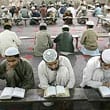
To understand the importance of this issue to the domestic stability and political outlook of Muslim nations, one need only look at Pakistan. Over the past three decades, Pakistan’s educational sector has steadily atrophied, a casualty of neglect and partisan politics. In its place has risen a parallel religious education system built around a specialized Islamic curriculum known as the Dars-e Nizami. Ostensibly, other subjects—including mathematics, history, and medicine—are also offered. But specialists such as Christine Fair of the United States Institute of Peace are quick to point out that this falls far short of a “wellrounded education,” since all the texts used for instruction, even those for supposedly “rational sciences,” are fundamentalist in nature, and many have stopped being taught altogether in Pakistan’s more than 10,000 madaris (the plural of madrassa).
Of those, Darul Uloom Haqqania in the country’s North-West Frontier Province is among the most prominent. In the past, Darul Uloom is known to have served as a training ground for Taliban leaders, as well as a recruiting center for Pakistani militants fighting in the disputed region of Kashmir. Today, Darul Uloom still casts a long ideological shadow; more than 2,800 Pakistani, Afghan, Tajik, Kazakh, Uzbek, and Chechen students are currently estimated to be enrolled there. Also prominent are the Ahlehadith madaris, located outside Lahore. These are known to have provided fighters to Lashkare Taiba, the Kashmiri terrorist group responsible for the bloody November 2008 assault on the Indian city of Mumbai.
By objective standards, the size of the problem is still small. Officials in Islamabad estimate that some 1.7 million students—just 1 percent of the country’s total population—are currently enrolled in the madrassa system. Yet if even a fraction of that number becomes radicalized enough to join the jihad against the West, it would be a boon to terrorist groups such as al Qaeda and a major challenge to the United States and its allies. And by all indications, that is precisely what is happening in places such as Afghanistan and Kashmir, where anecdotal evidence suggests that local radicals are being reinforced by new recruits from Pakistan’s Islamic schools.
Pakistan may be the most prominent example of this radicalization, but it is hardly the only one. Indeed, the same conditions that empowered the rise of a parallel, largely unaccountable educational system in South Asia’s most unstable state can be seen today throughout the rest of the Islamic world.
IT WAS NOT ALWAYS THIS WAY. Between the eighth and tenth centuries, Islamic thinkers pioneered significant new knowledge in mathematics and astronomy. The same period saw the translation and dissemination of classic books of literature and Greek philosophy throughout the Muslim world, and new inventions that aided technological and scientific discovery. Subsequent years, however, saw a systematic closing of the Muslim mind, as the “gates” of ijtihad—open, scholarly interpretation of Quranic texts—were “closed” and clerical authority replaced intellectual inquiry.
The cumulative effects of this change have been profound. Today the Muslim world suffers from a crisis of education—one that has systematically stripped that part of the world of the ability to compete in the “geography of ideas.” Exactly how deep this deficit runs is painfully clear. In its 2008 report on educational reform in the Middle East and North Africa, the World Bank notes that the countries of the region as a whole score far below countries like Chile and Estonia in every area of “knowledge”— from the skills and education level of their populations to the presence of an infrastructure that reinforces and rewards learning. Adult illiteracy in Arab states, meanwhile, stands at some 50 percent, nearly double that of the rest of the Third World.
Intellectual curiosity, meanwhile, is sorely lacking. As a whole, Arab countries translate “about 330 books annually, onefifth of the number that Greece translates,” the UN Development Programme’s 2002 Arab Human Development Report pointed out. “The cumulative total of translated books since the Caliph Maa’moun’s time (the ninth century) is about 100,000, almost the average that Spain translates in one year.” The Arabic world, in other words, is an intellectual outlier, an area of the planet that has failed to keep pace with others in the arena of thought, ideas, and innovation.
This state of affairs represents a major challenge for the West. According to the World Bank, “the population of 15 to 24 year-olds accounts for 21.5 percent (approximately 70 million) of the regional population, while another 45 percent is less than 15 years of age.” In practical terms, this means that more than half of the entire Middle East and North Africa is of school age and will continue to be for at least another generation. Yet America so far has paid far too little attention to this “youth bulge” or the means by which it could shape its upbringing and outlook.
TO ITS CREDIT, early on the Bush administration appeared to grasp the importance of education in the war of ideas now raging in the Muslim world. In its 2002 National Security Strategy, the Bush White House extolled the importance of “literacy and learning” and committed to expanding its stake in education in the Middle East and North Africa. And, reflecting this focus, by mid2008 the U.S. government’s total investment in basic education worldwide had risen to approximately $1.75 billion. Yet of that sum, merely a third (some $650 million) was spent in the Islamic world. And even those funds tended to be politicized—allocated based, above all, on the recipient country’s ability to provide “return on the dollar,” rather than its strategic significance in what has come to be known as the Long War.
For all of its protestations about Bush foreign policy, the Obama administration so far gives every indication of following in its predecessor’s footsteps. While still on the presidential campaign trail, then senator Barack Obama promised to establish a $2 billion Global Education Fund in order to “offer an alternative to extremist schools” abroad. Today, however, that plan remains more rhetoric than reality. The president’s first budget request, released publicly on May 7, included only a modest increase over existing levels for basic education worldwide, and contented itself with an amorphous pledge to continue “to study” the feasibility of creating a global education fund at some later date.
Perhaps the most emblematic—and egregious— example of this institutional neglect is Iraq. Militarily, the United States and its allies have succeeded in turning the tide of battle decisively away from al Qaeda and its affiliates, thanks in no small measure to the “surge” strategy adopted by the Bush administration in 2007. Intellectually, however, America has virtually taken itself out of the running in helping to shape a liberal, pluralistic order in the former Ba’athist state. That is because, since 2005, the U.S. government, as a matter of official policy, has funded no basic education programs there. Rather, educational projects—from the building of schools to the acquisition of moderate textbooks—have been relegated to the margins of the public policy debate over the future of the Iraqi state, funded at the discretion of individual military commanders.
Nor is any of this likely to change in the near future. As recently as this past April, in an internal bureaucratic decision, the Obama administration opted against allocating a nominal $20 million to fund basic education programs in Iraq. The reason? That such an investment is likely to carry more entanglements and political risks than tangible rewards for a White House interested in ending its involvement in Iraq as soon as possible.
It would be difficult to overstate the importance of this choice. Modernday Mesopotamia represents the cradle of the Islamic kingdom so desired by al Qaeda and other Sunni radicals. Osama bin Laden himself has termed Baghdad to be the “capital of the caliphate,” and Iraq the epicenter of the “Third World War” now raging between Islam and the West. The lack of serious, sustained American engagement in the mechanics of basic education in Iraq, therefore, is tantamount to an abdication of that arena to a host of hostile ideologies—and an invitation to America’s adversaries to engage where we have not.
Iraq, moreover, is a bellwether of sorts for Muslim education writ large. Of the world’s 49 majority Muslim countries and territories, nearly 40 percent currently do not receive American basic educational assistance. This chronic failure to engage the Islamic world on the battlefield of ideas, in turn, has permitted no shortage of radical ideologies and intolerant ideas to take root and wooed untold numbers of converts to the cause of America’s adversaries. It has also made the United States a marginal force in shaping the future of one of the world’s most volatile regions.
In his April address in Turkey, President Obama proclaimed his belief that the Muslim world can be a partner in “rolling back the violent ideologies that people of all faiths reject.” Making this vision a reality, however, will require the Obama administration to put its money where its mouth is and lay the educational foundation necessary for such a meeting of the minds.