


The sudden arrest of Zhang Youxia, holder of the highest military position in the Chinese Communist Party (CCP), is a seismic event — tantamount to a military coup in all but name.
Under the CCP’s rigid structure, the chairman of the Central Military Commission (CMC) must be the party’s paramount leader, which is Xi Jinping. Zhang, as vice chairman, was effectively the day-to-day head of the world’s largest army. Yet, at the first sign of discord with Xi, he was swiftly detained like a child in a playground scuffle. This isn’t unprecedented; Xi has already purged most top generals. Of the seven CMC members besides Xi, six are generals, and five have now been arrested, leaving just one standing.
The charges leveled against Zhang are a litany of bombast: Severely betraying the trust of the Party Central Committee and CMC; severely undermining the chairman responsibility system; severely fostering political and corruption issues that endanger the Party’s absolute leadership over the army and its governing foundations; severely damaging the CMC’s image and authority; severely eroding the political and ideological unity of the armed forces; and wreaking havoc on political construction, the political ecosystem, and combat readiness — inflicting severe harm on the Party, state, and military.
These accusations sound dire, laced with five instances of “severely.” But they’re hollow abstractions. In essence, his “crimes” are so trivial that they’ve been inflated with empty rhetoric.
Speculation abounds in unofficial circles. The gravest theory: Zhang was plotting a military coup against Xi. But if that were true, he’d have acted decisively, and with his intimate knowledge of CCP operations, he wouldn’t have been caught so easily without a whisper of resistance.
Another rumor points to incompetence in preparations for a potential Taiwan invasion. Yet, if an officer is merely underperforming, demotion suffices — it’s routine in any organization, including militaries. No rational state imprisons someone just for inadequacy.
Corruption is floated too, given the rampant bribe-for-promotion culture in the PLA and massive procurement kickbacks. But Zhang’s official indictment mentions nothing of graft, so that’s unlikely.
The CCP operates like a mafia syndicate, shrouded in secrecy, so the truth may never surface.
A more plausible angle: disloyalty to Xi. Loyalty is subjective; if Xi dislikes someone, disloyalty becomes the verdict. Still, if a superior mistrusts a subordinate, dismissal is the norm — not arrest.
Of course, these are all conjectures. The CCP operates like a mafia syndicate, shrouded in secrecy, so the truth may never surface. Our role here is calm analysis based on history and theory, not fabricating “facts” from bias.
First, Xi’s grip on power remains ironclad and unshaken. His institutional roles as CCP general secretary and state president confer supreme authority, now more stable than ever. This is a hallmark of the CCP’s evolution. In the 1980s and 1990s, the system was immature; titles like general secretary or president meant little compared to the raw power held by elders. Deng Xiaoping and his clique could discard leaders like yesterday’s trash. (RELATED: Xi Jinping: ‘The Reunification of Our Motherland Is Unstoppable’)
From Jiang Zemin’s era in the late 1990s onward, elder interference was phased out. Recent rumors of veteran Song Ping complaining to Xi about overly strict controls on retirees underscore this shift. Without meddlesome elders, the CCP has “normalized”: the general secretary wields absolute, unchallenged authority. A military coup or ouster lacks legitimacy under this framework and couldn’t gain traction. Conversely, the general secretary can arrest any underling without legal obstruction or upheaval — the system empowers it.
This leads to my second point: the only legitimate way to topple a general secretary is by accusing him of “rightism” — veering toward Western paths, “colluding with enemies,” or violating communist ideology. Such labels justify removal. But extremism on the left — radicalism — is no sin. Xi knows this well. His policies relentlessly purge Western influences and reinforce CCP absolutism, making him untouchable. No pretext exists for his ouster, ensuring party-wide support against any illegal challenge. (RELATED: Hong Kong, Once Free, Now Suppresses Any Dissent)
So, why purge Zhang? Recall the history and purpose of communist purges, starting with Stalin’s 1930s Great Terror in the Soviet Union, where he arrested and executed most generals. In totalitarian communism, whoever controls the guns poses a potential threat to the supreme leader — hence the army’s status as the paramount concern. That’s why Stalin and Xi target generals more than ministers. Did these generals ever actually rebel? From known history in the USSR and China, no. The CCP’s “party commands the gun” isn’t a mere slogan; it’s an enforced reality. No top general can mobilize troops, arms, or ammo against the leader without the paramount’s consent.
Yet dictators purge anyway — out of paranoia, seeing ghosts in shadows, convinced of plots against them, especially from the military. It’s a delusion of persecution.
Another layer: both Xi and Zhang are “red second generation” — offspring of revolutionary founders. Conventional wisdom holds that red princelings protect each other, viewing the state as their inheritance. That’s true — until one becomes the top dog. Then, it’s reversed, akin to imperial siblings: the heir apparent slays rivals to secure the throne. They might usurp power or know too many secrets. Think about Kim Jong-un’s assassination of his half-brother. From Xi’s vantage, red princelings are threats: they know his vulnerabilities and wield social clout.
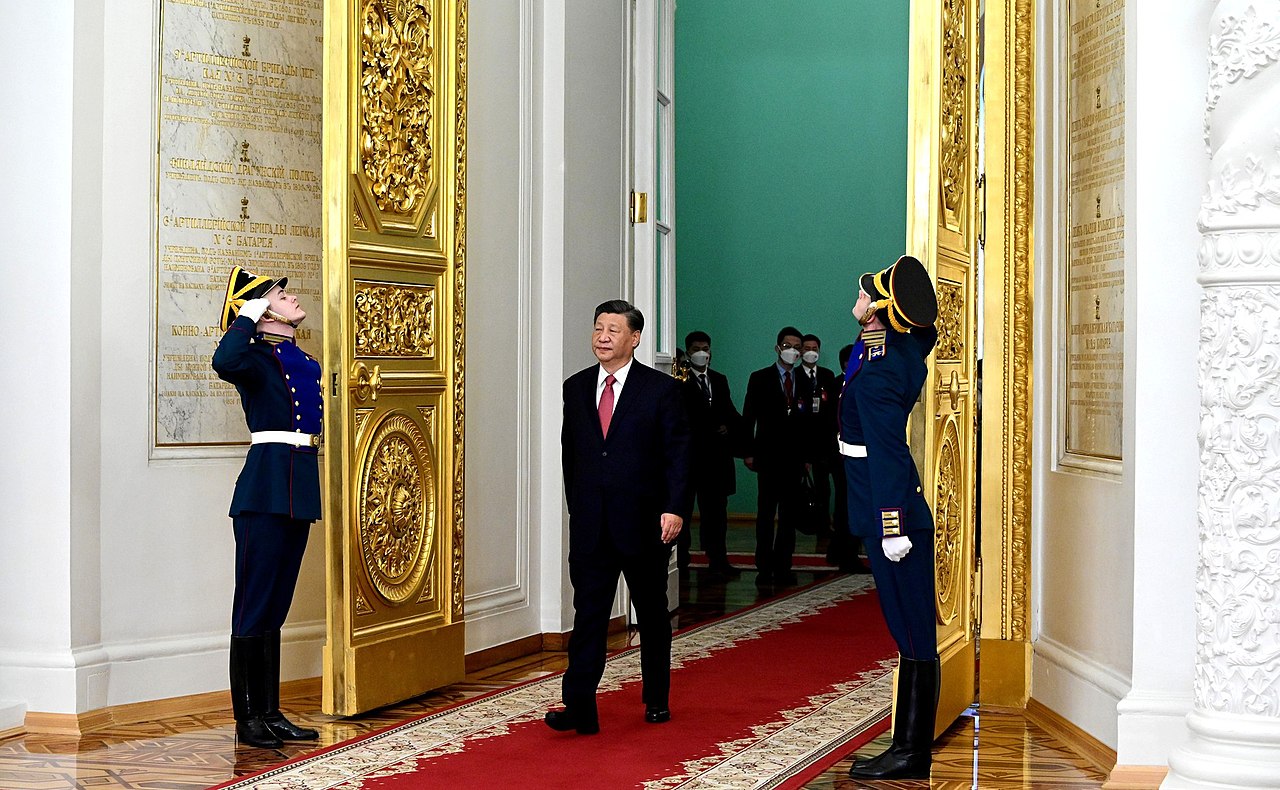
Zhang’s arrest reveals China’s paradoxes. It’s the world’s top economy by purchasing power, with cutting-edge infrastructure. In tech, it’s America’s sole rival; AI dominance will be a U.S.-China duel. Yet politically, it’s a cauldron of darkness and brutality. CCP spectacles — grand halls, seas of red flags, lockstep marches, even waitresses serving officials with military precision — mask the absurdity: serious matters treated frivolously, frivolous ones treated seriously.
High officials enjoy unparalleled perks: power, wealth, sexual favors, organ transplants on demand, even surrogates for childbearing. But they’re unfree, under constant surveillance, liable to vanish or execution at whim. They know this yet submit because of being completely brainwashed, awaiting doom without resistance — like every purged general. (RELATED: When Parenthood Becomes a Purchase)
This regime floods global markets with overcapacity, demanding the world bend to its rules. Domestically, it denies citizens basic rights — and treats its own elites no better, arresting them arbitrarily. It’s uniquely tyrannical worldwide.
What impact does arresting the PLA’s top leader have on China? Minimal, beyond gossip fodder. Internationally, it’s a footnote in media — world-weary eyes glaze over endless CCP infighting. Contrast U.S. feats: swiftly capturing Venezuela’s dictator or obliterating Iran’s underground nukes. The CCP excels at internal purges; don’t overfocus. The real global concern: this low-rights, mobilized juggernaut disrupting markets and rewriting rules. Are democracies ready to counter it?
READ MORE from Shaomin Li:
China’s Spy Network in America: A People’s War Against an Open House
Shaomin Li is a professor of international business at Old Dominion University.
Image licensed under Creative Commons Attribution 4.0 International.



















