

No one’s really sure how long ago the blind poet sang of that famous man of “twists and turns” whose cunning has captivated the centuries since. Eratosthenes claimed that Homer lived a mere 100 years after the events he described, which, by his timeline, would make the text almost exactly 3,000 years old today. Herodotus, the famous historian, thought that idea was hogwash and posited the text couldn’t have been written before 850 B.C.
But there’s a problem with even Herodotus’s date: The Greeks didn’t even have an alphabet until the 8th century B.C., which at least makes writing the thing down a bit difficult. That wasn’t really a problem for Joseph ben Matthias (a Jew from the first century A.D. who is better known as Josephus); his assertion that Greeks were rather poor writers until relatively late in their history is the reason most of us are told that Homer’s poetry began as an oral work, rather than as a written one. Modern scholars are even more stingy. Perhaps, they say, The Odyssey wasn’t written until 650 B.C. Perhaps it wasn’t even composed by Homer.
No one is saying that Nolan needed to have his star-studded cast speak ancient Greek or Beowulfian Old English, but maybe we could have elevated things just ever so slightly.
Bernard Knox (writing some 30 years ago) went with the most obvious read of the situation. Homer authored The Odyssey, probably not later than 700 B.C. (given that we have archeological evidence of the story from that era), and he did so by writing the thing down — archaic language, non-chronological order, and all.
But historical quibbles over dates and the manner of dissemination aren’t as important as the fact that this tale has captivated all of us so thoroughly that we keep retelling it millennia later. Petrarch actually tried to learn Greek just so he could read it (he failed, if that makes you feel better about your own linguistic forays). If you were to read into the weeks of squabbling we’ve had over Christopher Nolan’s portrayal of the tale, you might conclude that modernity still deeply cares about a text most of us haven’t touched since 9th grade.
At this point, you’d have to live under a rock (or at the very least, spend very little of your time on the internet) not to know the litany of things wrong with Nolan’s epic remake: Helen isn’t white, a Greek soldier is played by the 118-lb Ellen Page (a woman convinced her name ought to be Elliot), and the whole text is based on Emily Wilson’s “feminist” and dumbed-down translation of the work. Nolan, the critics complain, has given in to the demands of the woke mob, and he’s ruined the ancient tale as a result.
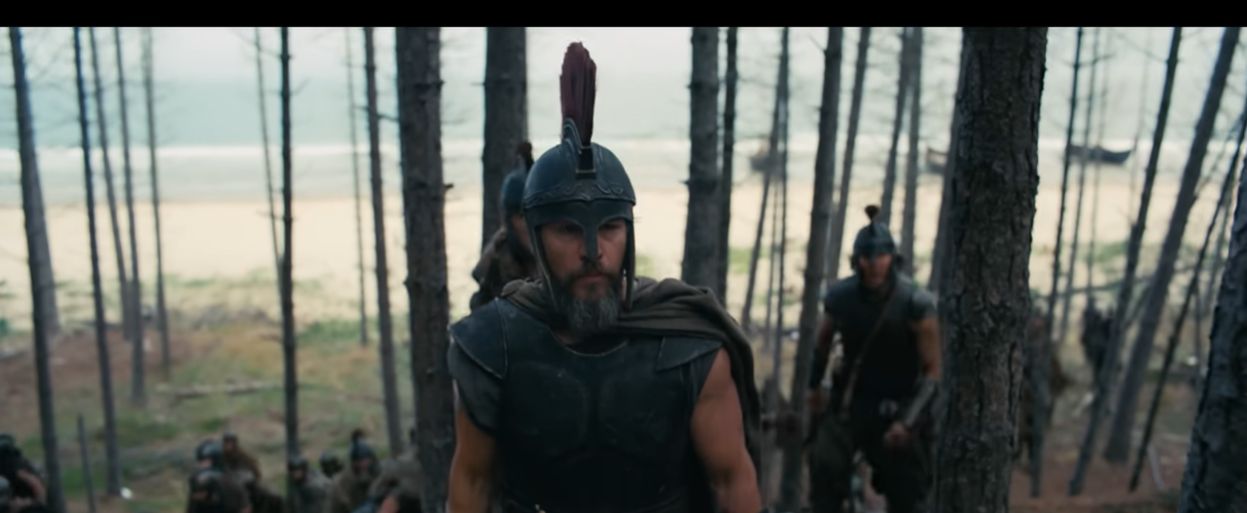
The box office, however, doesn’t seem to care. The film grossed $124.5 million domestically in its opening weekend. After all, Christopher Nolan directed the thing, and it’s nothing if not cool to watch. The average moviegoer apparently doesn’t particularly care if the armor Odysseus is wearing isn’t a precise reconstruction of what we think a Greek might have worn in 2000 B.C.
So is all the hullabaloo just overblown squabbling by purists who were already planning on hating the film anyway? Well, possibly. But the purists might have a point.
One of the reasons, for instance, that Nolan’s retelling of the story rankles purists is that his screenwriters did not shy away from modern vocabulary like “mum,” “dad,” and “f–k off.” At one point in the trailer, Odysseus yells to his Greek hordes of soldiers, “Let’s go!” There are no thees, thous, or archaic vocabulary.
From Nolan’s perspective, this isn’t exactly a problem. It makes his protagonist relatable — or in the words of the director: “It might bite me on the ass, but I wanted an earthy narrative. To me it was a no-brainer.” What his decision to Americanize and modernize the language doesn’t do is honor the original art.
Homer, you see, didn’t write (or sing, if we’re adopting Josephus’s theories) in a Greek that anyone ever spoke. He pulled words from all sorts of dialects around Greece and from ancient languages nobody spoke anymore. It would be as though Stephen King sat down to write an epic tale and decided to employ Old English terms like “heort,” the more Shakespearian “methinks,” and the Scottish “dreich.”
The difference is this: Homer’s approach shrouds his tale in mystery. The reader or listener always has the sense that he doesn’t quite grasp the meaning of the story. The more time he spends attempting to understand the text, the more he learns about man’s nature, the kinds of relationships we form, and what Homer believes should be our relationship with the gods. By stripping away that sense of mystery, Nolan’s approach risks tricking his viewer into thinking he’s understood everything about the story after just a first pass — which is tragic, because the story itself is a deeply instructive one.
No one is saying that Nolan needed to have his star-studded cast speak ancient Greek or Beowulfian Old English, but maybe we could have elevated things just ever so slightly to remind people that, you know, this is an epic and ancient tale, not a Marvel movie.
This is why, unfortunately, modernity can’t tell these ancient stories convincingly. We have a bad habit of stripping away mystery to try to make characters “relatable.” Odysseus wasn’t supposed to be relatable, after all, the average Greek wasn’t getting hit on by an enchantress and being offered immortality. No, Odysseus was supposed to be a hero.
The result is this: Nolan’s film is breathtaking, but, as one reviewer at the Spectator pointed out, it just lacks depth. Perhaps someone else will come along and make the definitive cinematographic retelling of the blind bard’s ancient tale; unfortunately, Nolan didn’t.
READ MORE from Aubrey Harris:
A Gay Couple Wanted to Abort the Baby. Now They’re Suing His Surrogate Mom.
Just Defund Planned Parenthood Already
The King Is the Defender of ‘the Space for Faith.’ Here’s Why That Shouldn’t Surprise Anyone.