


“You know, I’ve seen a lot of people walkin’ ’round /
With tombstones in their eyes …
But the pusher don’t care if you live or if you die.”
When Steppenwolf released “The Pusher” in 1968, it wasn’t a riff about casual hippie vice, but a cautionary tale about the business incentives of hard drugs. The pusher doesn’t moralize. His job is simple: keep the junkie hooked and the money flowing.
But what happens when the pusher gets hooked — when he gets high on his own supply? Things spiral out of control, and this is exactly the dilemma our out-of-control government spending has locked the American people into. (RELATED: Minnesota Welfare Scandal Is the Fraud Warning Americans Finally Noticed)
First, look at the demand side of this Janus-faced addiction. Minnesota’s smoldering welfare-fraud scandal is another shivering symptom of the government’s spending habit. The staggering scale of the welfare scam allegedly committed by members of Minnesota’s Somali community is, according to one federal prosecutor, estimated to be $9 billion in Medicaid fraud alone since 2018. The City Journal reported that taxpayer-funded programs were particularly prevalent within the state’s Somali community. These programs were funded with little verification, permitting the fraudsters to collect vast sums with little oversight. (RELATED: How Medicaid Made a Billion-Dollar Crime Inevitable)
Many of the “business owners” later charged had direct or familial ties within the Somali community, and prosecutors alleged that portions of the stolen funds were funneled to organizations linked to al-Shabaab, a Somalia-based, al-Qaeda-linked Sunni Islamist terrorist organization, considered by U.S. Africa Command (AFRICOM) to be “the largest, wealthiest, and most lethal Al Qaeda affiliate in the world today.” But instead of confronting the obvious malfestence head-on, Minnesota officials and their pals in the media often hesitated to ask basic questions, fearing accusations of racial bias. This reluctance, of course, allowed the fraud to metastasize and expose the obnoxious virtue-signalling of the entire redistribution enterprise beneath it.
And no incentive structure is more corrupting than spending other people’s money on other people — especially when political reward flows from distribution rather than results.
Milton Friedman warned this would happen. “One of the great mistakes is to judge policies and programs by their intentions rather than their results,” he wrote in Free to Choose. Government, Friedman argued, should be evaluated by incentives, not moral claims. And no incentive structure is more corrupting than spending other people’s money on other people — especially when political reward flows from distribution rather than results.
But as with any addiction, the supply side is the most destructive, and comes in all the money taxpayers lose in a country that has run up over $38 trillion national debt, is a full-blown addiction — government borrowing and spending like a dope fiend, with no real plan for restraint or rehab on the horizon. Here we have a drug-addled incentive structure that rewards distribution over accountability. (RELATED: The Bureaucracy Has Become the Mission)
The Congressional Budget Office’s (CBO) January 2025 report projects interest costs alone will surge from about $952 billion in 2025 to nearly $1.8 trillion by 2035, blowing up budgets from Portland, Maine, to Portland, Oregon. This is Sid Vicious-level dependence. (RELATED: How Did We Reach a $38 Trillion Debt During a ‘Shutdown’?)
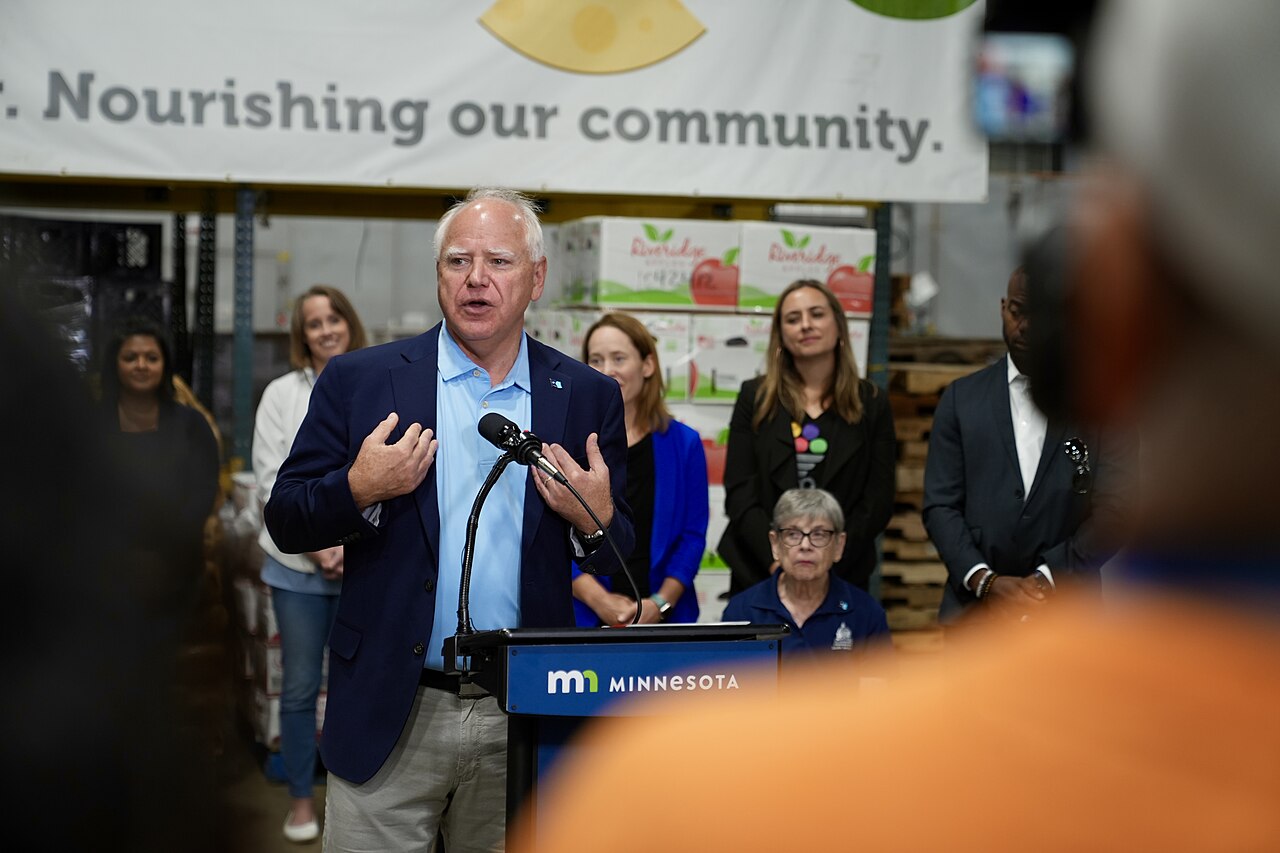
But why do we continue to let this happen? Because we’re like a battered family members left to live with an addict, we argue about the secondary details: whether the press was slow (not really), whether independent YouTube journalists are reliable (they can be), whether critics are unfairly targeting immigrant communities (they are not), and whether Tim Walz is an incompetent empty suit (of course). These arguments are sideshows to the big show: A system in which the government is both pusher and addict is inherently unstable. (RELATED: Walz Can’t Escape the Somali Fraud Scandal)
This two-faced addiction will always prioritize distribution over effectiveness or efficacy, as the government will always prioritize expanding the flow rather than improving outcomes.
How much more junk can we shoot into our veins?
This is what a government high on its own supply looks like. Instead of borrowing to build, it has to borrow to maintain the high. Every dime we spend servicing the debt is a dollar not spent on infrastructure, defense, etc. But addicts don’t think long-term, only their next fix.
Alexander Hamilton knew all about debt and warned that it is the “natural disease of all governments.” He knew that sober borrowing could be useful, but only when the government had a plan to repay the debt.
But does anyone know Washington’s plan to remedy this problem?
Of course not, because our government’s pusher/addict model is going to put us on Skid Row, but that doesn’t matter as the pusher couldn’t care less if the customer dies and the junkie just wants another hit. All the while, it is we, the taxpayers, who just walk the streets getting mugged year after year.
READ MORE from Pete Connolly:



















