


Many news organizations carried the story of the release of Bar Kuperstein two years after he had been kidnapped by Hamas on October 7. Kuperstein was a young security guard at the Nova Festival, the music festival targeted by Hamas for its fat genocidal possibilities, with sides of rape, torture, and kidnapping. After taking some time to begin to reacclimate to freedom and family, Kuperstein began to share his and his family’s experiences.
We are all in God’s hands. And this insight pierced the heart of her son’s captor. For one moment, they were on equal ground.
Hamas’ strategy to destroy Israel has been based on the perceived weakness of the West for enduring the discomfort of war. As is well attested by their own words, they wish to win by grinding down the political support for the fight against them, both in Israel and in Israel’s supporters in the rest of the world. Protests from the West, and even better, from within Israel itself, are demoralizing to the fighting spirit. In particular, when despairing hostage families protest, demanding that their government capitulate to the demands of the hostage takers, this is prime click bait and especially demoralizing to their hated opponents.
Kuperstein explained to the press how Hamas tried to get his family to publicly denounce Israel’s fight to rescue the hostages and end the rule of the hostage-takers. They pushed the despair button — we have your beloved son, and no one can stop us from doing to him whatever we want if you don’t comply. Kuperstein said:
During the period I was held captive, one of the terrorists called my mother and told her she was not doing enough to free me and that if she wanted to see me again, she needed to go out, file complaints at The Hague, and really fight.
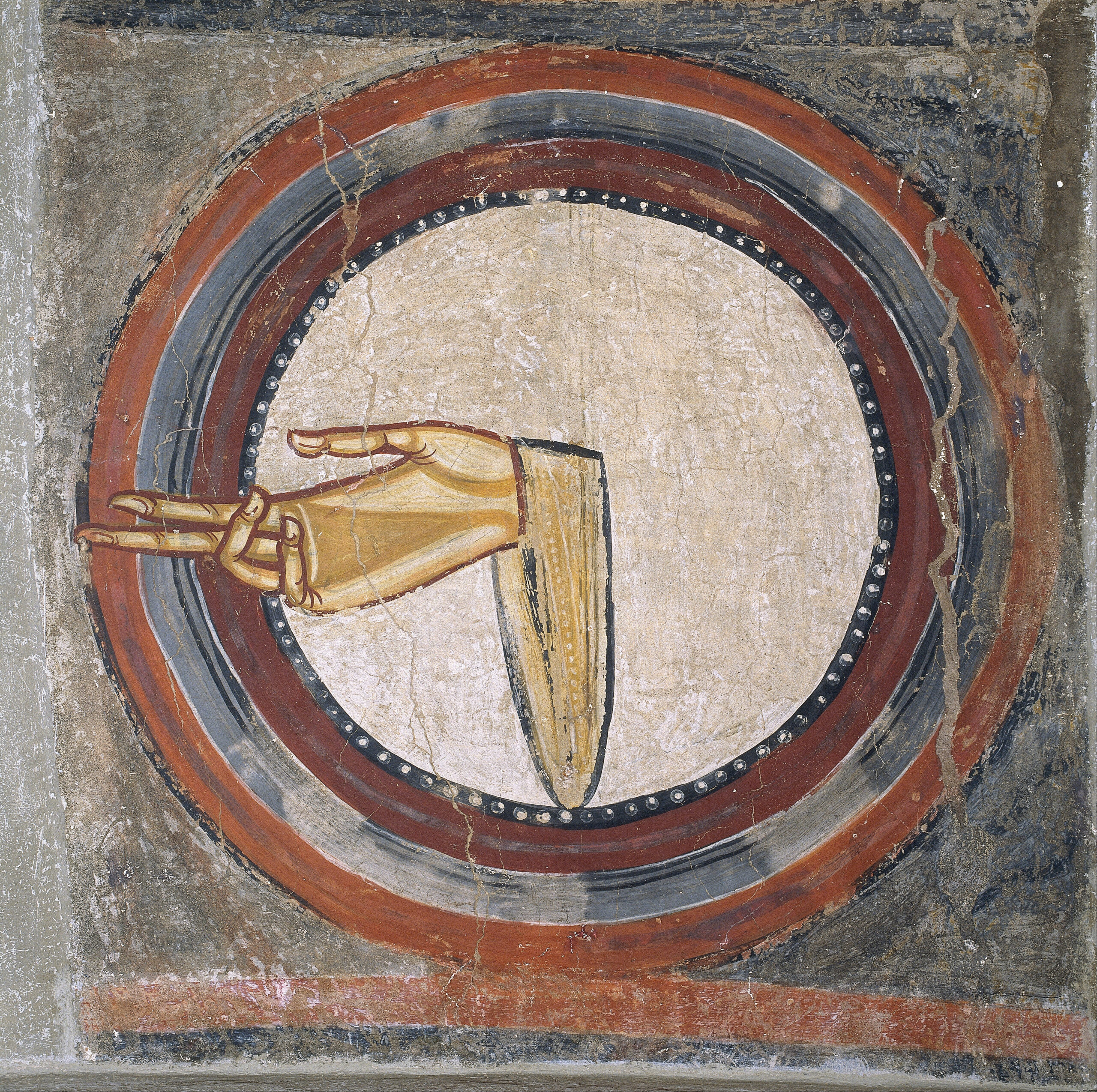
Kuperstein’s captor said to his mother that she had no choice, because her son was in their hands. Kuperstein continued: “She simply told him the following: ‘My son is not in your hands but always in the hands of the Creator — and you are too in the hands of the Creator.”
This was not the expected answer. In Kuperstein’s words: “There was a moment of silence because the terrorist did not know what to answer and then he replied, “All honor to you, madam.”
Kuperstein showed his interviewer the bracelet his mother had worn all the days of his captivity. On it were inscribed the words: “My son is always in the hands of the Creator.”
Kuperstein added: “Since then, we carry that motto with us all the time.”
What is most striking about this story is its redemptive core. Redemption is the great theme of the biblical tradition. Egyptian slavery was meant to end. So too the slavery to sin and evil is meant to end.
As the West distanced itself from religion, pained by its historical failures and the dreadful sins done in its name, it has lost its grip on what redemption looks and feels like. Estranged from the accumulated experience of the traditions that mapped how to approach it, and inspired us to anticipate it and work for it, redemption has increasingly seemed like so much gaslighting of party propagandists, something only the gullible take seriously.
To the post-religious West, it seems something mythical, a fool’s belief. And so, we ditch it as the superordinate goal of our endeavors, the strategic endpoint towards which all things come together, and where coercion is irrelevant, as the powerful direction from within pulls people into a peace that seemed impossible only moments before.
In place of the Redeemer, we turn to our own power, alone and unguided, as if it could provide either lasting comfort or guide us towards its applying it in a way that will not destroy us.
But power alone can do neither.
The fact that Churchill and Roosevelt and Eisenhower all used the religious vision to lead during World War II is telling. They were in the business of applying power, but realized how little power can be used for the good without the redemptive vision lodged in the souls of those who would bear power’s brunt.
Civilization trembled in the Thirties before the dictators. Those whose faith had been shattered by the Great War were waiting around dispiritedly to find the place eventually assigned to the tyrants that would at last turn his sights on them. In the Thirties, the young men of Oxford in Britain proposed and passed a resolution that they would not fight for God or country. The spirit in France was listless and defeatist.
But leadership arose in Britain and America that grasped the gravity of the moment, and that the redemptive religious tradition of the West as a whole called upon peoples’ souls — and they were equal to the calling. Even Stalin, nearly down for the count in early 1942, invoked God when speaking with Churchill in their Moscow meeting. Glum when informed that an invasion of Europe was not yet possible, his mood changed when Churchill explained the plan of the great North African pincer movement that would capture more enemy soldiers than Russia would at Stalingrad. He said to Churchill: “May God prosper this undertaking.”
It would be utter foolishness to think that Stalin had converted. Yet it is foolish as well not to see that the only thing adequate to describe the change from despair to hope is the ancient language of faith, deep in our bones and the words to which we naturally turn.
When modern Islamists saw the jaded disregard of religion in the modern West, they saw it as a sign of weakness, of absence of the inspiration necessary to face the crises that are the stuff of human life. People with nothing to die for have nothing to live for. There is nothing they won’t give up just to be left alone. The aggressors smell the fear and they salivate.
This was in the mind of the Hamasnik pushing Bar Kuperstein’s mother to betray her cause or else. The Jews, in his mind, are internally weak. Their faith was too life-affirming and when pushed, there would just be mush. Threaten the mother of a child kept for two years in terror tunnels and she will do whatever he pushes her to do.
He asserted his control over Bar’s life and hers, aiming to break whatever pitiful resolve might be there. But there was no mush, there was no fear. And even more: she asserted that the captor’s power was illusory. She did that not by braggadocio, but by the humility and reverence of the true power from which our human power entirely derives. She said, no, Bar and you and I are all under the control of God.
And the suddenly, there was wholeness.
I have no idea if that moment had a lasting effect on the Hamasnik. Perhaps, perhaps not.
But there is more redemption in the air today. The worshippers of power, in all the places they believe they control, haven’t got the story yet. But America is being reinvigorated by faith and the role it plays in our souls. We feel its liberty when we know ourselves released from the distortion caused by coercion. We know that our soul is a realm where coercion does not belong. And knowing that, we know we are free.
And not only in America. In Arab Middle East, many are choosing to elevate their own faith beyond the reach of the coercers whom they know now to be their enslavers. They find this elevation true to their own religion’s deepest teachings. Anyone who observes the media in Arab lands today and who compares it to what it was 20 years ago can see the magnitude of the change, especially as it works out in places like Morocco, Bahrain, the UAE — and even in Riyadh. Now there are many hopeful signs in Syria. And with the abject, humiliating failure of the coercive project of Iran and its clients, the new wind is blowing stronger.
There is no more basic message from our faith tradition than that we are all in God’s hands. This was central to George Washington’s faith, and he often spoke of America being established by the hand of Providence. Lincoln spoke of God having His own purposes, revealed slowly in the terrible events of the Civil War.
It is also a great central idea, flowing from the beginning of the shared biblical tradition. In a world created entirely by God, every least occurrence traces back to God’s purpose manifest in His work. Our moral agency alone allows us to fully realize the divine image granted humanity and which is the core of our human identity. By embracing it, we free ourselves from all Pharaoh’s and devote ourselves to the One whose power and beneficence are co-equal.
A mother, seemingly powerless, confronted by merciless power over the most precious thing in her life, saw piercingly to the core of this matter. It is the key to every matter in this world. We are all in God’s hands. And this insight pierced the heart of her son’s captor. For one moment, they were on equal ground.
And there lies our hope. Seen from the Above, there is nothing to stop peace, plenty, and wholeness.
We all have the power to see from Above. We all are in God’s hands. There we are one.
READ MORE from Shmuel Klatzkin:
In Defense of a Judeo-Christian America
Uncompromising Principles, Moderated Souls



















