
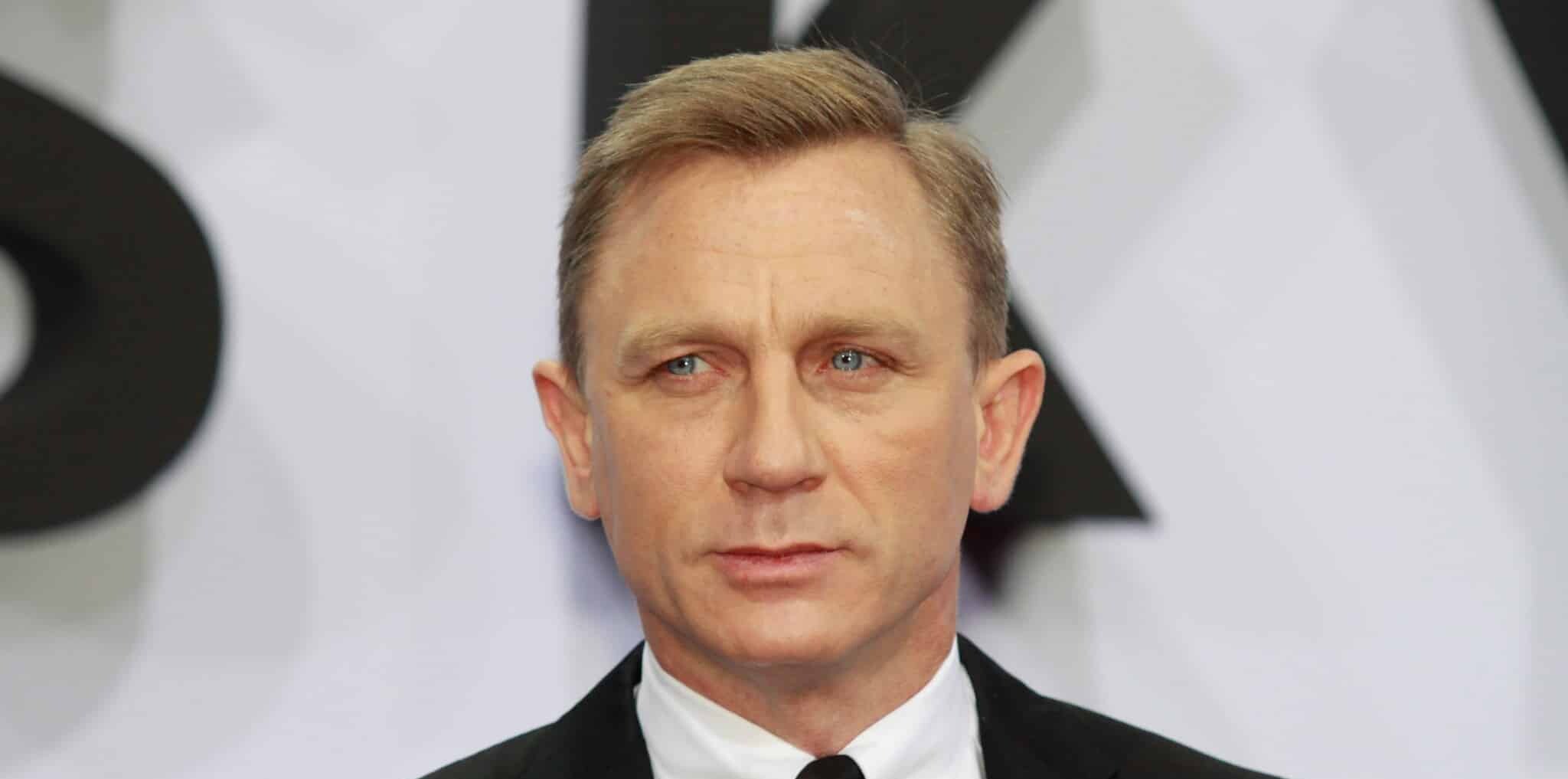


Deceive my parents? On the contrary, I was the most well-behaved of teens. But in a desperate moment as a 15-year-old, I deliberately disobeyed my mother. I’d been dropped off at Atlanta’s new multiplex movie theater — “multiplex” in those days meant only four screens, but this was 1965. I’d been given permission to watch, well, I no longer remember, something innocuous and suitable for a 15-year-old. And with an eye cocked knowingly at the title featured in huge letters on the marquee, I was specifically instructed not to see the James Bond movie.
But I couldn’t help myself; the call of Bond was simply too great, and soon I was settled comfortably, giant buttered popcorn and large Coke in hand, watching James Bond escape pursuit with a jet pack, then the opening credits roll as Tom Jones belts out “Thunderball.” I can’t exactly claim the moment as life-changing, movies rarely are, but the next several hours came awfully close. I’d been reading the Bond books for some years, but this was my very first James Bond movie.
I won’t go into all the ways this one movie exerted such an outsized influence on me personally, but as I read article after article this week about the Amazon acquisition of the Bond movie franchise, I can’t help thinking that I’m far from the only one still mesmerized by the whole Bond phenomenon. Here at The American Spectator, our own resident movie expert, Lou Aguilar, has written wistfully of the decline of the Bond franchise and the heroic Britain once epitomized in the Bond books and films. Our John Mac Ghlionn has asked, “Can Jeff Bezos Save James Bond?” (READ MORE: The End of Bond and Britain)
This morning, over at that other Spectator, Madeline Grant hopes, with a nod to the Trump era, that Bezos can “Make Bond great again.” And the National Review’s Mark Antonio Wright finds the answer in returning the Bond franchise to the 1950s, to the Cold War spy games of Fleming’s first books. These, of course, are all conservative voices. I’m ignoring those progressive film critics whose solution for Bond’s future consists of doubling down on the wokery that increasingly crippled and finally killed the Daniel Craig character.
There’s an interesting and persuasive convergence in the prescriptions offered by Grant and Wright. Grant’s suggestion that the director’s chair should be given to someone who actually likes the James Bond character is an obvious point of departure and a repudiation of much that has made the last Bond movies so franchise-killingly awful. But more fundamentally, she calls for having the Bond character once again do battle with real villains, Putin’s Russia, for example, or Xi’s China, instead of the increasingly denatured comic book baddies of the last several decades.
One can only hope. As someone who wishes to enlist popular entertainment in the causes we conservatives hold dear, I’m all for making Bond great again. But this might be a heavy lift for Bezos, who still seems stuck between his woke past and, in his words to the Washington Post staff, a more “balanced” future. Wright’s “return to Bond’s Cold War roots” suggestion might make this doable. If taking on Putin, Xi, or the Ayatollahs is a bridge too far for Bezos, then perhaps one might make a start where the Bond books began, battling the Soviet Union’s assassination experts, “Smersh.” (RELATED: Jeff Bezos Launches Intervention at the Washington Post)
I would take this a step further. When Bond first emerges in Fleming’s 1953 novel, Casino Royale, he’s already a veteran secret agent, someone whose World War II service saw him serving as a commander in the RNVR, the Royal Navy Volunteer Reserve. In other words, he’d had what we were once pleased to term “a good war.” Perhaps, then, Bezos might give the Bond franchise a genuine reboot, something much more substantial than the lame attempt in the 2006 movie version of Casino Royale.
However lacking in detail Fleming left things, Bond clearly began his career fighting Nazis, perhaps in a unit similar to Ian Fleming’s own wartime godchild, the intelligence-gathering unit “30 Commando.” Or perhaps he served with Lord Jellicoe’s famous “Special Boat Regiment” or with Blondie Hasler’s “Cockleshell Heroes.” Maybe he also fought the Japanese, serving with Australia’s Force Z. Or, this is James Bond after all, perhaps he did all of these things, and more, including facing down Nazi agents across a card table in Lisbon.
The beauty of this is that the Nazis — the real Nazis, not some Rachel Maddow fantasy — still serve as the enemies everyone can agree to hate. Done with affection and respect for the Bond character, it would pick things up and lay a foundation for a renewed series carried forward through the 1950s. It would also divest Bond of the science fiction campiness that has become the bane of the franchise.
To those who would argue that there’s no market for mining the past in this fashion, I would offer the success of SAS: Rogue Heroes as a refutation, or perhaps even Masters of the Air. Good historically-based stories still sell, and properly cast and presented with respect, they appeal across every demographic. And World War II is just close enough to the present to offer room for Q and his gadgets. Bond can still swim underneath enemy ships and jump out of airplanes or even fly them. Think Indiana Jones, another ruined franchise, for what could be.
There would still be room for many of the best features of the evolved Bond universe. I would hate to see Bond deprived of beautiful heroines or villainesses; my 15-year-old self conceived a massive crush on actress Luciana Paluzzi’s villainess, Fiona Volpe. Partnering Bond with a character akin to the OSS’s Virginia Hall offers all sorts of possibilities. Exotic locations would not be hard to find across the span of a world war, and Bond could still suit up from time to time in his dinner jacket for a battle across a card table.
For those of us who’d like a conservative political message, this approach also has an appeal. After so much division in our politics, so much uncertainty, so much loss of confidence, maybe it’s good to valorize once again a time when we stood for something more than the latest political or cultural fads. Maybe, rooting for a heroic character in a heroic time, we could take a first step toward recapturing something once universally admired.
Perhaps, instead of a Bond wallowing in self-pity, we might be inspired by a character who categorically rejects victimhood, who instead symbolizes the virtues we once strove to inculcate in our youth. And the right kind of movie maker might nudge viewers to see a contemporary relevance. Parallels between Hamas and Hitler, or Communist China and Imperial Japan, after all, should be blindingly obvious.
Some would still argue that this is all silliness, that serious people shouldn’t waste their time on such frivolity. But as I’ve argued before in these pages, “culture eats politics for breakfast.” We’ve wallowed in victim narratives to our great cost, allowing progressive wokery to march through our institutions. We’ve impoverished ourselves culturally and, in doing so, disadvantaged ourselves politically. We’ve started to turn things around, but there’s a long way yet to go.
In one of the most classic scenes in the entire Bond franchise, the hero is bound to a golden table, a cutting laser progressing slowly toward his crotch. He asks Goldfinger, “Do you expect me to talk?” to which Goldfinger responds, “No, Mr. Bond, I expect you to die.” For far too long, the Bond movies, the longest-lived heroic saga in modern entertainment, have been tied to Goldfinger’s golden table, in the hands of producers and directors who’ve tried over and over again to kill him off. If Jeff Bezos has the sense to untie him, release him from victimhood, and allow him to be a hero once again, we’ll be all the better for it.
READ MORE from James H. McGee:
Suppressing Speech in Germany: 1933 vs. 2025
Trump, Zelenskyy, and Ukraine: A Tale of Frustration
Vance and Ukraine at the Munich Security Conference
James H. McGee retired in 2018 after nearly four decades as a national security and counter-terrorism professional, working primarily in the nuclear security field. Since retiring, he’s begun a second career as a thriller writer. His recent novel, Letter of Reprisal, tells the tale of a desperate mission to destroy a Chinese bioweapon facility hidden in the heart of the central African conflict region. A forthcoming sequel finds the Reprisal team fighting against terrorists who’ve infiltrated our southern border in a conspiracy that ranges across the globe. You can find Letter of Reprisal on Amazon in both Kindle and paperback editions and on Kindle Unlimited.



















