
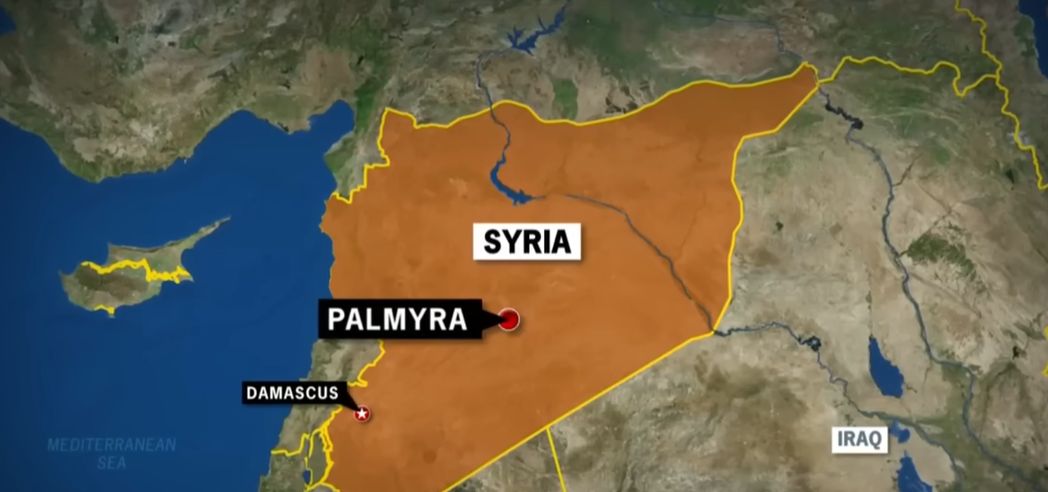


A week ago Saturday, three Americans — two members of the Iowa National Guard and an interpreter — were killed by an Islamic State fighter who was part of the Syrian security services. In retaliation, U.S. forces struck over seventy ISIS targets on Friday. Jordanian air forces reportedly aided in those strikes.
As long as we don’t respond by condemning that ideology and proving that it is false, this war will go on.
ISIS — the Islamic State in Iraq and Syria — is also known by several other names. In the Middle East it’s also known as the Islamic State in the Levant. It appeared in Afghanistan as ISIS-K in that country’s Khorasan province. It is also known as “DAESH,” its acronymic name in Arabic.
ISIS began as an al-Qaida offshoot funded by Abu Musab al-Zarqawi in 2004. Al-Zarqawi, with Usama bin Laden, were the founders of al-Qaida. The group changed its name to ISIS and launched terrorist attacks in Iraq and Syria. It’s leader, Abu Bakr al-Baghdadi announced a caliphate, claiming it ruled territory from Aleppo in Syria to Diyala in Iraq. It carried out terrorist attacks as far away as Paris and New York City.
Beginning in 2014 the U.S. led a coalition of nations (including the United Kingdom, France, Jordan, Turkey, Canada, and Australia) to attack the caliphate. By December 2017, the caliphate had lost about 95 percent of its territory including Mosul in Iraq and in December 2019, President Trump announced that ISIS was defeated. It wasn’t.
ISIS still lives and “inspires” terrorism. It may or may not be linked to various acts of terrorism but its ideology — which requires the killing of Jews and Americans — is alive and well. The massacre of Jews at Bondi Beach in Australia was reportedly carried out by a father-son team of gunmen who were “ISIS-inspired.”
When President Trump announced in 2014 that he was keeping U.S. forces in Syria his supposed aim was to protect that nation’s oil fields. The Pentagon promptly said our forces were aimed, instead, to fight ISIS.
As of this month, there are about 1,000 U.S. troops in Syria which is down from about 2,000 a year earlier. This year Trump has made a “peace” of sorts with Syria’s new leader, Ahmed al-Sharaa. But al-Sharaa is a former al-Qaida leader who once had a U.S. bounty of $10 million on his head. This isn’t someone to trust in any respect and certainly not to fight terrorism.
We are apparently playing “whack-a-mole” in Syria as we did for twenty years in Afghanistan. We are apparently having the same level of success in Syria which is to say little or none.
We fought the Taliban for 20 years until former president Joe Biden created a debacle that suddenly withdrew our forces in August 2021. He then admitted about 70,000 Afghans to the U.S. without any real vetting to distinguish between friend and foe. We have begun to pay the price in lives with an Afghan killing one U.S. national guard troop in Washington, DC and severely wounding another.
The question boils down to how, whether and for how long we should keep troops in Syria.
We have a vital national security interest in suppressing terrorism everywhere, but we cannot maintain troops everywhere and forever. We and the Israelis have struck at Houthi terrorism but the Houthis are now apparently sponsoring Somali pirates to raid shipping in the Red Sea and the Indian Ocean. Al-Qaida terrorists reportedly now govern in Mali, a nation in western Africa. And so it goes.
U.S. forces were obviously aware of the 70-plus ISIS targets in Syria but we ignored them until three Americans were killed. Why did we wait to attack those sites? How effective do we think that a mere 1,000 troops will be in suppressing ISIS?
Having a token force in Syria is probably worse than having no force at all.
Do we want to make a concerted effort to suppress ISIS in Syria? That would take thousands of special operations men and the intelligence they need to take out ISIS leaders and members. President Trump can’t do that and maintain his wish to go down in history as a peacemaker.
The problem that stops Trump from doing that is the Islamo-fascist ideology. It pops up regularly around the world in various terrorist attacks. As long as we don’t respond by condemning that ideology and proving that it is false, this war will go on.
The late Donald Rumsfeld understood that. So did former UK prime minister Tony Blair who wrote about it in his memoir of the Iraq war. Gen. Mike Flynn, Trump’s first national security adviser, understood. Neither former president George W. Bush nor his vice president, the late Richard Cheney, understood it. Former president Obama surrendered that war. Does President Trump understand this? He has given no sign that he does.
As I have written since 2006, we cannot win the war against Islamic terrorism unless and until we fight and win the ideological war.
READ MORE from Jed Babbin:



















