
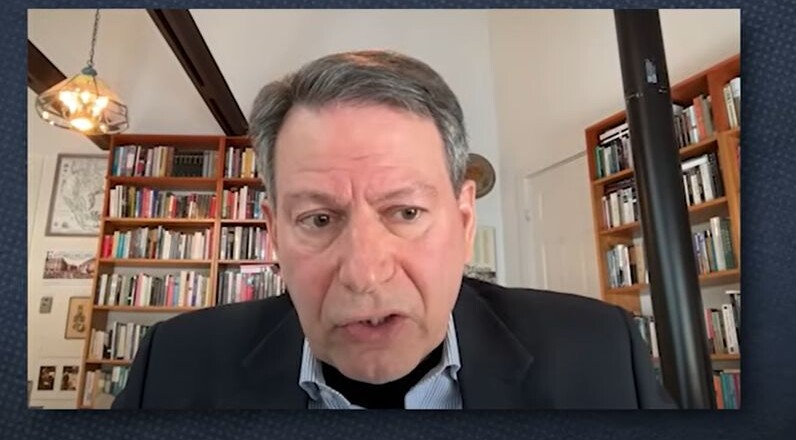


Robert D. Kaplan is one of our country’s most important geopolitical thinkers. His always incisive writings blend knowledge of geography, history, and usually healthy doses of Bismarckian realism. But in a new article in Foreign Policy, Kaplan strays from realism to embrace, of all things, Wilsonianism, or at least Kaplan’s version of Wilsonianism.
Kaplan faults Trump for viewing the Earth as divided by regions, but that is how all great geographers and statesmen … viewed (and view) the world.
Kaplan does this as part of his criticism of President Trump’s approach to our European allies who Kaplan fears are “becoming weaker and more divided, threatened by Russia to the east and political turmoil in response to migration from the Middle East and Africa to the south.” And, according to Kaplan, it’s all Trump’s fault because he is “ahistorical,” “post-literate,” and doesn’t care about defending Europe anymore. With all due respect to Kaplan, Trump, like many of his more “literate” predecessors, merely wants the nations of Europe to do more to defend themselves.
Kaplan, who has great respect for geography, criticizes Trump for being too wedded to geography and too “unappreciative of the postwar saga of the West.” Kaplan derides Trump for knowing nothing about the Atlantic Charter, which ironically was full of idealism but short on realism.
Kaplan’s admiration for Wilsonianism rests on the idea that the more democratic countries there are in key regions of the world, the more secure the United States will be. But Kaplan has seen what harm unbounded Wilsonianism can do to international stability and order, and he wrote about it brilliantly in his book The Tragic Mind. Kaplan apologized in that book for being a cheerleader for the Iraq War, which ended the reign of a terrible dictator but let loose the horrors of anarchy.
Kaplan accuses Trump of imagining that the United States can be made secure by hemispheric defense (Panama Canal, Greenland, Canada as the 51st state, the Gulf of America). But here again Trump appears to be merely reinvigorating the Monroe Doctrine, which every U.S. President since the doctrine’s namesake, with the exception of Obama and Biden, has affirmed. Securing our hemisphere against China’s strategic infiltration makes geopolitical sense. It is a secure Western Hemisphere that allows the U.S. to project power to the Old World.
Europe today, according to Kaplan, faces a challenge comparable to what it faced in 1941, when the United States came to its rescue. But Russia is not Nazi Germany. Putin is bad but he is not Hitler. And some historians and scholars are now appreciating the extent to which Western post-Cold War policies created the monster that is Vladimir Putin, much as George Kennan, who Kaplan admires, predicted in the late 1990s.
The Trump Atlantic Alliance
What Trump, Secretary of State Marco Rubio, and other Trump national security officials are promoting is a version of the Atlantic alliance where the nations of Europe finally accept primary responsibility for their own defense. That is not much to ask of them after 80 years. Very literate and great students of history like George Kennan and Walter Lippmann proposed the same arrangements in the late 1940s and early 1950s that Trump is proposing now. And there is a large number of literate scholars, historians, and former policymakers who warned about the consequences of enlarging NATO and poking the wounded Russian bear.
Kaplan faults Trump for viewing the Earth as divided by regions, but that is how all great geographers and statesmen, many of whom Kaplan admires, viewed (and view) the world. Spheres of influence are a major part of diplomatic history, recognized by such literate men as John Quincy Adams, Otto von Bismarck, Winston Churchill, Henry Kissinger, Richard Nixon and other realist thinkers. Donald Trump may not have read as much history as these men, but unlike Wilsonians, he instinctively grasps the anarchic nature of world politics.
READ MORE from Francis P. Sempa:



















