
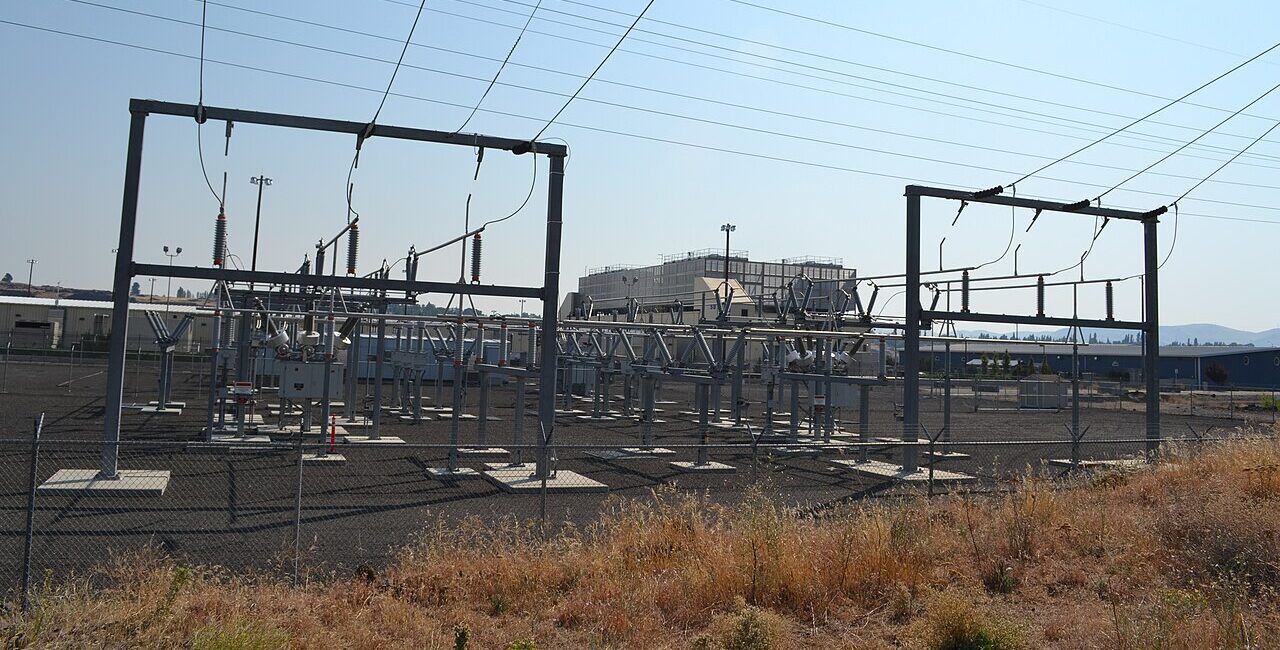


Data centers are easy targets. They require large amounts of water, electricity, and land. They’re an eyesore. Of the 3,907 data centers in the U.S., the majority are in Virginia, Texas, California, Illinois, and Georgia.
Companies fight mundane regulatory battles in the background, leaving consumers with the image of sprawling data centers popping up across the country, sucking up all the electricity.
The reality is different. Data centers have borne the brunt of the blame for rising electricity prices, yet we are reminded each year by the forces of nature that another culprit is at hand: bureaucracy.
Among the top 10 states with the highest concentration of data centers, Georgia is the only state that didn’t see an increase in its average electricity price. Rather than suggest a correlation between data centers and rising costs, the data shows something simpler: demand has far outpaced current supply. (RELATED: No, Trump Isn’t Raising Your Electricity Bill)
Advancements in technology have outpaced the speed at which we update our energy infrastructure.
The average price of electricity has risen in 25 of 50 states, but energy use by data centers is a minor part of that equation. By 2028, the Lawrence Berkeley National Lab expects data center energy consumption to be about “6.7 to 12 percent” of total U.S. load.
Our population is growing, and so is our thirst for electricity. Electric vehicles, household appliances, and smart homes, to name a few innovations, add to the strain on an aging electrical grid. Advancements in technology have outpaced the speed at which we update our energy infrastructure.
Now, much of our grid infrastructure has exceeded its lifespan, according to the American Society of Civil Engineers. The organization’s 2025 Report Card for America’s Infrastructure “assigned an overall grade of C to the nation’s infrastructure.” This middling grade was the “best since ASCE began determining grades in 1998,” and “incrementally better” than the C- the country scored in 2021.
One key area in which the country did not improve was energy infrastructure. In its report, the ASCE calls out “aging assets” that need to be “replaced or modernized” as key drivers of the downgrade from C- to D+ in the energy category.
Poor infrastructure costs lives. Today, millions of Americans from Michigan to Texas are dealing with the effects of a winter storm that has reportedly left at least 28 people dead and over 800,000 people without power.
It was not an unforeseen conclusion. In an effort to “mitigate blackouts” caused by the storm, the Department of Energy (DOE) issued guidance to utility providers in the Mid-Atlantic, Northeast, and Texas before the storm began, authorizing maximum production at their facilities “regardless of limits established by environmental permits or state law.”
In Tennessee, Mississippi, and Louisiana, the storm “knocked out electricity to more than a million customers on Sunday,” according to Politico, with providers “scrambling to restore power.”
Facing increasing demand driven by technological innovations, population growth, and economic expansion, utility providers like PJM Interconnection, the regional transmission organization that manages the electrical grid across 13 states and D.C., have continually failed to adapt.
After PJM failed in December to secure enough supply to meet expected electricity demand in 2027, the DOE issued a statement asking the nonprofit to “temporarily overhaul its market rules” and build “more than $15 billion of reliable baseload power generation.”
Yet, despite DOE’s guidance before the recent winter storm, PJM’s outages are higher than the grid’s planned levels, Reuters reported. Some electric utilities, however, have learned from previous lessons.
Following its disastrous handling of the February 2021 storm that claimed 200 lives, Texas’ Electric Reliability Council of Texas made significant improvements to its facilities. That preparation seems to have paid off, with grid conditions showing the council has over “11,000 megawatts of operating reserves” and “no issues with the supply of electricity are expected,” according to CBS News.
Meanwhile, across much of the country, permitting structures for building new energy capacity remain antiquated, often involving multiple layers of environmental reviews and legal and political challenges.
Last October, a bipartisan group of over a dozen governors released a list of reforms to “improve federal permitting and regulatory processes for critical energy infrastructure projects,” calling on Congress to fix the permitting process to allow for “energy projects of all types to move forward.”
On top of federal regulations like the National Environmental Policy Act (NEPA), companies seeking to engage in energy projects must also clear local and state hurdles, which may include additional environmental laws, zoning restrictions, and NIMBY’s. The Council on Environmental Quality, which oversees NEPA implementation, typically takes 34 months to review a project’s environmental impact statement.
NEPA’s jurisdiction over everything from road construction to data center development positions it as a central player in energy infrastructure projects. However, that outsized scope of authority has drawn the ire of lawmakers and the courts.
In Seven County Infrastructure Coalition v. Eagle County, Colorado (2025), the Supreme Court called NEPA a “substantive roadblock” that paralyzes federal agency decision-making. In the opinion of the court issued by Justice Brett Kavanaugh, the Court described its ruling as a “course correction of sorts” needed to bring NEPA back in line with “common sense.”
This month, the Trump administration finalized an interim rule from the Biden administration that would have expanded the Council on Environmental Quality’s authority under NEPA.
Recognizing the danger of kicking the proverbial can down the road, some states have eased restrictions around energy projects, making it easier for companies to build.
In Wyoming, Kansas, New York, Utah, and Ohio, lawmakers are embracing nuclear power to meet energy needs. Others are relying on technological advancements.
Currently, 18 states have adopted laws to boost advanced transmission technologies (ATTs). Transmission lines make up the backbone of our power grid. ATTs are hardware and software solutions that can significantly boost transmission line capacity, sometimes by 110 percent or more.
Unlike new transmission lines, which can take “up to 10 years to complete, on average,” ATTs can be installed on existing structures in “as little as three months.”
We can also leverage public-private partnerships.
Rather than relying on public-sector efforts, private industry is answering the call for more energy by building out its own capacity. To avoid infringing on the communities they’ve joined, companies like Microsoft, Amazon, and Meta have committed to building out their own microgrids.
Public-private partnerships would go a long way toward implementing innovations such as distributed energy resources and liquid-cooling systems to help manage energy use. Distributed energy resources use existing infrastructure to shift or shed supply capacity in response to energy demand. Liquid cooling systems, while potentially costly, can reduce energy consumption by “more than 27 percent.”
America’s crumbling infrastructure is long overdue for an upgrade. Lawmakers can begin the process by removing regulatory barriers to new energy generation.
READ MORE:
Climate Activists Want to Derail the AI Revolution
Booming Data Economy: Brussels Regulates Innovation to Death
Drill, Baby, Drill — But What About the Electrical Grid?
Image licensed under CC BY-SA 3.0.



















