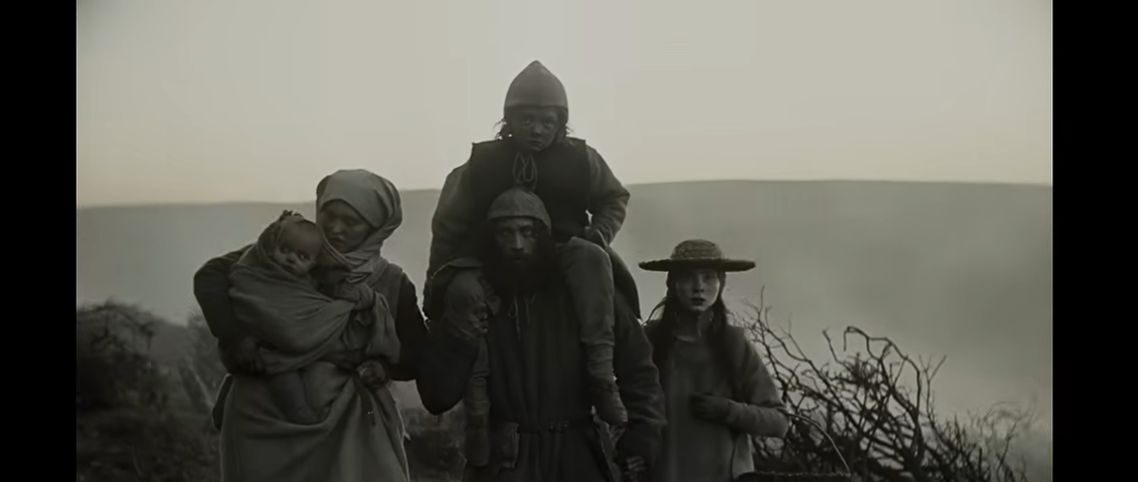


The first trailer for Robert Eggers’ Werwulf has arrived and with no less fearful strangeness than anticipated.
I’ve only seen two of Eggers’ films: The Northman (2022), and Nosferatu (2024). Each left me a strange set of sensations: Horror, yes, but also a bizarre sense of enchantment, or stepping into weird wilderness, jerked out of my usual meadow of daily routine and into the stony ravines of the ancient, the cryptic, the fantastical.
While every villain has an origin story, not all evil can be explained away through mere psychosomatic or social means.
Eggers’ films have all done quite well, and Werwulf, which will appear in theaters on Christmas Day of this year, looks to finish the fearful triad of the young director’s earlier films. He’s done witches, vampires, and now werewolves. What’ll he do next? Bigfoot? Whatever it might be, one thing is certain: Interesting storytellers like Eggers are captivating the imaginations of the secular West over and over again simply by revisiting old, supernaturally charged myths.
While I’m not a horror fan, it is clear the genre is witnessing a resurgence. Consider Obsession, the independent film with a budget of less than a million dollars that earned enormous returns at the box office May and June of 2026. Werwulf could see even greater success this December if it’s anything like Eggers’ earlier films. And horror, of course, is often an offshoot of the fantasy genre. Indeed, so much popular fantasy includes elements of horror, like Harry Potter, or even The Lord of the Rings. Fantasy novels and movies typically include some foreboding presence of evil in them. Werwulf looks to be no exception.
But why are so many people drawn to stories like this? Why do we love narratives with magic, spells, and monsters? Why are we trying so hard to be scared?
I think that these kinds of movies urge us to consider that evil can’t be materially explained. The notion of possession, of demonic forces taking over a human vessel, is not at all foreign to horror films and books, and shows up in older literature, too, and in the Bible. Indeed, the Gospels tell us that Jesus went around casting out demons regularly.
We often intuitively sense the existence of a reality that matter can’t entirely explain. Perhaps that’s one of the reasons why horror films have remained so popular over time. They eschew the materialistic worldview; in Robert Eggers’ oeuvre, modern expectations are not given much credence. The vampire Nosferatu, for instance, is not a misunderstood and sympathetic villain. He’s an evil force of nature and devours everything in his path. He is something like Heath Ledger’s “Joker” character in Christopher Nolan’s The Dark Knight. Alfred, played by Michael Caine, tells Bruce Wayne (Christian Bale) that “some men aren’t looking for anything logical, like money. Some men just want to watch the world burn.”
Those are chilling words, but that sentence alone challenges our modern, progressive notions of human nature as essentially good. While every villain has an origin story, not all evil can be explained away through mere psychosomatic or social means. A more conservative anthropology, however, argues the people are flawed from the get go. We are selfish. We need help. Our politics and communities must be arranged accordingly. To put it in more religious terms, we are all sinners in dire need of God’s grace and mercy, and there are evil forces at work in the world that are actively trying to deface the beauty and goodness of the created order.
In a way, then, films like Werwulf are managing a rare feat. They speak to modern audiences and dismantle a lot of sacred modern cows. I know a lot of conservatives might have reservations about the horror genre, which I understand, but it’s worth noting how this category of story complicates many of modern paradigms and can offer a much more mysterious picture of the universe we inhabit. Conservatives are often too busy obsessing over politics and hot-button culture war issues to pay much attention to what’s going on in the arts. This is unfortunate. The cultural imagination of a nation is so much more important than winning ephemeral political battles. If conservatives want to truly win people over to different norms and values, culture is the realm to focus on. The stories, art, films, and other media we consume will shape our collective identity. Politics is important, of course, but so is culture. Robert Eggers is subtly urging us to reject materialism. Will more of us join in?
READ MORE from Peter Biles: