
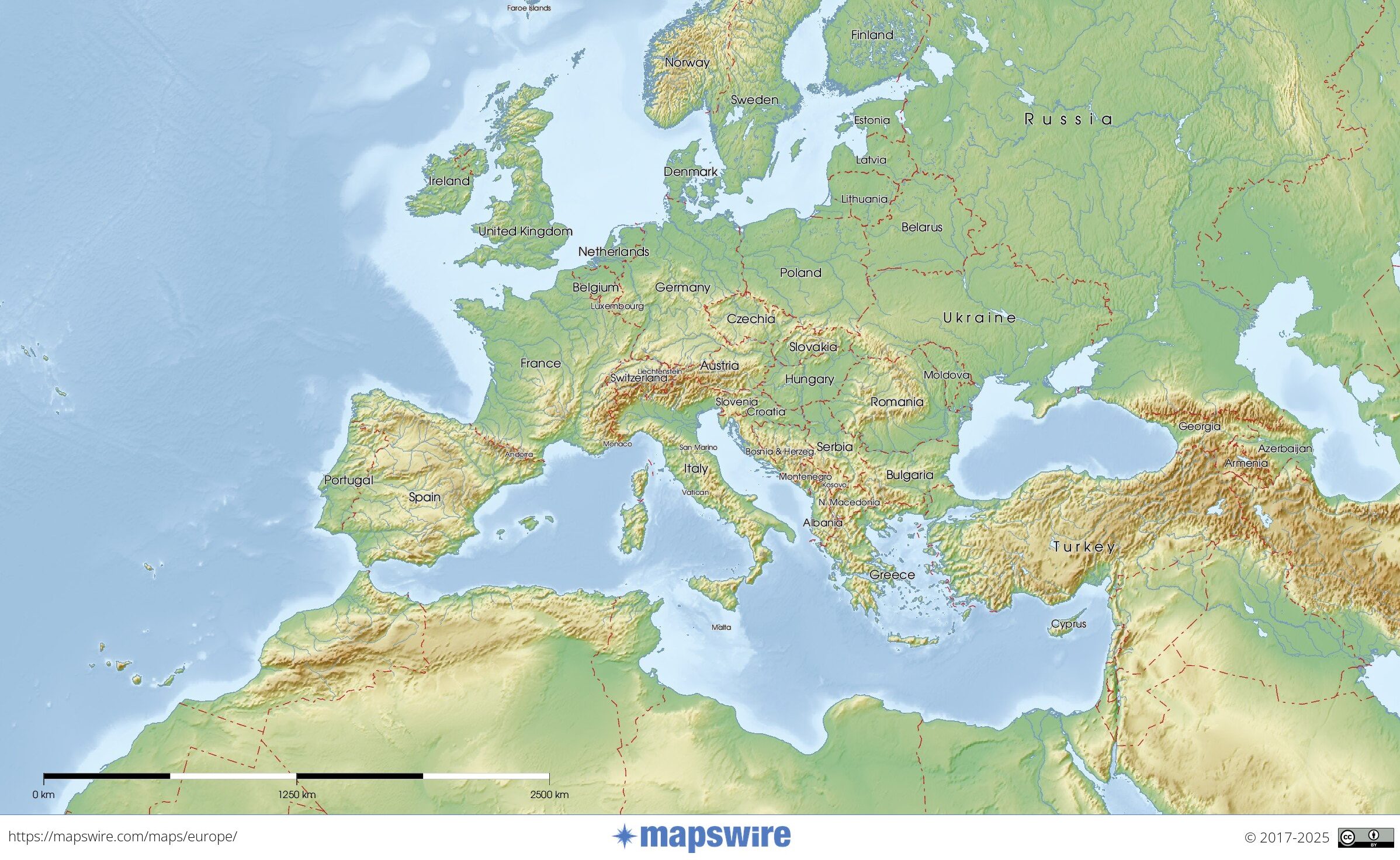


I love Europe.
I took a job unexpectedly in Milan, Italy, when I was just 22 years old. I had graduated from college less than a year earlier, and my first real experience of adulthood was not in America, but in Europe. I did not arrive as a tourist drifting from museum to café. I arrived to work, to struggle, to adapt, and to build a life inside a foreign culture.
I didn’t learn about Europe from conferences or policy papers, but from daily life. From navigating bureaucracy in a second language. From late dinners that turned into long arguments about politics, history, and identity. From friendships formed across borders. From the pride Europeans feel in their nations — and from the quiet frustration many feel toward the elites who claim to speak in their name.
Europe is not an abstraction to me. It is human. It is intimate. And my affection is personal.
That is why I am writing this letter — not as an adversary, not as a scolding American, but as someone who knows Europe well enough to care deeply about its future.
For years, Europeans have been fed a story by their political and cultural elites: that America is reckless, declining, morally unserious; that it is driven by crude nationalism and dangerous populism; that it represents instability rather than leadership.
At the same time, China is presented as pragmatic, inevitable, sophisticated — a neutral economic partner rather than a civilizational rival. Increasingly, Europeans are told that the transatlantic alliance is outdated, that American leadership is destabilizing, and that Europe must “emancipate” itself from Washington.
Much of this story is false.
Worse, it is dangerous.
China is not simply another great power with different preferences. It is a totalitarian regime.
It is governed by a single ruling party that permits no opposition, no free press, no independent courts, and no meaningful religious liberty. Speech is surveilled. Dissent is criminalized. Entire populations are monitored through a vast digital control system that regulates travel, employment, and daily life.
Millions of Uyghur Muslims have been detained in reeducation camps. Churches are shuttered or forced to subordinate faith to party ideology. Lawyers, journalists, and academics disappear for challenging the state. Technology is not used to liberate, but to control.
These are not accusations. They are facts.
And yet, in one of the great moral inversions of modern history, many European — and American — elites refuse to speak plainly about this reality. The same people who describe America as “authoritarian,” who obsess endlessly over Donald Trump, who warn darkly about nationalism and democratic backsliding, cannot bring themselves to utter a harsh word about the most powerful authoritarian regime on Earth.
How can this be?
How is it that a country with free elections, a combative press, constitutional protections for speech and religion, and constant internal dissent is portrayed as a threat to democracy — while a one-party surveillance state is treated as a respectable partner?
The answer is not ignorance. It is incentive.
China flatters elites while controlling citizens. It offers access to markets, investment, prestige, and power — while demanding silence about its crimes. It does not challenge Europe’s ruling class on immigration, national identity, cultural confidence, or democratic accountability. It does not tolerate dissent, but it does reward compliance. It offers leverage without moral language.
America does the opposite. America argues. America debates. America criticizes — even itself. And that openness, that disorder, that refusal to submit quietly to authority has become intolerable to elites who no longer trust their own people.
This is why America — and Trump in particular — are attacked relentlessly, while China is handled delicately. Trump disrupted a carefully maintained illusion: that economic dependence on Beijing was harmless; that offshoring industry had no strategic cost; that China would liberalize if welcomed into the global order. He said plainly what many elites preferred never be said. For that, he was not merely opposed, but treated as uniquely dangerous.
But reality has a stubborn way of asserting itself.
When Europe looks honestly at its own history, the record is clear.
Twice in the 20th century, Europe descended into catastrophe. Twice, the United States crossed an ocean not to conquer, but to save.
In the First World War, American intervention broke a stalemate Europe could not resolve alone. In the Second World War, American blood and industrial power were decisive in defeating fascism. The beaches of Normandy are not abstractions. They are graves.
And after that war, America did something unprecedented. It rebuilt. The Marshall Plan was not colonial extraction; it was civilizational investment. While past empires stripped the defeated, the United States restored them. Allies and former enemies alike were rebuilt, stabilized, and reintegrated. Europe’s postwar prosperity was not accidental — it was constructed.
For the last eight decades, American power has been the backbone of European security. The United States has supplied the nuclear deterrent, the intelligence architecture, the logistics, the command structure, and the forward-deployed forces that allowed Europe to demilitarize, to build generous welfare states, and to pursue peace without constant fear of invasion.
This was not exploitation. It was protection.
When Finland’s President Alexander Stubb says Europe can “unequivocally” defend itself without the United States, the numbers make the claim laughable. Finland’s active-duty military consists of roughly 24,000 troops, with a wartime mobilization force of about 280,000 — adequate for territorial defense, not continental deterrence.
Finland has no nuclear weapons, no strategic airlift, no global intelligence or satellite architecture, no missile-defense system, and no power-projection capability beyond its borders.
By contrast, the United States maintains approximately 1.3 million active-duty personnel, hundreds of thousands of reservists, over 5,000 military aircraft, a global logistics network, and the world’s dominant intelligence and command-and-control systems.
Finland’s entire defense budget is roughly €6–7 billion; the United States spends nearly $1 trillion annually, providing roughly two-thirds of NATO’s real military capability. To claim Europe can defend itself independently while relying on American nuclear deterrence, intelligence, logistics, and command structures is not realism — it is denial dressed up as confidence. It is hubris and it is reckless.
Your elites and politicians are selling you out. They are not acting in the interests of European citizens, but in their own.
They speak the language of “values” while trading away sovereignty. They invoke “strategic autonomy” while deepening dependence. They lecture you about democracy while bypassing voters, silencing dissent, and insulating themselves from accountability. Their loyalties are not to your nations, your cultures, or your families — but to transnational institutions, corporate interests, and an elite consensus that rewards compliance and punishes truth.
When policies fail, they do not reconsider; they deflect. When citizens object, they do not listen; they moralize. And when power shifts away from the people, they call it progress.
This is not leadership. It is self-preservation.
Without American defense guarantees, Europe would not be strategically autonomous — it would be dangerously exposed. That is why, whenever real threats emerge — whether from Russia, terrorism, or instability on Europe’s borders — the call is always the same: Washington.
China has never done this for Europe. It never will.
China did not bleed to liberate Europe. It did not rebuild it. It does not defend it. It does not protect free speech or religious liberty. It does not tolerate dissent. And it does not see Europe as an equal partner — only as a market, a technology source, and a geopolitical buffer against the United States.
To pretend otherwise is not realism. It is self-deception.
Most Europeans have never experienced the level of freedom and broad-based prosperity Americans have long taken for granted — but few are encouraged to ask why.
The United States was born in an act of independence, grounded in the belief that rights are inherent, not granted by the state, and that the government is subordinate to the individual. American exceptionalism was not a boast; it was a governing principle.
Europe, by contrast, emerged from centuries of empire, hierarchy, and state-conferred privilege, and even its modern freedoms arrived late, fragile, and often contingent. This difference matters. Europeans have been conditioned through centuries of experience to accept that the individual is subordinate to the state.
Europe deserves better than leaders who invert reality — who scold America for its imperfections while excusing China’s crimes; who speak endlessly of “values” while aligning with a regime that holds millions behind barbed wire; who mock national loyalty while quietly selling strategic dependence.
This letter is not a demand. It is a warning — and an appeal.
If you want to understand who we are — and what is truly at stake — look no further than the recent assassination of Charlie Kirk.
Charlie Kirk was not a soldier. He was not a head of state. He was a young American who believed in free speech, national sovereignty, faith, and the right of ordinary people to speak without fear. For that, he was demonized, dehumanized, and ultimately murdered.
What followed was not universal moral clarity, but silence, justification, and evasion from many of the same cultural and political institutions that claim to defend democracy and human rights.
This is who we are now confronting — not just in America, but across the West.
The same ideological forces that excuse violence when it serves their cause, that label dissent as extremism, that treat truth as negotiable and speech as dangerous, are the forces that instinctively align with centralized power — whether it wears the face of technocracy in Brussels or authoritarianism in Beijing. They fear free people more than they fear tyrants. They despise national loyalty more than they despise repression.
Charlie Kirk’s death was not an aberration. It was a warning.
And it revealed something essential: despite all the caricatures, despite the lies told about America, there are still people here willing to stand openly for liberty — knowing the cost. That willingness, that moral courage, that refusal to submit quietly, is not a flaw of the American character. It is its inheritance.
It is also Europe’s inheritance.
The story of the West is not the story of comfort or consensus. It is the story of conscience — of individuals standing against orthodoxy, power, and fear. That tradition did not begin in Washington. It began in Jerusalem, Athens, and Rome. It was refined in Europe long before it crossed the Atlantic.
That is why this letter is not written in anger, but in urgency.
I urge you to look honestly at the choices being made in your name. I urge you to ask who benefits when America is vilified and China is excused. I urge you to ask why those who claim to defend democracy so often side with those who crush it.
And I urge you to remember who you are.
For those who want to understand what this moment means — and what it costs when truth is abandoned — I invite you to read my book, For Christ and Country: The Martyrdom of Charlie Kirk. It is not merely a story about one man’s death. It is an examination of what happens to a civilization when courage is punished, lies are rewarded, and freedom is treated as a liability rather than a gift.
I love Europe too much to lie to it.
And I believe — despite everything — that Europe still remembers who it is. Your future is being shaped by decisions being made at this very moment. History warns us that it is very hard to regain freedom once lost.
Image licensed under CC-BY 4.0.



















