

Sunday night’s security cabinet meeting in Jerusalem moved to an undisclosed location in anticipation of an impending Iranian attack amid the uncertain direction of the U.S.-Iran war. But the regional Iranian conflict took a different turn over the weekend with a brief respite, and the Israeli cabinet ministers focused instead on the surging violence between Palestinians and Jewish residents in the West Bank.
Ahead of Israeli Prime Minister Benjamin Netanyahu’s visit to Washington on Monday, July 27, officials in Jerusalem vowed to expand military operations against Palestinian “terrorist strongholds” in the West Bank following clashes over the weekend that left two Israelis and four Palestinians dead. New military operations and escalating tensions in the Palestinian territories, however, could overburden an already strained Israeli military still operating deep inside the Gaza Strip and southern Lebanon.
The recent clashes broke out on Friday, July 24, when several dozen Israelis gathered for a morning hike in the northern Samaria region of the West Bank, and passed south of Nablus near the Palestinian village of Tell. Nablus and its surrounding villages are designated as Area A under the 1993 Oslo Accords and fall under the Palestinian Authority civil and security administration. Israelis are prohibited from entering Area A, and the hikers failed to follow protocol of alerting security officials when in proximity to these areas.
A conflict broke out on the outskirts of Tell when the hikers encountered Palestinians near a mosque. Members of the nearby Havat Gilad civilian security guard soon arrived on the scene with a small Israeli Defense Force (IDF) dispatch, which only further antagonized the rising tensions. As reported in the Israeli news, a Palestinian snatched the M16 rifle from the Havat Gilad security member Benayahu Mellet and opened fire, killing Mellet and IDF Maj. Yuval Ezra. In the ensuing conflict, four Palestinians, including the gunman, were also shot and killed.
First-responder medical teams from Israel’s Magen David Adom arrived in bulletproof intensive-care vehicles to treat numerous gunshot wounds and evacuate the casualties via military helicopter to a hospital.
The clashes near Tell were the third violent incident in the area in 24 hours. The previous day, the Israeli agricultural worker Itamar Cohen was stabbed and killed while attempting to extinguish a brush fire. Hours later, another stabbing attack was reported in the northern West Bank.
By late Friday afternoon, the IDF and Shin Bet (Israel’s internal security agency) were conducting widespread raids in the area around Nablus in search of the perpetrators involved in the Tell shootout. One resident of the nearby Jewish town of Kedumim told me that the Shabbat opened on Friday night with the sounds of helicopters, armored vehicles, and distant gunfire.
IDF troops deployed throughout the northern West Bank detained over seventy suspects over the weekend. According to Ghassan Barkat, director of Nablus Specialty Hospital, “more than fifty armed [IDF] soldiers and officers stormed the hospital” to arrest the wounded Ali Hussein Ali Ramadan, who had picked up the stolen M16 rifle after the first assailant was shot dead and continued firing at the Israelis.
The Friday shootout sparked outrage in both Israeli and Palestinian communities and ignited violent retaliatory responses.
Dr. Jihad Ramadan, secretary-general of the Palestinian National Commission for Education, Culture, and Science, and a resident of Tell, rejected claims that the Palestinians initiated the violence against the Israeli hikers. Ramadan reported that the hikers raided the village from several directions, committed arson, and “carried out a real massacre in front of cameras and the media.” “People here are neither silent nor afraid. The barrier of fear has completely collapsed,” he said.
Ramadan, like the Israeli far left, blames the current political landscape for inciting violence in the West Bank. “This is the internal election campaign of Bibi [Netanyahu], [Finance Minister] Smotrich and [National Security Minister] Ben-Gvir,” he said. “They are trying to improve their electoral position at the expense of Palestinian blood.”
Although Friday’s shootout paled in comparison to the events of October 7, it was a chilling reminder that civilian rapid-response security is ultimately the first line of defense against perpetual hostile neighbors.
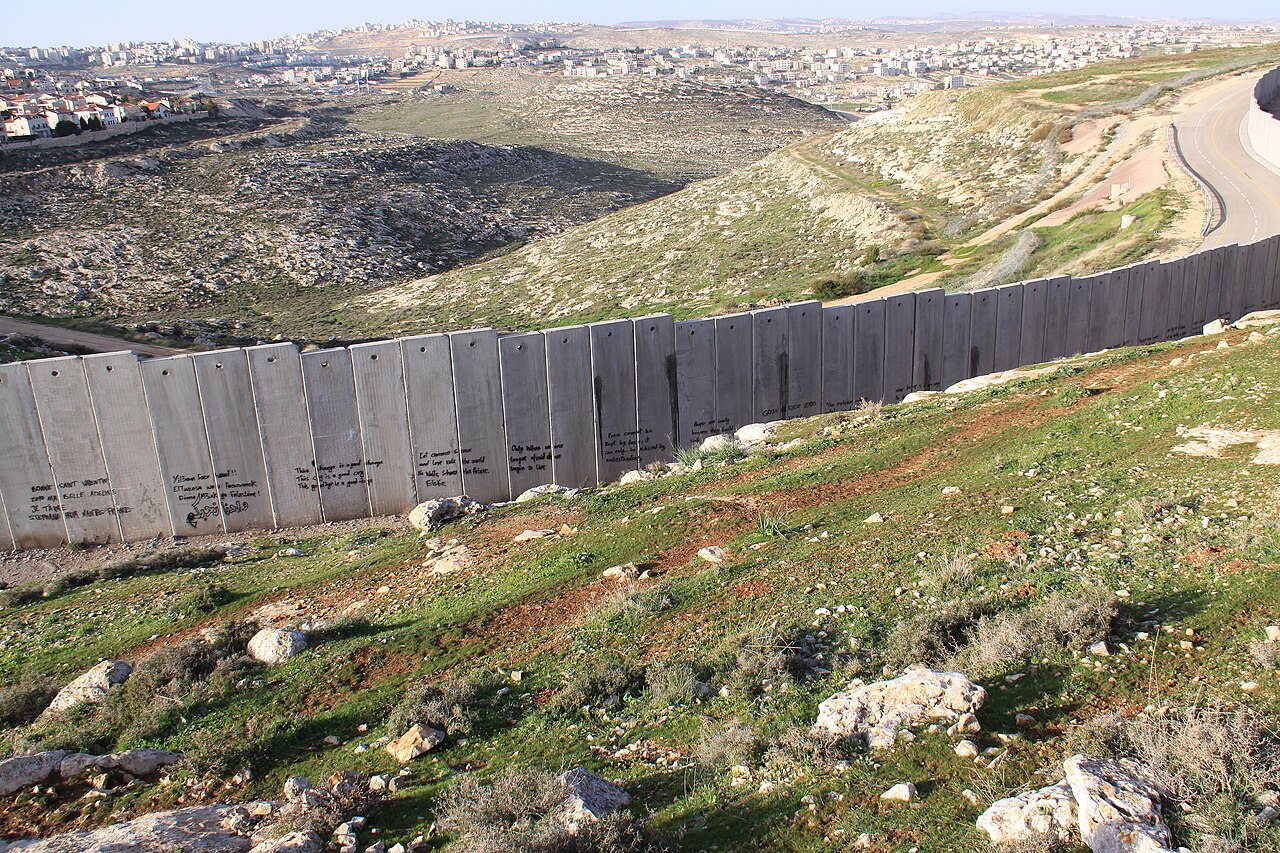
Israelis living in the West Bank — commonly called “settlers” — also blame the current government for the deaths of the two Israelis on Friday by imposing policies that handicap or restrict civilian residents from defending themselves. Israel gained control of the West Bank after reclaiming it from Jordan during the 1967 Six-Day War. Since then, the area is deemed by much of the international community as an Israeli occupation of land designated for a Palestinian state. Clashes between Israelis and Palestinians in the West Bank are often framed as Israeli settler occupation violence against harmless Palestinians, thus generating a worldview narrative of Palestinian victimhood in the West Bank. The Biden administration even went as far as imposing sanctions on select Israeli settler families.
To save face from the international narrative of Israeli perpetrators and Palestinian victims, Netanyahu’s government has urged Israeli settlers not to take defensive matters into their own hands but to rely on the military for defense and security. The government has even imprisoned civilian Israelis for defending themselves in the West Bank with lethal force against Palestinian violence. It was these same restrictive policies, curtailing civilian self-defense, West Bank Israelis argue, that allowed Hamas to commit its massacre on October 7, 2023.
Although Friday’s shootout paled in comparison to the events of October 7, it was a chilling reminder that civilian rapid-response security is ultimately the first line of defense against perpetual hostile neighbors.
Residents of the Jewish town of Havat Gilad (named after Gilad Zar, a regional security officer killed in a Palestinian shooting attack in 2001) said that they endured a week of violence before the clash on Friday. “Sixteen family homes and another eight businesses were burned here… We are living through terrorism. It feels like a war zone, and what we hear is ‘settler violence’ and ‘Jewish terrorism.’ It simply makes me angry,” said Itay Zar, brother of Gilad Zar.
While the IDF and Shin Bet conducted raids and arrests over Friday night in the identified Palestinian-terrorist hubs of Tubas, Nablus, Jenin, Qalqilya and Tulkarm, civilian Israelis also went on a revenge spree for the deaths of Benayahu Mellet and Yuval Ezra.
The official Palestinian media outlet WAFA reported that Jewish settlers raided the village of Qusra, south of Nablus, on Saturday and set fire to an under-construction mosque and several homes and vehicles. The Hebrew words “Benayahu’s Revenge” were graffitied on the mosque, together with a Star of David, before the arson. Another mosque near Tulkarm was also set on fire with graffiti “Jewish blood is not free.”
On Sunday, the IDF sealed off the homes of the two Palestinians involved in the deadly Friday shooting in preparation for demolition — the one who first snatched Mellet’s gun and opened fire, and Ali Hussein Ali Ramadan, abducted from the Nablus hospital, who continued shooting. As is Israel’s longstanding yet controversial policy, the home of any Palestinian who commits terrorism against an Israeli is demolished.
Jerusalem’s expanded security operations in the West Bank are paramount in thwarting large-scale October 7-style attacks on nearby Israeli cities, but perhaps do little to curb the tit-for-tat clashes as seen on Friday or the hit-and-run, lone-wolf attacks that are commonly carried out by Palestinian terrorists. In the long run, any sustained IDF presence in the West Bank will drain the manpower and resources needed to carry out the ongoing operations in Gaza and southern Lebanon.
READ MORE from Bennett Tucker:
Rubio’s Israel-Lebanon Agreement Cuts Iran Out of the Peace Process
Israel’s War Objectives Challenged by US-Iran Negotiations
Missiles Fired at Northern Israel Break the Iranian Ceasefire
Image licensed under Creative Commons Public Domain Mark.