

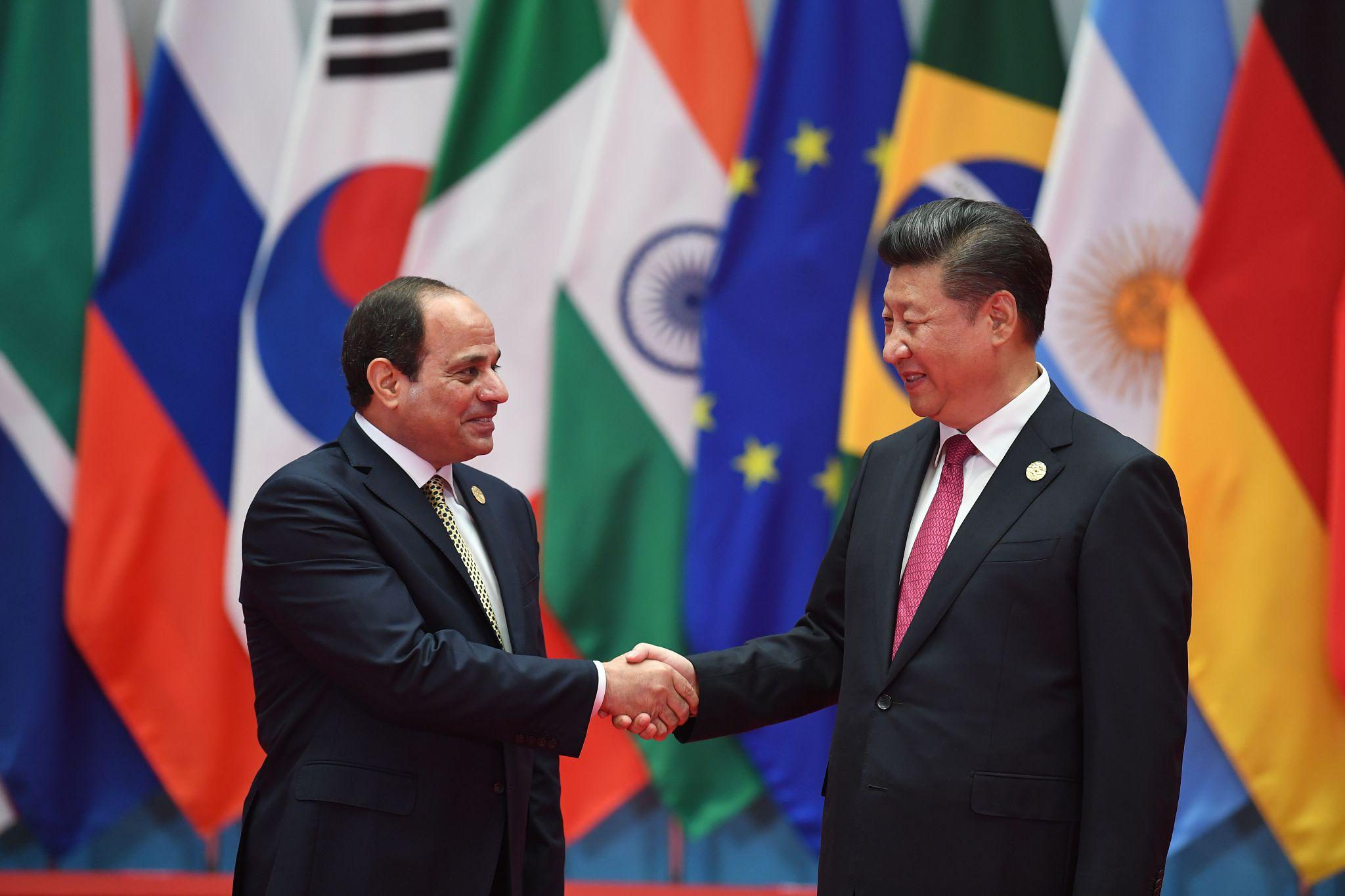


More than a decade ago the Egyptian military ended Cairo’s short-lived experiment with democracy. When Gen. Abdel Fattah el-Sisi, both Commander-in-Chief of the Armed Forces and Minister of Defense, seized power in July 2013, he did so with the public support of Coptic Pope Tawadros II. Unfortunately, el-Sisi has betrayed the estimated 15 million Copts in Egypt, the largest Christian population in the Middle East. Although Cairo is a nominal American ally, it oppresses religious minorities as well as political dissidents. These practices contribute to the instability and violence which continue to bedevil the Mideast and entangle the United States.
Unfortunately, authoritarian regimes that fear their people rarely welcome minority religious faiths.
Throughout thousands of extraordinary years of life, Egyptians have never enjoyed the blessings of liberty or democracy. The overthrow of Hosni Mubarak during the celebrated Arab Spring in 2013 briefly offered hope of change, but newly elected Mohamed Morsi, a member of the Muslim Brotherhood, proved to be a maladroit Islamist, sabotaging his own presidency. El-Sisi, though appointed to his positions by Morsi, became an enthusiastic frontman for Saudi Arabia and the United Arab Emirates, which helped finance his coup.
El-Sisi proved to be a more effective authoritarian than Mubarak, creating a brutal dragnet for opponents, critics, and most anyone exhibiting even minimal antagonism toward the regime. Indeed, el-Sisi learned from the Chinese government, staging a repeat of Tiananmen Square, only in Cairo. The military violently dispersed demonstrators from Rab’a Square, killing more than 800 people there alone. As many as 65,000 Egyptians were arrested and imprisoned. Torture is widespread, and the regime also shut down NGOs that had monitored the Mubarak government. I visited one of them, the Al-Nadeem Center for the Rehabilitation of Victims of Violence and Torture, which had survived Mubarak’s dictatorship but was closed after publicizing al-Sisi’s abuses.
There has been little improvement over the last decade. Freedom House rates Egypt as not free: “President Abdel Fattah el-Sisi, who first took power in a 2013 coup, has governed Egypt in an increasingly authoritarian manner. Meaningful political opposition is virtually nonexistent, as expressions of dissent can draw criminal prosecution and imprisonment. Civil liberties, including press freedom and freedom of assembly, are tightly restricted. Security forces engage in human rights abuses and extrajudicial killing with impunity.”
Human Rights Watch reached similar conclusions:
Egyptians continued to live under the authoritarian grip of President Abdel Fattah el-Sisi’s government. The authorities cracked down on peaceful critics and systematically repressed human rights defenders. Civic space remained severely curtailed as independent organizations operating under draconian laws faced continued judicial and security harassment. Thousands of detainees remained locked up in dire conditions in lengthy pretrial detention or serving sentences stemming from unjust trials. Parliamentary elections, held in August and November [2025] under a general state of repression, were criticized for absent genuine competition and reported violations.
Moreover, elections have been perfunctory, mostly a show for an international audience. The penalty for running against el-Sisi is severe: “several would-be opponents, including with military backgrounds, sought to oppose him, but he arrested or intimidated them all. For instance, Abdel Moniem Aboul Fotouh, a 2012 presidential candidate, was detailed along with fifteen party members and placed on the official terrorism list. Sami Anan, el-Sisi’s predecessor as army chief of staff, was arrested, and a top member of his campaign, Hisham Geneina, el-Sisi’s former anti-corruption chief, was sentenced to five years in prison.” Such was the price of exercising the nominal right to run for office.
Washington was reluctant to criticize Egypt, though the Obama administration eventually delayed some aid to the regime. The latter step mattered little, since the el-Sisi regime enjoyed financial backing from Riyadh and Abu Dhabi. Moreover, members of Egypt’s officer corps use their privileged positions to enrich themselves — they play a huge economic role, controlling up to 60 percent of the nominal private economy by one estimate — and prefer not to risk their futures by allowing democratization. Neither the first Trump administration nor the Biden administration exhibited much interest in the status of human rights in Egypt. Indeed, President Trump referred to el-Sisi as “my favorite dictator.”
Unfortunately, authoritarian regimes that fear their people rarely welcome minority religious faiths. Throughout the Middle East regimes typically seek to maintain public quiescence if not support by discriminating against and, all too often, persecuting non-Muslim faiths. Jews and Christians are the most common targets, though people not considered to be “People of the Book,” such as Baha’is in Iran and Yezidis in Iraq, are treated as apostates and infidels, and sometimes suffer even more.
The el-Sisi government is no different. In Egypt Christianity long predates Islam. Explains Coptic Solidarity:
The Coptic people are an ethnoreligious population that identifies as the descendants of ancient Egyptians according to their genetic results and the evolution of their language and traditions that root back to the ancient Egyptian civilization. After the Christianization movement in around 60 CE by Mark the Evangelist (known to the Copts as the first Patriarch of the Coptic Orthodox Church), the Church of Alexandria became an intellectual center for the ancient world and a leader in theology and the sciences.
Christians today make up a larger share of Egypt’s population than anywhere else in the Mideast, other than Lebanon. Alas, they suffer from extensive discrimination and persecution. Notably, el-Sisi’s record on religious liberty is no better than that of his predecessors, despite substantial Coptic support for his overthrow of Morsi. For instance, journalist Jared Malsin reported that “Copts joined the demonstrations against Morsi in large numbers. There were Copts who felt that the one-year-old Islamist regime had failed to protect them from attacks by extremists and had pursued a sectarian agenda.” Indeed, el-Sisi made a pitch for Christian support, and received Tawadros’ high profile endorsement. Although the Egyptian president has maintained “some initiatives to encourage religious inclusivity”— his government remains fundamentally hostile toward Christians and other religious minorities.
For instance, the United States Commission on International Religious Freedom reported last year:
While Egypt’s government continues to support initiatives that selectively promote religious diversity and tolerance, it continues to systematically restrict freedom of religion or belief (FoRB) by enforcing laws, policies, and judicial decisions that repress non-Muslim and Muslim religious minority communities. Such FoRB violations affect Coptic Christians, Jews, Baha’is, Jehovah’s Witnesses, and Qur’anists, as well as nonbelievers. In January 2025, the United Nations (UN) working group evaluating Egypt for its Universal Period Review (UPR) expressed concern that these religious and belief communities continue to face ‘varying forms of discrimination, including restrictions on the building and operation of places of worship and burial sites, restrictions on the public practice of their faith, including prosecution under blasphemy laws, and acts of violence and sectarian attacks carried out with impunity, including by armed groups.’
The latter incidents are of particular concern. Earlier this year the Commission reported that,
In rural Upper Egypt, local authorities have failed to protect communities from violent attacks, and hostile attitudes towards Christians are more pronounced than in urban areas. While security services sometimes moved expeditiously to quell violent incidents against churches in Upper Egypt, authorities often failed to sufficiently investigate such incidents and hold perpetrators to account.
Christians have also been disproportionately prosecuted for blasphemy and expressing “contempt for Islam,” and even labeled as terrorists. Nonbelievers, too, are vulnerable to such charges. Reported Coptic Solidarity:
The “blasphemy law” has long been a major human rights concern in Egypt as it severely limits freedom of thought and expression. A deeper, lesser- known concern is the disproportionality and execution of the law that authorities have been using to particularly target Copts and other religious minorities. In a study by Tahrir Institute of Middle East Policy’s Eshhad, 41% of all recorded blasphemy cases are against Christians. Of the 36 blasphemy cases made between 2011 and 2012, 35 were made for blaspheming Islam and the only one against Christianity was dismissed. This law has been abused by authorities and religious officials to prohibit any evangelical activity and even comments on the Islamic State.
The government also continues to enforce legal limitations on church construction and dictate the personal status of religious minorities, despite promises of redress. Such factors create significant disabilities for believers. According to Coptic Solidarity: “tens of churches are closed annually due to the bureaucratic, lengthy licensing process, and such difficulties often lead to sectarian attacks.”
Unfortunately, “The courts have proven to be ineffective to rule in sectarian incidents as, according to a study, 45% of these are decided by customary reconciliation sessions. These sessions are usually biased against the Christian participants, and a common result is the forced migration of the Christian family.” Women are particularly vulnerable and have little redress: “Throughout the last decade, hundreds of Coptic minor females have been lured, kidnapped, raped, and forcibly converted to Islam.”
Discrimination and persecution are facilitated by designating a person’s religion on their IDs. Despite a constitutional provision guaranteeing “freedom of belief and the freedom of practicing religious rights,” legal conversion has been barred by refusing to allow Muslims to change their IDs. Detailed Coptic Solidarity:
However, a court ruled … that Muhammad Hegazy, a Muslim convert who wanted to change his name and religion on his ID “can believe whatever he wants in his heart, but on paper, he can’t convert.” The judge explained that he relied on the Second Article of the constitution that gives shari’a supremacy over any other civil laws, and the shari’a bans conversion from Islam to any other religion.
This is a dismal record on a basic human right which the Trump administration has strongly supported. El-Sisi shouldn’t be a favorite in any sense for the United States. Washington understandably seeks geopolitical stability in the Mideast, and Egypt has long been an allied if repressive state. However, by stoking religious hatred and empowering sectarian extremists Cairo is promoting more division, conflict, and unrest in a region already overflowing with such vices.
President Trump and his administration challenge the el-Sisi regime’s treatment of political dissidents and especially religious minorities. As long as governments treat Christians, Jews, and members of other faiths as second class human beings, the Middle East is likely to be riven with intolerance, discrimination, instability, and violence. Transforming the region remains a distant dream, but ending religious persecution is a necessary starting point. And Egypt, which hosts an ancient Christian church whose members long have been integrated in that society, could — and should — become an example of tolerance and freedom to the rest of the region.
READ MORE from Doug Bandow:
Tiananmen Square Anniversary Reminds Us of Freedom Lost
When Democracies Turn on Faith
Mayor Zohran Mamdani’s Utopian Future?
Doug Bandow is a Senior Fellow at the Cato Institute. A former special assistant to President Ronald Reagan, he is the author of Foreign Follies: America’s New Global Empire and Tripwire: Korea and U.S. Foreign Policy in a Changed World.




















