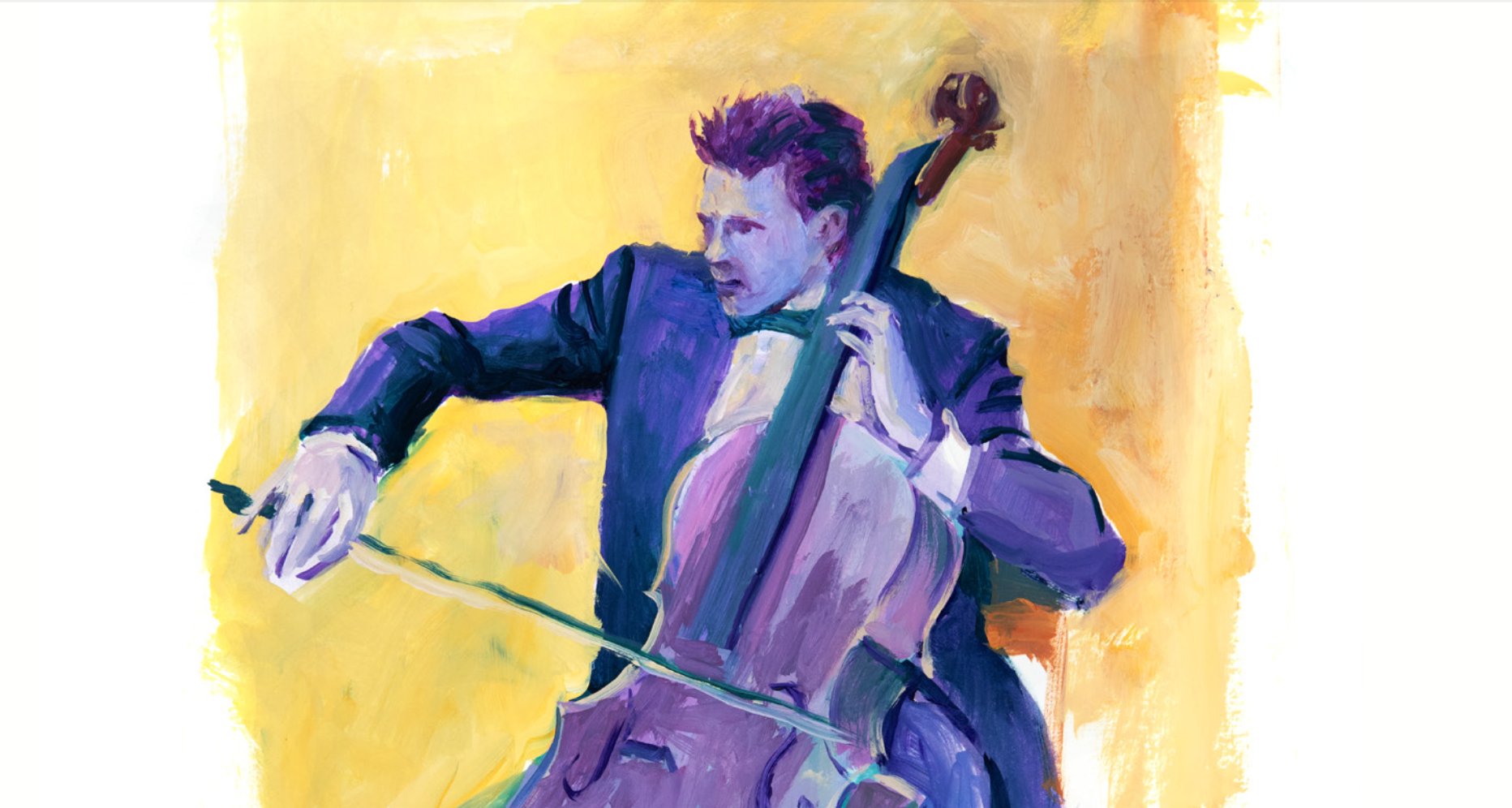


In the hush that follows the first, tentative notes of Edward Elgar’s Cello Concerto in E minor, Op. 85, one senses a world already slipping away. Composed in 1919, in the immediate aftermath of World War I, the work unfolds not as a triumphant declaration but as a subdued elegy — a solitary voice tracing the contours of what has been irretrievably lost. Whereas Elgar’s earlier Pomp and Circumstance Marches had embodied an imperial grandeur, outward-facing and confident, the Cello Concerto turns inward, reticent, melancholy, and profoundly nostalgic.
This article is from The American Spectator’s summer 2026 print magazine. Subscribe to The American Spectator to receive the magazine.
It is Englishness not as spectacle but as intimate farewell: the England of country lanes and settled customs, of moral order and unselfconscious beauty, the Edwardian world that the war had shattered forever. In listening, we confront our own longing — for meaning, for beauty, for the sense of belonging that philosopher Roger Scruton would later call oikophilia, the love of home. The concerto becomes a musical meditation on how that home was lost, and why its memory still aches.

Subscribe to The American Spectator to receive our summer 2026 print magazine.
The concerto’s genesis is inseparable from the cataclysm of 1914–1918. Elgar, who had once captured the swagger of empire, now found himself in an “autumnal” frame of mind, his music falling out of fashion amid the new dissonances of modernism. The work emerged almost as a phoenix from the ashes — or, more accurately, as the smoke of a funeral pyre. It mourns the prewar Edwardian idyll: a Britain of ordered hierarchies, rural rhythms, and a shared moral grammar that had seemed eternal. The opening Adagio — moderato, with its halting, descending cello line against the orchestra’s distant fanfares — feels like a sigh of recognition. Here is no bombast, but a “vanishing persona,” as commentators have described it: the composer bidding goodbye to an England that would never return.
The war had not merely killed a generation; it had dissolved the moral order that had sustained it. Duty, reticence, quiet faith in continuity — these were the unspoken virtues of that older world. In their place came mechanized horror, cynicism, and the modernist urge to dismantle tradition. Elgar clung stubbornly to Romanticism, refusing the atonal experiments sweeping Europe. In doing so, he preserved something essential to English musical identity: a language of feeling that valued emotional honesty over intellectual rupture. The concerto, then, is an act of cultural fidelity, a refusal to let the new world erase the old.
Yet what it expresses about Englishness is not the outward nationalism of flags and marches, but its quieter, internal facets. English reticence runs through the score like a hidden stream — moments of bluff public persona giving way to private, desperate sorrow and tender reflection. The second movement’s playful yet wistful dance evaporates into the third’s profound melancholy, where the cello sings alone, as if remembering a landscape now haunted. There is no grand resolution, only fleeting memories of the past, dissolving like mist over the Malvern Hills. This is the “other” side of English identity: not pomp but understatement, not certainty but a deep, unspoken grief.
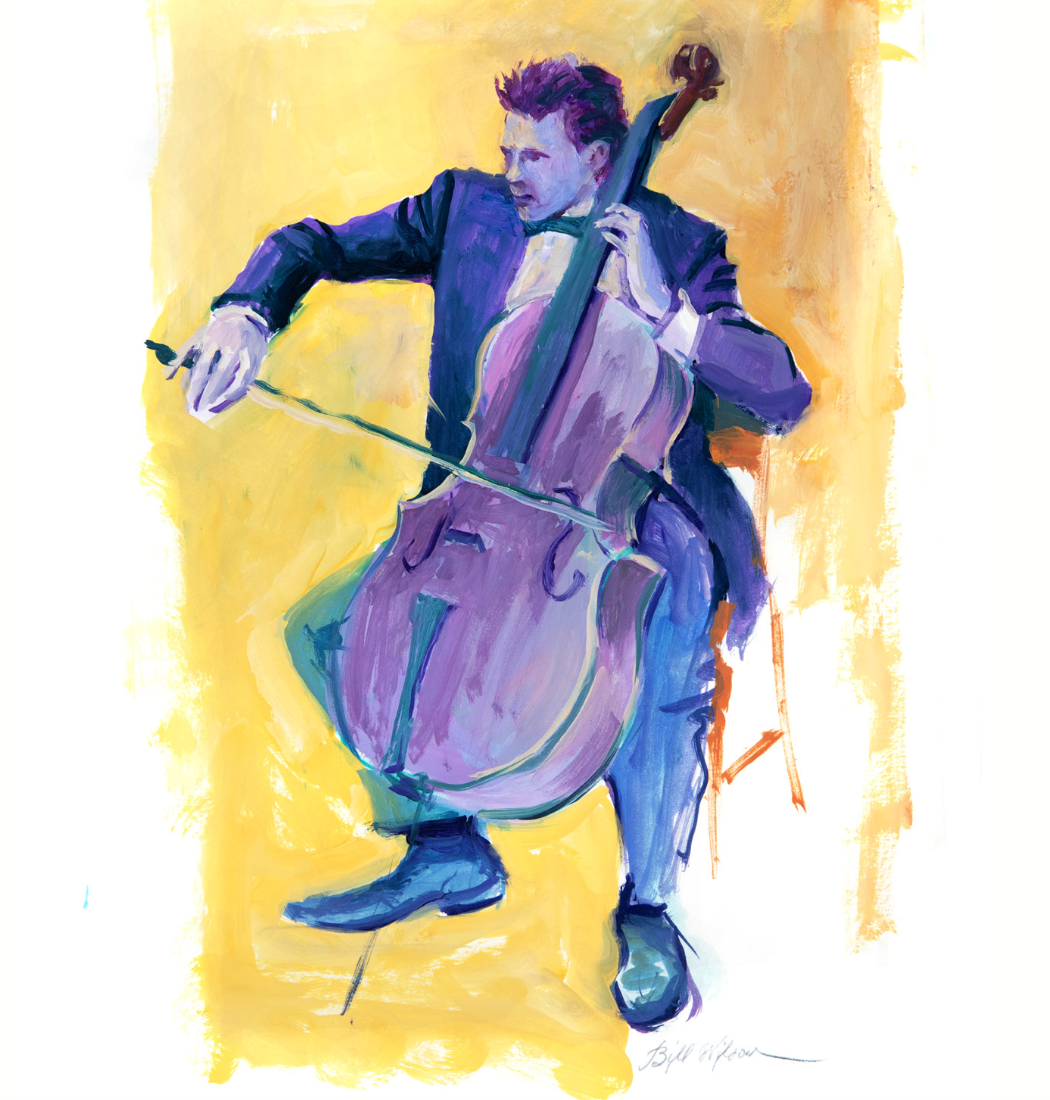
Art by Bill Wilson for The American Spectator
The concerto has become woven into national memory precisely because of this restraint. In 1965, Jacqueline du Pré’s recording with Sir John Barbirolli — himself a player in the 1919 premiere — elevated it to the status of national treasure. Du Pré’s impassioned yet vulnerable tone captured the work’s essence: English emotional life laid bare, not in exhibition but in confession. Listening today, one feels the music as a bridge across the century’s abyss, carrying the ache of what was once whole. (Another piece by Elgar, “Nimrod” from his Enigma Variations, is performed at the National Service of Remembrance, its strains accompanying the laying of wreaths at the Cenotaph — a musical embodiment of collective mourning that asks nothing theatrical and provides only presence.)
It is here that Roger Scruton’s philosophy illuminates the concerto’s deeper resonance. Scruton, the English conservative thinker who died in 2020, devoted much of his life to exploring our human need for home — for oikophilia, the instinctive love of the particular place, customs, and inheritance that root us in the world. We are, he insisted, “needy creatures, and our greatest need is for home — the place where we are, where we find protection and love.” Home is not mere shelter; it is the shared territory of belonging, built through representations of ourselves in relation to others: the village green, the parish church, the inherited melodies that tell us who we are.
In the Edwardian England that Elgar elegizes, this sense of home was still intact — a moral order where beauty was not optional but the visible sign of an ordered cosmos. Beauty, for Scruton, was no frivolous ornament; it was the path by which we come to feel at home in the world. “The experience of beauty,” he wrote, “tells us that we are at home in the world, that the world is already ordered in our perceptions as a place fit for the lives of beings like us.” Through beauty we shape our surroundings as a home, amplifying joy and consoling sorrow. The prewar world had embodied this: its music, architecture, and social forms invited us to settle, to belong without self-consciousness.
The Great War, in Scruton’s view, accelerated a spiritual homelessness. Modernism — whether in music’s embrace of atonality or in broader cultural rootlessness — represented a kind of oikophobia, a hatred of home that repudiated inheritance in favor of abstraction and utility. Elgar’s concerto stands against this. Its tonal warmth, its melodic continuity, its refusal to abandon the listener in dissonance: these are acts of oikophilia, invitations to remember the pastoral homeland now lost. Scruton himself recognized this. In reflecting on works of mourning, he cited the Cello Concerto explicitly as invoking “our lost pastoral homeland in a spirit of tender regret.” Like Elgar, Scruton saw such music as legitimate grief — not nostalgia for its own sake, but a necessary reckoning with what modernity had desecrated.
The concerto does not merely lament; it consoles by restoring, however briefly, the beauty that once made the world feel habitable. In its long, arching phrases, we hear the yearning for meaning that the war had seemingly extinguished: the belief that life was not random suffering but part of a larger, intelligible order. Post-1919, that order fractured. The moral grammar of duty, restraint, and reverence gave way to irony and fragmentation. Yet the music whispers that this longing persists. Beauty, Scruton argued, is our way back from alienation. It is not subjective whim but objective gift, guiding us toward harmony with others and with ourselves.
This longing for meaning and beauty is not merely historical; it echoes in our own era of digital dislocation and cultural amnesia. We inhabit a world that Scruton might have diagnosed as profoundly oikophobic — globalized, utilitarian, suspicious of particular attachments. The Edwardian moral order — its quiet faith in continuity, its unembarrassed reverence for the beautiful — feels impossibly distant. Yet Elgar’s concerto reminds us that such loss is not total. The music moves from public persona to private sorrow precisely because it trusts the listener to follow: to feel the reticence, to share the grief, and, in sharing, to recover a fragment of belonging. It is English in the deepest sense — not jingoistic, but profoundly local, rooted in a landscape of memory. The concerto’s final pages fade into silence, not triumph, but acceptance — a gentle close that leaves the ache intact yet somehow bearable.
In the end, Elgar’s Cello Concerto is more than a musical masterpiece; it is a philosophical testament. It captures the internal truth of Englishness as a culture that values understatement because it knows the cost of loss. Through Scruton’s lens, we see it as an expression of oikophilia amid encroaching homelessness: a plea to cherish the particular, the inherited, the beautiful, lest we wander forever as strangers in our own world.
The 1965 recording endures not merely as performance but as cultural sacrament, a reminder that art can still call us home. In an age hungry for meaning, the cello’s voice lingers, inviting us to pause, to remember, and perhaps to rebuild. For in that longing — for the England that vanished, for the beauty that consoles, for the home that we never cease to need — lies the serene dignity of being human. The concerto does not restore what is gone; it teaches us to mourn it rightly, and in mourning, to love what remains.
Subscribe to The American Spectator to receive our summer 2026 print magazine.