


On the eve of 2026’s snowmageddon last weekend, reaction crossed every segment of society. By Saturday, churches were closing. You would think we were in uncharted territory, even though it had been just five years since our last one-foot-plus snowfall.
Greenland decided to throw its Arctic weather at us in a stealthy snow attack; even the weather apps were bemused.
Each generation believes the one that follows is somewhat softer. There is little arguing that America today is cushioned, curated, and constantly hand-sanitizing.
America has misplaced its spine somewhere between the couch cushions and the smartphone charger.
America has misplaced its spine somewhere between the couch cushions and the smartphone charger. Contemporary life feels nothing like the rough and tumble childhood many remember, back when growing up was like navigating a Darwinian obstacle course. (RELATED: A Cynic’s Ruminations on 2026)
Back then, kids roamed the neighborhood like free-range livestock. You left your house at sunrise and returned when the streetlights came on, and in between, you engaged in things that would now require a legal waiver and a helmet certified by NASA. No one tracked your location or filed a missing child report if you were late. There were no texts to make sure you were hydrated.
You were simply “out and about.”
And provided you found yourself in another neighborhood, you assimilated, unlike those Somalis and Karens in Minneapolis.
Today, parents track their children’s location with GPS and schedule playdates like diplomatic summits. Childhood has become a joint venture between parents, pediatricians, and the Department of Homeland Security.
Playgrounds back in the day were constructed from industrial-grade materials left over from World War II. Slides were metal sheets that in summer reached the temperature of molten lava by noon. Swings were chains that pinched your skin so hard you practiced new vocabulary words. Provided you fell off the monkey bars, you hit concrete and quickly learned a distinctive lesson in Newton’s law of gravity.
Today’s playgrounds resemble an invasion of rubber mats. Swings and slides are plastic and designed to prevent bruising. This is why no one under the age of 30 knows how to climb a tree without filing an accident report.
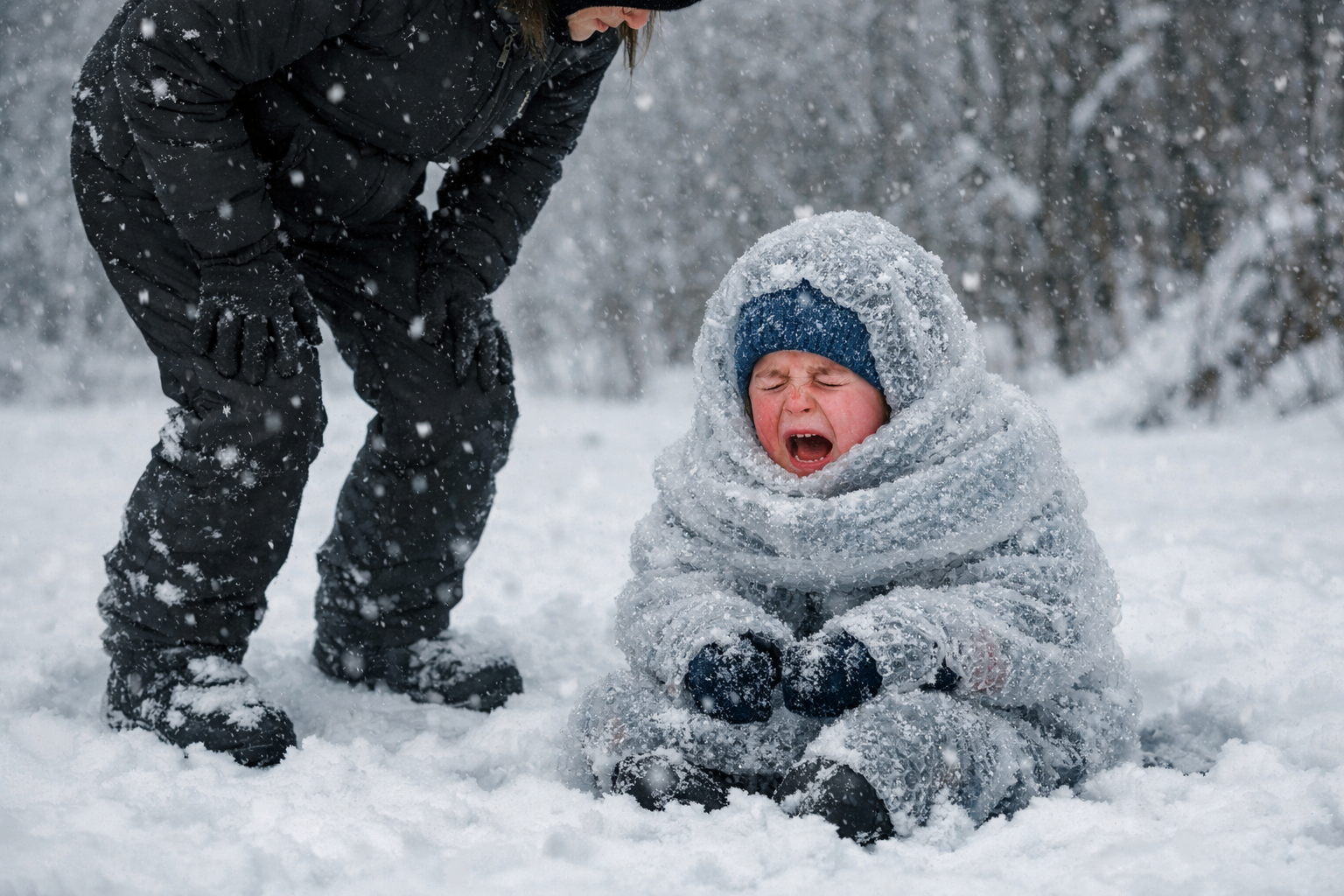
Today’s kids live in a bubble-wrapped world and travel in padded armor with helmets, knee and elbow pads, and reflective vests just to ride a bike with a parent jogging behind like some Secret Service detail. (RELATED: Defying Mr. Softee: The Return of the Presidential Physical Fitness Test)
Even the weather tells a similar tale. You walked to school in snow, sleet, and rain, while two-hour delays only applied to airports and Apollo moon missions.
You fixed things instead of replacing them. You worked with your hands. You didn’t outsource inconvenience.
Whereas today, convenience is the national religion. We have traded resilience for convenience, independence for supervision, and discomfort for instant gratification.
We have apps to deliver groceries, walk dogs, and assemble furniture. We outsource discomfort the way previous generations outsourced dry cleaning. The slightest inconvenience is a crisis. A downed Wi‑Fi connection can ruin a day. A delayed Amazon package is a private tragedy, while others will have a meltdown if their latte has the wrong kind of milk.
We have more comfort than any generation in human history, and somehow, we complain more than ever.
As we prepare for the next existential crisis, maybe the real forecast is simpler: a chance of perspective with accumulating gratitude. Comfort is a blessing, not a birthright or an app you can download.
Maybe that is the lesson buried somewhere under this year’s frozen snowdrifts.
READ MORE from Greg Maresca:
College Football: CFP Punts on Expansion in 2026




















