


A student of college athletic history — and not even a very good student — would have to say the Indiana Hoosiers winning the national championship in football last week was the sports story of the century.
No, not the college football story of the century, but the sports story of the century. More surprising, more unexpected, more unprecedented than anything that happened in baseball, football, basketball, hockey, volleyball, ping pong, rugby, cricket, badminton, racquetball, pickleball, spikeball, roofball, or any other sport involving a puck or a ball or a shuttlecock in the preceding 25 years of the 21st century.
The mind freezes upon attempting to find an analogy.
Indiana winning the national football title is like Ron Paul winning the presidency. Like Kim Jong Un winning the Nobel Peace Prize. Like David Spade winning a Best Actor Oscar. Like The Room winning best picture. Like Liechtenstein winning the World Cup. Like the Nebraska Cornhuskers winning March Madness.
No! Wait! What?
That last one might actually happen.
The historically worst NCAA men’s tournament team is 20–1 at this writing, losing Tuesday night for the first time after a 24-game winning streak stretching to last season, and is ranked fifth in the country. The only power conference team to never have won an NCAA tournament game — 0–8 in eight March Madness appearances — the Cornhuskers have been slated as a No. 1 seed come Selection Sunday by a CBS Sports bracketologist, and a No. 2 seed by ESPN.
Indiana, erstwhile hoop mecca, is a gridiron powerhouse; more than halfway through the season, Nebraska, former football dynamo, has lost only once, to the No. 3 team, on the hardcourt. (RELATED: Indiana U’s Historic Season)
As Walter Sobchak would put it: “Has the whole world gone crazy?”
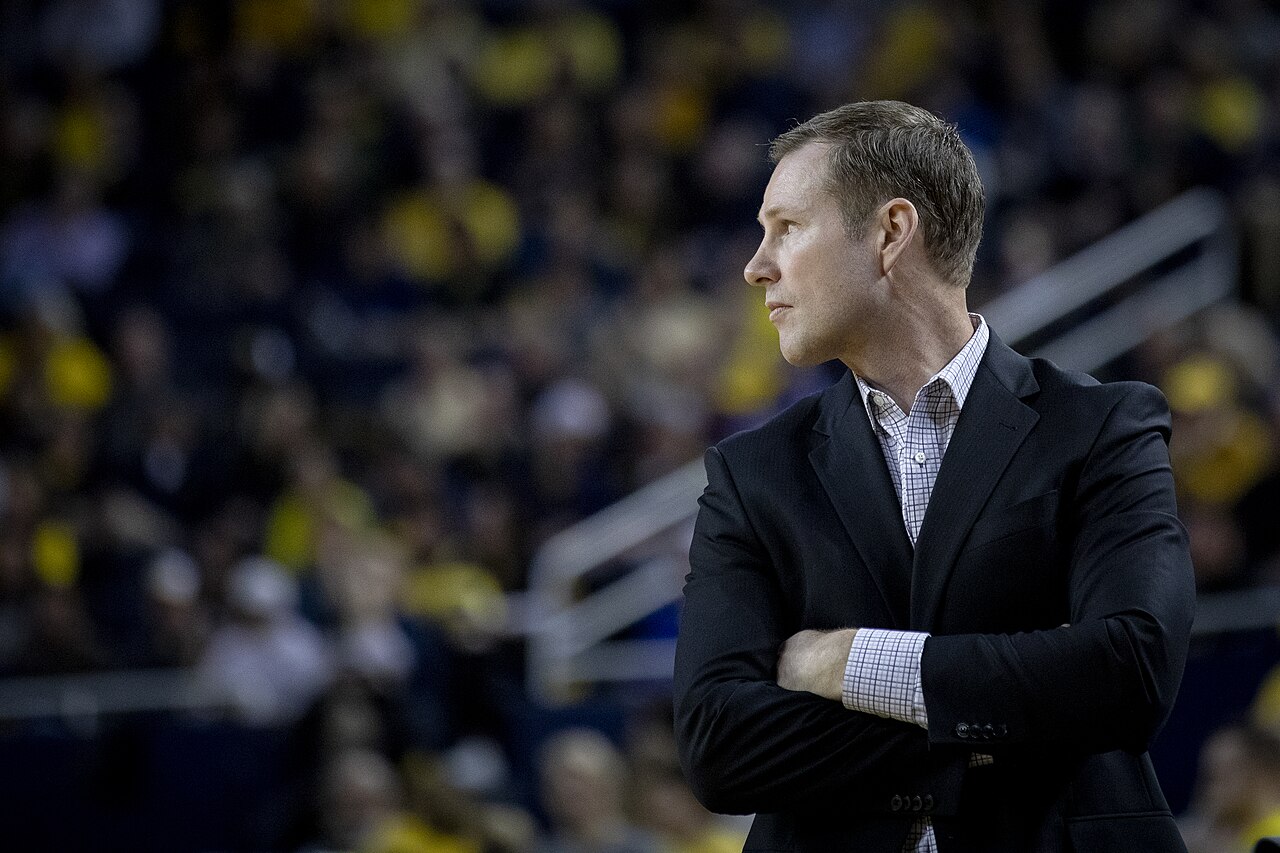
One college town out on the prairie certainly has. The good town of Lincoln and environs pour 15,000-plus into its Pinnacle Bank Arena (PBA) on a regular basis to give their Cornhuskers a crazy home-court advantage. But coach Fred Hoiberg’s team has shown pluck away from PBA as well, notching one of their two ranked wins, over Illinois, on the road.
Hoiberg has been around success his whole sporting life, starring for his hometown Iowa State Cyclones after winning Iowa’s Mr. Basketball award as a standout at Ames High School. Possibly the most popular player in program history, “the Mayor” — a moniker derived from receiving write-in votes during the 1993 Ames mayoral race — parlayed his all-around talents into a 10-year NBA career before slinging a whistle around his neck and moving to the front end of the bench.
After coaching his alma mater to four straight NCAA tournaments and leading the Chicago Bulls for three seasons and change — he was fired after a 5–19 start in his fourth — he took the Nebraska job for the 2019–2020 season.
Success did not come immediately. His Cornhuskers went 7–25 and 7–20 in his first two seasons, then 10–22 and 16–16 in the next two. Coaches with those win-loss records usually find themselves on studio talking-head panels. But about that time, Nebraska was firing one football coach (Scott Frost), with a heavy buyout, and hiring another (Matt Rhule), and may not have wanted to incur two buyouts (Hoiberg’s was $18.5 million) and two expensive hires in the same cycle.
Hoiberg lucked out. And it was lucky for Cornhusker basketball that he did. The past two Hoiberg teams have gone 23–11 and 21–14, before the current one-loss team.
He did it with a different strategy. Instead of flipping a roster annually with transfer talent — a tactic employed to great success in Ames — he set about building a team with more discrimination for character and fit. And he strove to build a culture.
This year’s team doesn’t possess the highest talent ceiling, but it features unselfish grit and savvy play. They spread the floor and jack up a lot of threes, true, but they also get their butts down and play tenacious defense. They play together, pass the ball around, and just plain play harder than their opponents.
Transfers still play a heavy role for Nebraska. But many came dragging less-than-stellar résumés. Pryce Sandfort, the leading scorer, with the quickest release this side of Klay Thompson, was buried on the bench at Iowa. Berke Buyuktuncel came from UCLA, and Jamarques Lawrence from Rhode Island. Two of the top eight are walk-ons, including the coach’s son, Sam, the scrappiest of all.
The leader, though, a big man Hoiberg has built the team around, is from the Netherlands. Rienk Mast, back after sitting out last year with an injury, is a big man who can hit from outside and key to Nebraska’s inordinate basketball success.
Which still feels weird to type. In fact, even weirder is this: So routine has success been for this traditionally futile program that players are asking fans to stop storming the court after ranked opponents fall to the Big Red.
Said Lawrence after the No. 13 (at the time) Huskers took down the No. 9 Michigan State Spartans earlier in the month, and students flooded onto the floor. “We’re supposed to win that game, guys,” Lawrence told the kids, via the AP. “No more court storms, please. I just got to say that.” Mast echoed the plea, albeit more politely: “I don’t blame the fans. They got excited for that win. From here on out, we’ve proven we belong in these games, and we’re supposed to win these types of games.”
Ten years ago, Big Red Nation would have traded all this hardcourt success for a couple of five-star offensive linemen.
Now, I’m not so sure. Nebrasketball might be here to stay.
READ MORE from Tom Raabe:
Southeastern Conference Football Woes
Desperately Seeking $20 Million
Image licensed under Attribution-ShareAlike 2.0 Generic.




















