


Humanity has a rather unfortunate habit of getting things wrong.
Kids figure this out fairly quickly. One day they discover (and it happens quite suddenly) that Mom’s name is not, in fact, “mom,” but something else entirely, like Susan or Beth. The idea is strange to them at first. Then, perhaps, they become a little proud of it. After all, there are lots of moms in the world, and very few Beths or Susans.
This, of course, happens so repeatedly that, at some point, most of us develop the belief that someday — perhaps when we’re all grown up — we’ll stop getting stuff wrong. Then, when we do grow up, life disproves even that belief. (The Spectator P.M. Ep. 181: Chick-fil-A Is Losing Their Biblical Foundation)
This brings us to our friends, the progressives.
At its root, the progressive creed is simple: History and all of humanity are engaged in an unstoppable march toward a future utopia. In this utopia, we’ve all become supermen, capable of fashioning our own morality and our own perfect identities. Practices that once made you a social pariah — homosexuality, for example — will become sacred walks of life. Humanity will embrace one another in love and acceptance.
It’s understandably a bit disappointing to come to the realization that humanity isn’t doing a very good job of “progressing” toward that “utopia” — a position in which Drs. Tessa Charlesworth and Eli Finkel found themselves.
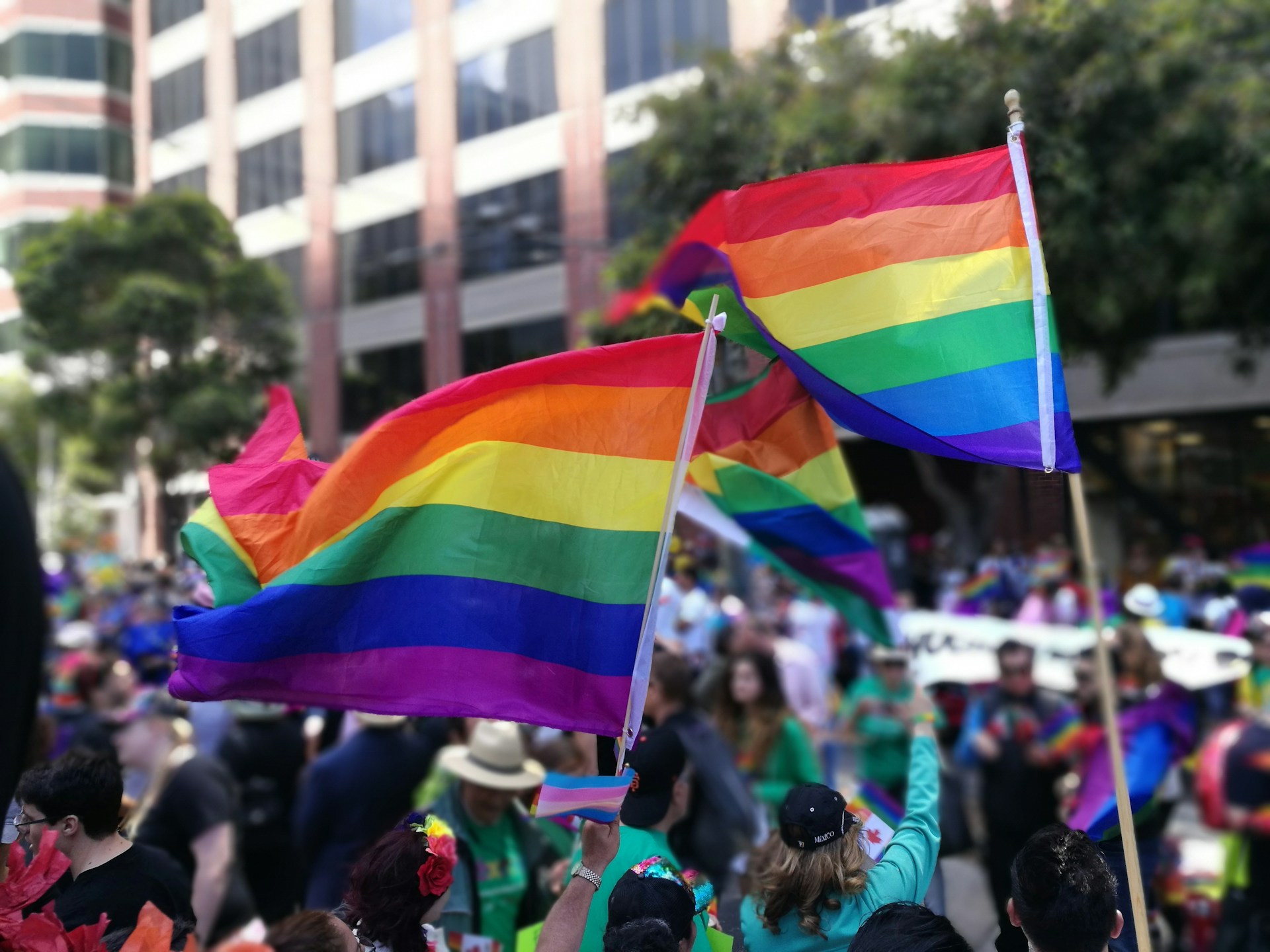
Earlier this week, these two research psychologists took to the pages of the New York Times to explain a rather baffling discovery they’ve recently made in the realm of the human mind: From 2021 to 2024, anti-gay bias rose by 10 percent. “Progress,” in the words of our psychologists, “had reversed.”
This fact is especially astonishing when paired with the assertion that, just a few years prior, “anti-gay bias plummeted — by roughly 75 percent on explicit measures and 65 percent on implicit ones, on average.” In fact, if Americans had continued to “progress” in a numerically logical way, anti-gay bias would have “hit zero as early as 2022.”
But Americans didn’t — more specifically, Americans under the age of 25 didn’t.
Baffling, right?
Lest you come to the wrong conclusion, Charlesworth and Finkel were quick to debunk the popular conservative theory that this rise in anti-gay bias is a side effect of some kind of backlash against the alphabet movement. No, they assure their readers, an increase “in anti-trans bias” is not “meaningfully correlated with subsequent increases in anti-gay bias.” Nor is it, they assure us, the perfectly reasonable response of people justifiably worried that sexual grooming is a problem and “gay adults are recruiting or influencing children to become gay.”
The former hypothesis is one I’ve posited before, and while I’m not completely satisfied with these psychologists’ reasons for dismissing it, I’m happy to continue brainstorming some options. (READ MORE: We’re Winning the Marriage Fight in Spite of Ourselves)
Charlesworth and Finkel did offer their own explanations for this phenomenon, the first of which was that rising social instability might be leading young people to blame gays for their woes.
There’s no doubt that young Americans are experiencing something that might be called “social instability.” Groceries are pricey. Buying a house is prohibitively expensive. Politics are wild. But didn’t we complain about the same things in 2008? And 2015? TikTok videos of young people blaming gays for these problems aren’t going viral. Social media doesn’t replace good data collection, but it does seem that you’d expect an opinion to show up in the public square if anyone seriously held it.
Their second explanation was simply that homosexuality has become mainstreamed. It’s backed by the establishment. Young people like to be revolutionary, and, at this point, being anti-gay is revolutionary.
This may get a bit closer to the truth, but it doesn’t quite capture the whole thing. It assumes a reactive view of politics, in which public opinion swings like a pendulum. In one decade, the theory goes, the public may believe that gays are singlehandedly invoking the wrath of God upon mankind. In the next, gays will enjoy public acclaim for their intrepid bravery in pursuing their own identity. In the following decade, we will burn those who came out of their closets at the stake for their troubles.
But to posit this theory undermines the very optimism so intrinsic to the progressive mindset. Humanity is, apparently, stuck oscillating between two extremes while simultaneously advancing in a slow and solemn march toward a utopia where gay marriage is a sacred institution.
Unless it’s not. Perhaps our society, having recognized that being pro-gay also means watching homosexuals perform private and unnatural acts in public streets while partaking in parades, has rejected the argument that homosexuality is moral. In doing so, it would be making progress — not toward a liberal utopia, but towards a moral world order.
In doing so, our society is demonstrating that it’s developed the maturity to admit that it got something wrong. That kind of progress is, as history demonstrates, hardly inevitable; once we’ve made that progress, we’re going to need to work to keep it that way.
READ MORE by Aubrey Harris: The Problem Isn’t That Plato Is Woke




















