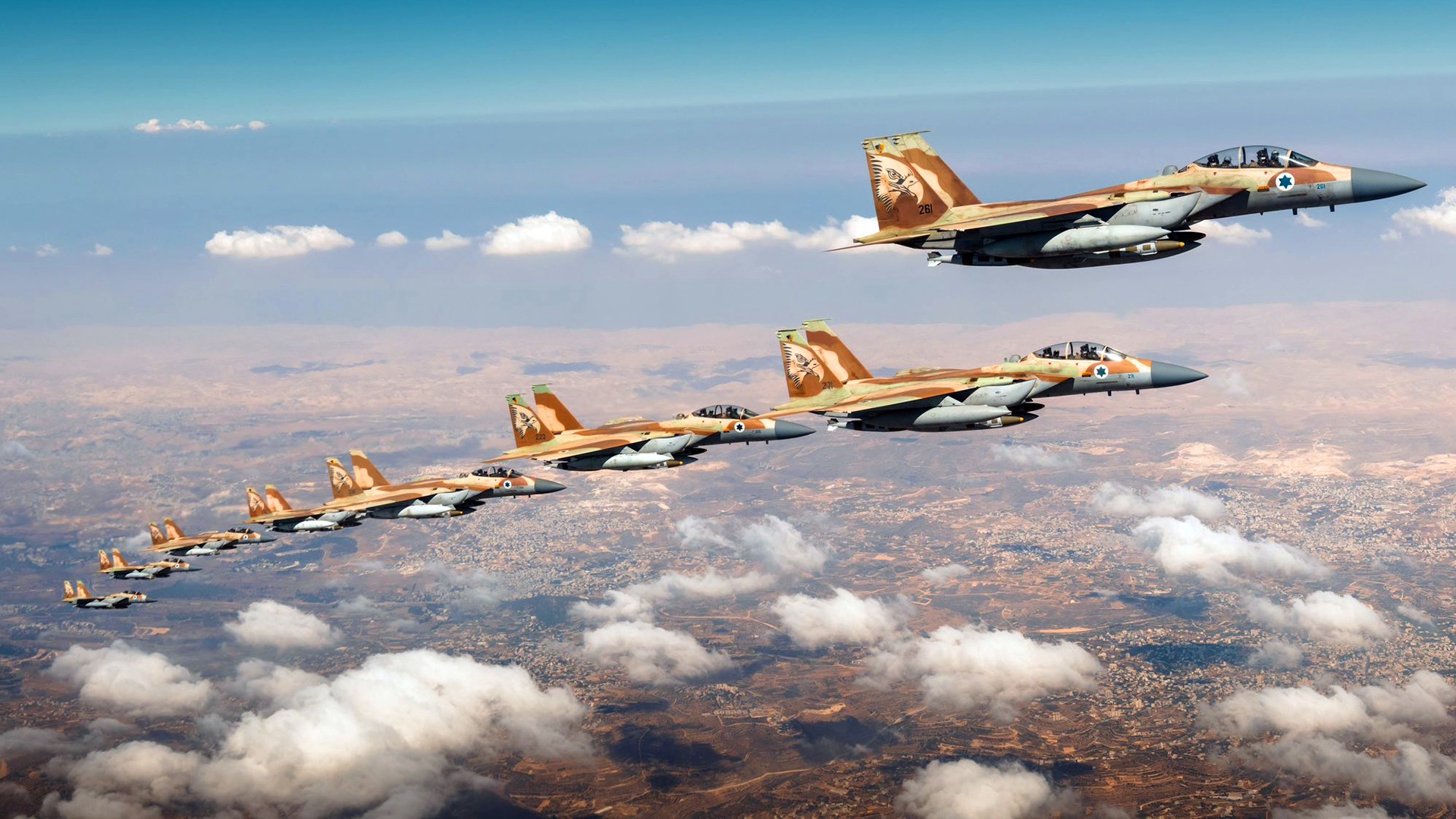


The Israeli Home Front Command issued new warnings over the weekend for the population to prepare for potential conflict with Iran, bringing to mind the 12-day missile war with Iran last June that took the lives of 28 Israeli civilians.
Although the home front’s official security status did not change, warnings of preparedness followed heightened tensions between Washington and Tehran over the bloody crackdown of nationwide protests in Iran. President Donald Trump has warned that military intervention may be necessary to stop the Iranian regime from massacring protesters. Iranian officials, on the other hand, have responded that any U.S. intervention will result in retaliation not only against U.S. military bases and assets in the region, but against Israel.
Demonstrations erupted across Iran on Dec. 28 over the collapse of the Iranian economy. The Iranian currency exchange rate plummeted to over 1.4 million Iranian rials to $1 largely as a result of international sanctions over Tehran’s nuclear program. Protesters took to the streets in major Iranian cities to pressure key government officials to abdicate or flee and to rouse opposition parties to overthrow the Ayatollah’s radical Islamist regime. Government security forces responded to the demonstrations with lethal force and bloody crackdowns.
With the internet shut down, phone lines cut, and Qatar-funded Al Jazeera as the only news agency permitted to broadcast on the ground in Iran, international human rights groups such as the U.S.-based Center for Human Rights in Iran (CHRI) and the Norway-based Iran Human Rights have confirmed through “eyewitness accounts” and “credible reports” that hundreds of protesters have been killed, with the likelihood of the death toll rising.
At the start of the week, the Human Rights Activist News Agency (HRANA) reported the death toll had reached over 600, including 505 protesters and 113 military personnel, with over 10,700 protesters detained. According to Israeli intelligence, the death toll could be as high as 1,000. Reuters cited an Iranian official who said the estimated combined death toll of security personnel and protesters labeled as “terrorists” could be around 2,000. The Iranian opposition website, Iran International, claims that 12,000 people have been killed.
President Trump warned that the United States would intervene with military action if Iranian forces continue to open fire on protesters. According to Department of Defense officials, Trump has been briefed on a wide range of military options against Iran, from long-range missile strikes to cyber operations.
Late on Monday, Trump issued a new 25 percent tariff on exports from any country doing business with Iran. Trump described this order on Truth Social as “final and conclusive,” suggesting that the next step would be military action. The tariffs will most likely affect trade relations with Brazil, China, Russia, Turkey, and the United Arab Emirates, whose economies are tied to Iranian oil.
Iranian Foreign Minister Abbas Araghchi blamed Israel and the U.S. for inciting violence among the protesters. “That’s why the demonstrations turned violent and bloody to give an excuse to the American president to intervene,” Araghchi told Al Jazeera.
“There are those who are trying to drag Washington into war in order to serve Israel’s interests … We have a large and extensive military preparedness compared to what we had during the last war [in June]. If Washington wants to test the military options it has previously tested, we are ready for it,” Araghchi stated.
Iranian Parliament Speaker Mohammas Baqer Qalibaf said on Sunday that in the case of an attack on Iran, “the occupied territories [Israel] as well as all U.S. bases and ships will be our legitimate target.”
With Trump hinting at imminent military action, and officials in Tehran promising a strong and unprecedented retaliation on Israel and U.S. assets, the Israel Defense Force (IDF) is preparing for any scenario.
IDF spokesperson Brig. Gen. Effie Defrin posted on X on Monday that the IDF “is prepared on the defensive front and remains on alert for surprise scenarios, should they be required. The protests in Iran are an internal matter. We continue to conduct ongoing assessments and will provide updates if and when there are any changes.”
Israeli intelligence also assessed on Monday that the Iranian regime may be trying to put an ultimate end to the demonstrations by crushing the protesters in the next 48 hours.
Israeli officials have been in close coordination with Washington over the current Iranian issue. The Israeli “Kan” public broadcasting network assessed over the weekend that if Trump keeps his word to attack Iran, it will immediately lead to another war between Israel and Iran, similar to or of greater intensity than the 12-day war waged last June.
Israeli Prime Minister Benjamin Netanyahu spoke with U.S. Secretary of State Marco Rubio on Saturday about Iran, but the details have not been made public. Israel Channel 12 news reported that Netanyahu also met with top officials in Jerusalem on Sunday as Trump’s national security cabinet convened in Washington to discuss possible military options against Iran. Israeli officials warned that Iran’s recent offer to resume negotiations with the U.S. on a nuclear deal was a ploy to redirect news headlines away from the atrocities committed against the protesters and to delay potential U.S. military intervention. Channel 12 also stated that Jerusalem will know in advance what military actions President Trump decides to take.
The 12-day war last June crippled Iran’s missile arsenal, destroyed its nuclear infrastructure, and left the Ayatollah’s regime with an unquenched thirst for revenge against Israel and the U.S. Since June, Iran has reportedly embarked on rapid rearmament, largely with the help of China and Russia. U.S. military intervention in the Iranian protests means calling Tehran’s bluff on claims that retaliation could be devastating for U.S. bases and ships in the region. Furthermore, Tehran’s obsession with placing Israel in the crosshairs shows the level of inherent animosity the Ayatollah has for the Jewish state, and how seemingly isolated conflicts in the Middle East — from Yemen to Syria to Iran — are tied to the Islamist objective to destroy Israel.
Image licensed under CC BY-SA 3.0.