
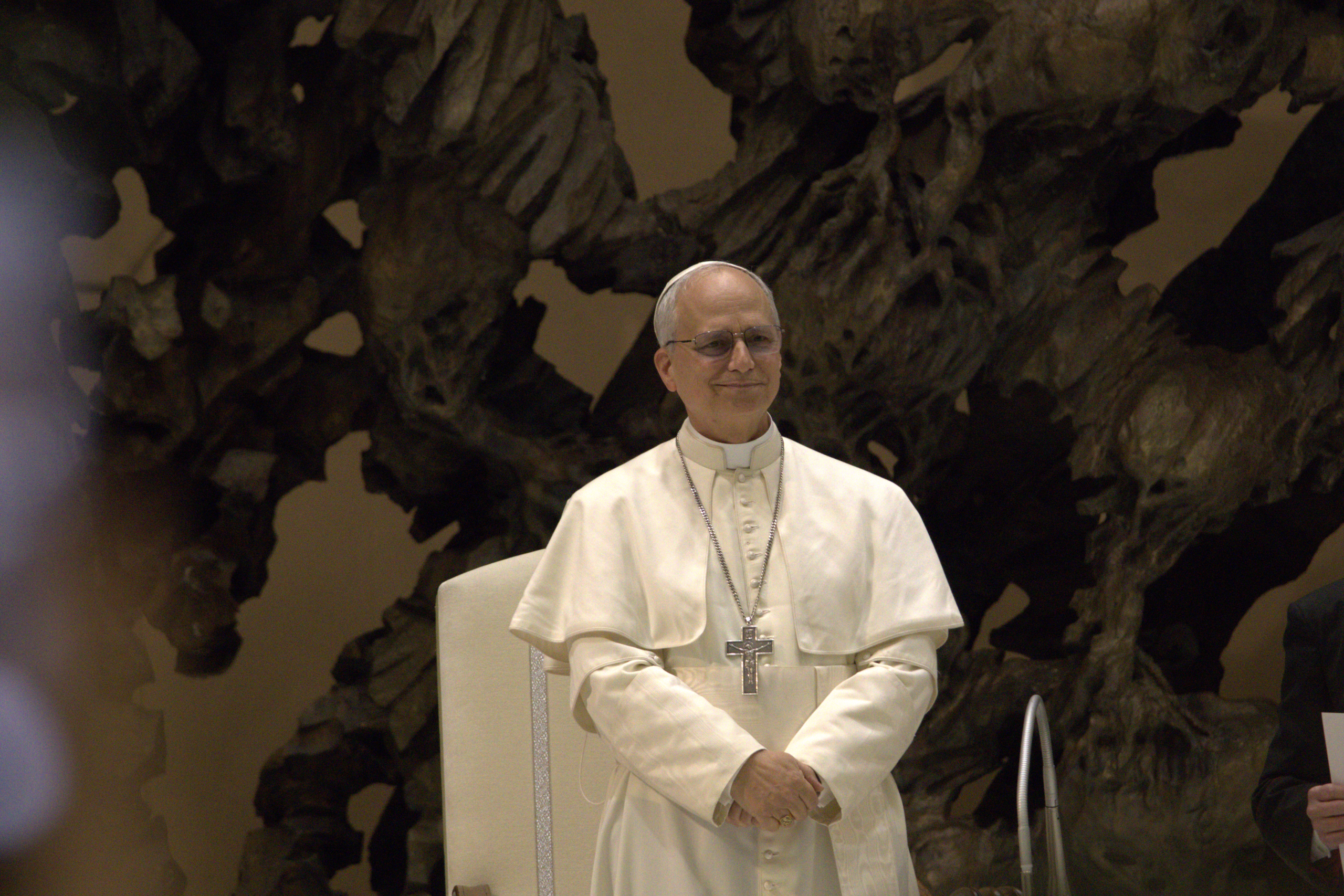


Pope Leo XIV has summoned a second consistory of the College of Cardinals, scheduled for late June. According to Vatican spokesman Matteo Bruni, the pontiff intends to gather the world’s Catholic cardinals together in consistories annually, a welcome departure from the governing style of the late Pope Francis.
It is heartening that Pope Leo XIV has announced annual consistories and full meetings of the whole College of Cardinals.
Under the Francis pontificate, meetings of all the world’s cardinals were rare occurrences. Pope Francis convened ten consistories between 2014 and 2024, but these were for the creation of new cardinals and those new cardinals were often the only members of the college present. Only three “extraordinary” consistories were convened, in which all the world’s cardinals met to offer the pontiff advice on particular issues. This presented several key issues for the Catholic Church during Francis’s tenure.
First of all, the cardinals rarely had an opportunity to meet and fraternize, depriving these Princes of the Church of the chance to get to know one another, form friendships, and debate matters of importance. This resulted in a seeming fracture, a sense of isolation. The cardinals simply did not know their brethren. This isolation was glaringly evident in the papal conclave which eventually elected Pope Leo XIV: It fell to Cardinal Timothy Dolan, then the long-serving Archbishop of New York, to serve as a bridge between a coalition of cardinals from the Western hemisphere, many of whom did not know each other. Each cardinal had to rely on Dolan to understand his concerns and desires for the Church, convey them accurately to other cardinals, and identify a man who could assuage those concerns and fulfill those desires.
The fractured nature of the College of Cardinals under Francis’s rule led to another prominent issue: the pontiff’s autocratic, arbitrary reign. Of course, the pope’s powers are fairly sweeping, but as the Church has expanded over the centuries, the pontiff has often relied upon the counsel of the learned and virtuous men whom his predecessors have elevated to the rank of cardinal. Pope Francis largely eschewed this custom, preferring instead to make his own decisions with little advice, sometimes resulting in damage done to the unity of the Church.
One example of this may be found in the implementation of Traditionis Custodes. Pope Francis’s controversial motu proprio effectively relegated the Tridentine Mass — the form of the Mass celebrated prior to the Second Vatican Council, also called the Traditional Latin Mass (TLM) and dubbed the Extraordinary Form of the Mass by the late, great Pope Benedict XVI — to second class. Pope Francis cited widespread division and schismatic ideology as the basis for the restrictive motu proprio, but a report following his death revealed that Traditionis Custodes, which stripped hundreds of thousands of faithful Catholics across the globe of the liturgical treasure with which they had fallen in love, had been prompted by only a handful of bishops with modernist sensibilities.
Perhaps Pope Francis would have decided against publishing Traditionis Custodes — or at least loosened some of the stringent restrictions it contained — had he heard from his College of Cardinals of the great love that the Tridentine Mass inspired in so many and of their sincere devotion to Holy Mother Church. Perhaps he would have dismissed the cardinals’ advice and issued the motu proprio anyway. Regardless, he did not turn to the cardinals for counsel. The habit of not even seeking the advice of the cardinals led to the moniker of the “Dictator Pope.”
It is heartening that Pope Leo XIV has announced annual consistories and full meetings of the whole College of Cardinals. It is not likely that all of the damage which the Francis pontificate inflicted upon the Church, particularly in terms of unity, will be undone under his successor’s pontificate, but fostering fellowship and, frankly, collegiality among the cardinals is a significant step on the path to healing.
READ MORE from S.A. McCarthy:
Is Hostility Against Christians Going to Increase in 2026?




















