


There’s a sarcastic if not morbid joke within the ranks of the Federal Deposit Insurance Corporation about the meaning of its acronym, FDIC, as it pertains to the numerous “lifers” who have been employed at the FDIC for decades: “Found Dead In Chair.”
As a former employee of the FDIC who worked at the agency for almost eight years (March 2010 to December 2017), it has given me some belated satisfaction to see that the incestuous management, dereliction of duty, abuse of authority, hostile workplace, and organizational dysfunction that I experienced firsthand are finally being exposed to the public and relevant congressional committees.
Thus, the time has come for Congress to eliminate the exorbitant gravy train of career federal employment.
Last November, the Wall Street Journal published several devasting articles on the toxic workplace culture and management misconduct at the FDIC. The articles were so shocking that it forced the FDIC’s board of directors to appoint a law firm to conduct an independent investigation on the allegations last December.
The law firm commissioned to conduct the investigation, Cleary Gottlieb Steen & Hamilton, completed its report in April, and the FDIC released it publicly on May 7, 2024. The 228-page report provides an impressively detailed and wide-ranging account of management malfeasance allegations by over 500 current and former FDIC employees.
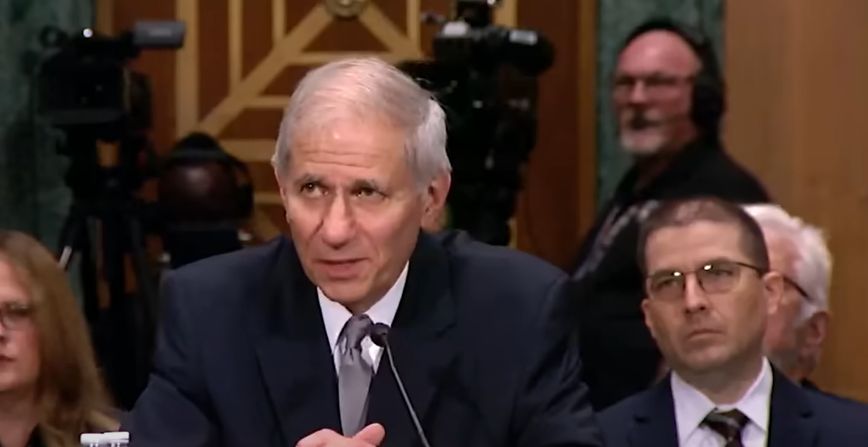
The Cleary report is especially critical of the current FDIC chairman, Martin Gruenberg, who has served on the FDIC’s five-member board of directors since August 2005. His 19 years of service on the FDIC board include almost 10 years as chairman over three separate stints (both as acting and Senate-confirmed), including approximately nine of the past 13 years.
Here’s just a summary of the types of misconduct outlined in the Cleary report:
1. Lack of Accountability: A failure over time to hold wrongdoers accountable in a way that is transparent to employees, with wrongdoers being moved around, even promoted, and not disciplined in any meaningful or perceivable way.
2. Fear of Retaliation: A deep-seated and credible fear of retaliation that has prevented employees from raising and reporting issues of workplace misconduct internally.
3. Insufficient Prioritization of Workplace Culture: A failure by management to sufficiently and consistently prioritize a positive workplace culture that aligns with FDIC values for all employees, and a failure to sufficiently emphasize management and leadership skills among managers.
4. Patriarchal, Hierarchic, and Insular Culture: A culture that is “patriarchal,” “hierarchic,” and “insular” with outdated notions of appropriate workplace behavior and interpersonal workplace interactions.
5. Risk Aversion: An overall risk averseness that permeates the institution, including in connection with disciplinary decisions, that has contributed to the lack of accountability.
6. Lack of Clear Guidance: The lack of clear guidance provided to employees on proper workplace behavior and how to address improper workplace behavior, particularly conduct that, although not arising to unlawful conduct, nonetheless violates the FDIC’s policies, Code of Conduct, and values.
7. Abuse of Power Dynamics: Abuse of certain power dynamics and imbalances, including between commissioned examiners and non-commissioned examiners and within field offices, has contributed to conditions that allowed workplace misconduct to occur.
8. Confusing and Ineffective Reporting Channels: A failure by management to implement and communicate effectively about proper reporting channels and processes involved that has contributed to underreporting, and thus, to the insufficient response to allegations and conditions that require redress.
9. Investigative Processes Lack Credibility: Investigative functions that currently lack credibility among employees and are viewed as being protective of management, which has contributed to under-reporting.
10. Insufficient Record Keeping: Failure by management to keep and maintain proper records that would permit the FDIC to understand and keep track of the volume, trends, and other information relating to workplace misconduct. Inadequate record keeping, identified as a specific issue in the Office of Inspector General’s 2020 report on sexual harassment, remains a problem, including in the FDIC’s current efforts to gather records and information following the recent public attention and in response to the various pending inquiries.
The Cleary report is admirable in providing a thorough, fact-based account of the range of alleged misconduct along with recommendations for remedial actions. However, it does not touch on other important problems at the FDIC that are mostly unknown to the public and systemic in nature. These include: (1) Massive overstaffing and empire building; (2) excessive tenures of chairman, board members, and senior executives; and (3) unprecedented politicization of the board of directors.
Massive Overstaffing and Empire Building
During my last year at the FDIC, in 2017, when the agency had approximately 6,300 personnel, I became increasingly aware of the extraordinary level of excessive staff. I personally witnessed and learned from FDIC co-workers that entire departments within the agency were literally engaged in no meaningful work. One FDIC co-worker in my department at the time told me that he did not have a single work assignment over the course of more than a year. But this was not an aberration or confined to one particular area of the agency. Other FDIC co-workers that I knew in completely separate areas of the agency routinely expressed their frustration with the absence of any meaningful work and the amazing level of redundant staff employed at the agency. (READ MORE from Steve Dewey: Abolish the IRS: A Massive System Beyond Repair)
In fact, I came to learn during my last year at the agency that one entire department was known among its own staff as “the morgue” because its work environment was so lifeless with its own managers routinely being absent from work without any accountability.
Another FDIC colleague of mine with over 25 years of tenure at the agency worked at the Division of Administration — the division responsible for human resources and personnel policies. He confided in me that the FDIC could eliminate 50 percent of its staff across most of the agency and it would not affect the execution of its mission. I also learned from FDIC co-workers that some senior-level managers at the agency would engage in “empire building,” i.e. lobbying internally for larger staff sizes far in excess of actual need.
There was hope for improvements at the FDIC when Jelena McWilliams, nominated by President Donald Trump, took over as the new Senate-confirmed chair of the FDIC in June 2018. She provided a sorely needed fresh perspective on the management of the agency. McWilliams immediately pushed an agenda of less onerous regulation, better relations with the private-sector banking community as well as with other financial regulatory authorities, more focus on financial technology, and a consolidation of some FDIC operations.
After taking over as chairman, McWilliams soon recognized that the FDIC was excessively staffed, especially in the management ranks. I heard from one former FDIC colleague that McWilliams was shocked when she learned of the high number of FDIC employees with salaries in excess of $200,000 per year (reportedly over 180 employees). In March 2020, she initiated the offering of an early-retirement buyout package to an estimated 20 percent of the FDIC’s workforce. However, the buyout package had to be withdrawn less than two weeks after it was announced due to the sudden emergence of financial stability concerns over the COVID pandemic.
During McWilliams tenure as chairman, she was on the right track to reduce headcount and streamline operations. However, since Gruenberg returned as chairman in February 2022, he reversed course and returned to the old ways of running the agency. Over the past three years under Gruenberg’s current stint as chairman, the FDIC’s head count increased by almost 18 percent from 5,793 in 2021 to 6,817 in 2024, and its operating budget increased by almost 30 percent over the same three-year time period from $2.28 billion in 2021 to $2.96 billion in 2024. These recent increases demand an independent audit under the control of the relevant congressional oversight committees. Congress needs to also consider placing the FDIC under its budget appropriations authority.
Excessive Tenures of Chairman, Board Members, and Senior Executives:
As referenced above, Gruenberg is now serving in his 19th consecutive year as a member of the FDIC board of directors, which includes almost 10 years as chairman over the course of three separate stints. Gruenberg’s extensive length of service both as chairman and as a board member is unprecedented in the FDIC’s 91-year history. Given the wide range of problems described in the Cleary report under Gruenberg’s leadership over many years, it is reasonable to consider strict limits on the number of years of service for the chairman and board of directors. This would include closing the loophole on open-ended “acting” positions for those requiring Senate confirmation.
Congress needs to consider more than just the downsizing or reform of federal agencies.
One of the most notable characteristics of the FDIC from my firsthand experience as an employee was the extraordinary length of service of much of the FDIC’s workforce. When I joined the FDIC as a new hire in 2010, I was shocked at how many FDIC employees had seemingly been there forever. While I do not know specific data on FDIC employee tenure, I do know numerous examples of FDIC employees who have worked at the agency for more than 30 years — in some cases even over 40 years. Moreover, many of these longtime FDIC employees have never worked in the private sector or even for another government agency.
From my personal perspective of having worked entirely in the private sector prior to my employment at the FDIC, I was accustomed to people moving around from one private-sector job opportunity to another on a regular basis; i.e. the free job market at work. In sharp contrast, the FDIC seems to operate as a kind of private members’ club — insular and incestuous with very little employee movement. Long-tenured employees become solidly entrenched in their positions and develop a spoiled attitude of entitlement. This is especially true with the abundance of senior executives at the agency — many of whom are grossly overpaid for the limited work that they actually provide for the agency. For senior executives, it’s a comfortable gravy train that most are not inclined to give up for other opportunities, and it’s unlikely that the board of directors would ever address the top-heavy nature of the FDIC as needed.
This systemic problem is not unique to the FDIC. It is embedded across the federal bureaucracy. Thus, the time has come for Congress to eliminate the exorbitant gravy train of career federal employment and enact legislation for terms limits on federal civilian employees.
Unprecedented Politicization of the Board of Directors:
Jelena McWilliams was providing much improved leadership at the FDIC during her initial three-plus years as chairman. However, after Biden replaced Trump as president in January 2021, the Biden administration predictably reversed the composition of the five-member FDIC board of directors from a Republican to a Democrat majority. This resulted in an unprecedented challenge of authority by a new board majority against an incumbent FDIC chairman — never done since the founding of the FDIC in 1933. Rather than enduring a protracted hostile working relationship with the new Democrat majority on the board, McWilliams announced her resignation as chairman on Dec. 31, 2021 and departed on Feb. 4, 2022. This chain of events caused the return of Martin Gruenberg as chairman.
Since the release of the Cleary report, Gruenberg has faced renewed negative media coverage along with brutal questioning and condemnation at hearings before the House Financial Services Committee and the Senate Banking Committee, respectively, on May 15 and 16. Many members of both committees implored Gruenberg to immediately resign. Due to this pressure, Gruenberg announced May 20 that he would be “prepared to step down from my responsibilities once a successor is confirmed.” However, the Wall Street Journal editorial board was highly critical of Gruenberg’s announcement as hypocritical and disingenuous. It allows him to remain as FDIC chairman indefinitely until a replacement is Senate-confirmed. Even assuming the Republicans win both the presidency and control of the Senate in the upcoming November elections, it will likely take until at least next March or April to get a Senate-confirmed replacement for Gruenberg. In the meantime, Gruenberg will continue to push for more politicized, heavy-handed Democrat regulatory policies on the banking sector. (READ MORE: The Deep State’s Deeper Involvement in Biden’s 2020 Election Campaign)
Given the highly polarized political environment in Washington and the unprecedented size and power of the federal regulatory agencies, Congress needs to consider more than just the downsizing or reform of federal agencies. It needs to outright abolish federal agencies that have become excessively intrusive and abusive with their regulatory powers, redundant, politically corrupt, or have otherwise outlived their usefulness. Such is the case with the FDIC.
Steve Dewey is a retired federal financial regulator and managing director of the Bastiat Society of Washington, DC (www.aier.org/chapter/bastiat-society-of-dc). He is also founder of GeoFinancial Trends, LLC (www.geofinancialtrends.org) and writes on Substack (stevedewey.substack.com).




















