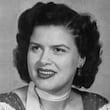


Tuesday it will have been a half-century since the premature death of Patsy Cline deprived the world of one of the finest and most charismatic musical stylists of the 20th century (or of any other century, come to that).
Patsy’s many fans, which include me, have every reason to wonder what might have been had she been given a few more decades to perform and record. And every reason to mourn what is surely a considerable loss. But damn I’m glad we had her while we did. What she left behind is a treasure.
Those who love her music might celebrate on this melancholy anniversary by rehearing her classics: “Crazy,” “Sweet Dreams,” “I Fall to Pieces,” “Faded Love,” “She’s Got You,” “So Wrong,” et al. These songs, hits on both the country and pop charts a half century ago, still hold up today. (I came up with country, so Patsy was always a country singer to me. But her songs are equally appealing to many who never wore a cowboy hat or heard a steel guitar.)
Patsy also did upbeat numbers, including a fine job on the Hank Williams, Sr. standard, “Lovesick Blues.” (Yes, a song named “Lovesick Blues” can be upbeat. Check YouTube.) But it was in the slow ballads that her rich, bold contralto voice, perfect pitch, and raw emotional intensity took the love song to a new level, one that, a half century out, has yet to be matched. It takes a heart so hard a coyote wouldn’t eat to listen to a Patsy Cline love song and not feel exactly what she meant you to feel. Patsy lived a love song, and she made you live it too.
Robert K. Oermann, who writes about Nashville and country music, nailed it with, “Patsy could paralyze audiences with her ballads.” Just so. I know the feeling.
Ironically, Patsy had to be talked into recording some of what turned out to be her signature songs. “Crazy” is Patsy Cline. Written by a 27-year-old Willie Nelson, “Crazy” by Patsy went on to become the number one jukebox tune of all time. But Patsy didn’t like the demonstration tape of the song, performed by Willie, who even then was always ahead or behind the beat. She had to be dragooned into recording it, and she finally did it her way, which turned out to be magic. She also didn’t like “I Fall to Pieces,” a great country song that turned out to be Patsy’s second hit (“Walkin’ After Midnight” was the first). She originally didn’t like “Sweet Dreams” either, her rendition of which still gives chill bumps. Many have recorded these songs after Patsy. No one has improved on them.
Though Patsy’s fame is based largely on her slow songs of thwarted love and yearning, she preferred performing the red-hot-mama songs. Those who knew her speculate this is because these matched her personality, which was sassy and brassy and smart. Not especially pretty, she was well built and sexy. She was loud and friendly (unless you crossed her), they say. She enjoyed a drink, cussed like a sailor, and though married didn’t spend nights alone on the road unless she wanted to. She called everybody “hoss.” She was the life of the party, which was wherever she was.
The songwriters who hung out in Tootsie’s Orchid Lounge, across the alley from the back door to the Grand Ole Opry building, say Patsy was a regular there and always one of the boys. She could tell a joke that was not just as raunchy as the boys told, but funnier too. She didn’t look away when it was her turn to buy a round. She was not arrogant, but uber-confident. In short, she was quite a package. She stuffed a lot of life into her few years. And she gave back a lot of life. She was, to use the technical phrase, a hot ticket.
Things didn’t start out so hot for Patsy, who was born Virginia Patterson Hensley, on September 8, 1932, in Gore, Virginia, just six days after her parents’ shotgun wedding. Her mother was 16, father 43. The only helpful thing the abusive father ever did for the family was to bug out when Ginny, as she was then known, was 15, leaving her and her mother to scrape by financially. Patsy dropped out of high school to work and to play as many road houses, Moose Hall dance gigs, and county fairs as she could in order to jump-start her musical career. By way of the Arthur Godfrey show and the Grand Ole Opry, and a walk-on by first husband Gerald Cline, whose only impression on Patsy was to leave her with a last name, the world finally got to know Patsy Cline.
Tragically, we only knew her for a few years before she was gone. Her career took off in the early sixties, with hit after hit on the country and pop charts. In early March of 1963, Patsy flew to Kansas City to play a benefit with several other country stars for a DJ who had just died in an auto accident. After the concert, Patsy and two other country singers, Cowboy Copas and Hawkshaw Hawkins, decided to fly back to Nashville in a single-engine plane flown by Patsy’s manager, Randy Hughes. The weather was dicey, so singer Dottie West offered to drive Patsy to Nashville. Patsy declined.
The flight was delayed a day, and then had to dodge around bad weather, tacking its way back to Nashville. The luckless group made it to a small airport at Dyersburg, Tennessee, just 90 miles from Nashville. They took off from Dyersburg in bad weather and, minutes later, crashed into a hill. No one survived. Pasty Cline was 30.
Two of Patsy’s big hits “Sweet Dreams,” and her rendition of the Bob Wills classic “Faded Love,” recorded before Patsy’s Kansas City trip, weren’t released until after she was gone. Albums of Patsy Cline favorites have sold in the millions since her death, and rack up respectable sales even now. (For TAS readers with a Patsyless music library, I recommend “Patsy Cline’s Greatest Hits,” 1967.) People who weren’t yet born when Patsy died respond to her music. You just have to say “Patsy” and they know who you mean. Patsy’s continuing popularity is because her music is as timeless as love itself. In this way she is still with us. For which we can be truly thankful. It takes more than a trifling half century to make stale the work of the artist and great soul that was Patsy Cline.