The American Spectator

home
ADVERTISEMENT
Media Matters
Print Email
Text Size

Media Matters

Pancake Red Stone

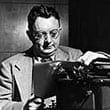
When it came to the Soviet Union, the journalist I.F. Stone wasn’t so independent.

“Izzy taught a great many of us about the importance of independence, the critical ingredient of a good journalist,” journalist Robert Kaiser, who later became managing editor of the Washington Post, said of I.F. Stone upon his death in 1989. “Izzy was totally independent from the politicians and officials he wrote about.” The Times of London titled its obit: “I.F. Stone: Spirit of America’s Independent Journalism.” Jeff Cohen, the founder of Fairness and Accuracy in Reporting (FAIR), more recently called Stone “an American patriot” whose “journalistic hallmark was independence.”

But the man behind I.F. Stone’s Weekly was neither patriot nor independent. He was an agent for the Soviet Union.

“Charges about Stone’s connections with the KGB have been swirling about for more than a decade, prompting cries of outrage among his passionate followers,” write John Earl Haynes, Harvey Klehr, and Alexander Vassiliev in an excerpt of their new book, Spies: The Rise and Fall of the KGB in America, posted at Commentary magazine’s website and linked by the Drudge Report. “Until now, the evidence was equivocal and subject to different interpretations. No longer.”

Long before the trio of Cold War scholars came along with the latest evidence, the case against Stone showing him as a compromised rather than an independent voice was considerable.

The WWII-era Venona intercepts of Soviet spy cables document repeated attempts by Soviet intelligence to contact Stone. “PANCAKE to give us information,” one such cable triumphantly reported. Stone, the Soviet spymaster noted, avoided the earlier entreaties because he did not want to attract the attention of the FBI or damage his career. That said, he reported that Stone “would not be averse to having a supplementary income.”

Atop the Venona intercepts, numerous mid-century FBI informants, including the former managing editor of the Daily Worker, reported Stone as a onetime Communist Party member. KGB General Oleg Kalugin, who plied his trade as a press liaison at the Soviet embassy in Washington, D.C., conceded in the early 1990s that Stone had been his agent. “We had an agent — a well known American journalist — with a good reputation who severed his ties with us in 1956,” he declared. “I myself convinced him to resume them. But after 1968, after the invasion of Czechoslovakia… he said he would never again take any money from us.” Kalugin subsequently identified the unnamed agent as Izzy Stone. After an uproar by Stone’s admirers in the U.S. and the former Soviet Union, Kalugin vacillated as to how formal the arrangement with Stone actually was.

And now, Vassiliev, a KGB-agent-turned-historian, has recovered more than 1,100 pages of notes from research inside Soviet intelligence archives. Included among them are details of Stone’s work as a Soviet agent in the 1930s. “Relations with Pancake [Stone’s codename] have entered the channel of normal operational work,” a document from 1936 reports. The intelligence files outline Stone’s role in recruiting other agents for the KGB and passing along information to his handlers. “To put it plainly,” Haynes, Klehr, and Vassiliev write, “from 1936 to 1939 I.F. Stone was a Soviet spy.”

Even without the declassified FBI memos, decrypted Venona cables, and the material from Soviet-era archives, Stone’s peculiar prose was enough to raise suspicions.

During the Great Depression, Stone judged a “Soviet America” as “the one way out that could make a real difference to the working classes.” When Sidney Hook, John Dewey, Norman Thomas, and other leftist intellectuals issued a proclamation condemning the Left’s double standard on totalitarianism in Germany versus totalitarianism in Russia, Stone was a signatory of the response that held it “a fantastic falsehood that the U.S.S.R. and totalitarian states are basically alike.” In the waning days of World War II, long before the left expressed outrage over Robert Novak’s “outing” of CIA officer Valerie Plame, Stone exposed four American intelligence officers, including future CIA director Allen Dulles, working undercover in neutral Switzerland. Stone even advanced the idea, rejected just about everywhere save for one prison state in East Asia, that the South Koreans started the Korean War.

Alexander Vassiliev’s find documenting the espionage work of Izzy Stone adds further confirmation of the journalistic icon as a compromised puppet manipulated by Moscow ventriloquists. More significantly, it exposes the gullibility, and utter incuriosity, of journalists when the subject deserving investigation is one of their own—both professionally and politically. It is a mark of dishonor for journalism that journalists would honor someone so dishonorable to their profession. But honor him they do.

Harvard University’s Nieman Foundation for Journalism awards an “I.F Stone Medal for Journalistic Independence.” Ithaca College hosts an “Izzy Awards” for “independent media.” The University of California-Berkeley’s graduate school of journalism offers “I.F. Stone Fellowships.” In 1999, New York University’s journalism department, and a panel of prestigious scribes that included Jeff Greenfield, Mary McGrory, and Morley Safer, named I.F. Stone’s Weekly as number 16 on its list of the 100 best works of U.S. journalism in the 20th century.

Don’t expect the academic honors, or the media hosannas, to evaporate anytime soon. Stone took money from the KGB and not the CIA, after all. Izzy Stone was wrong about nearly everything he wrote about during the Cold War. It is only fitting that his admirers got him so wrong too.

topics:
Mainstream Media, Communism

About the Author

Daniel J. Flynn, the author of The War on Football: Saving America’s Game, blogs at www.flynnfiles.com.

Letter to the Editor View all comments (84) |

Billy| 4.24.09 @ 6:28AM

We still got it. Who says the conservative movement is out of wind? We're still outing communists from the 50's! Oh were relevant alright. No question. How does everyone feel about the threatened Soviet boycott of the Lake Placid Games?

George Crosley| 4.24.09 @ 6:39AM

That's it, Billy: if you can't refute what the writer says, simply change the subject or attack him as out of touch. In truth, what the writer is saying (at least in part) is this: during the postwar era, America's best and brightest sneered at the very idea that communism posed a threat to us. Over time, the best and brightest have been shown up as pretentious fools. And some of those same voices from the Cold War era are now steering America into what they consider a great big beautiful tomorrow. We should watch their progress with prudent caution.

Billy| 4.24.09 @ 7:14AM

There is no question that I.F. Stone and his Communist leanings poised a fundamental threat to the American way of life. Those foolish intellectuals in the 50's missed it. To think, he was almost the godfather of my first born and he came so close to taking over the United States, him and his dangerous ideas. I can't imagine why E.F. Stone didn't just come out and admit he was a Communist. I mean it's America, it's not like anyone's gonna persecute you, it's the 50's right, they only perscuted blacks back then. So believe me, I am just as weary as you are of people trying to steer this country into a "great big beautiful tommorow." It's the fools who think it's morning in America. You and I both know that it's dusk, or at the very least mid-afternoon. So stock up on those canned good, shotgun shells and bibles my friends.

Pingback| 4.24.09 @ 7:40AM

Pancake Red Stone links to this page. Here’s an excerpt:

…soon. Stone took money from the KGB and not the CIA, after all. Izzy Stone was wrong about nearly everything he wrote about during the Cold War. It is only fitting that his admirers got him so wrong too. Read More Share and Enjoy: Related posts: Good Riddance As I mark my fiftieth year in the craft... Happy Earth Day, Vladimir Ilyich When I lived in Waterbury, Vermont, in the late... How to Handle a Bully: Nixon vs.…

Pingback| 4.24.09 @ 8:17AM

Red journalism | Babalú Blog: an island on the net without a bearded dictator links to this page. Here’s an excerpt:

…Policies about comments Customizing your avatar Polls Archive Babalu Mobile Edition Fair Use Notice Red journalism By George Moneo, on April 24, 2009, at 8:17 am An icon of "journalism" revealed as a red. What a surprise: "Izzy taught a great many of us about the importance of independence, the critical ingredient of a good journalist," journalist Robert Kaiser, who later became managing editor of the Washington Post,…

stmichrick| 4.24.09 @ 9:00AM

Billy;

..and your point is...
Communist subversion was a good thing?
There is nothing to be learned from that period in history?
Soviet efforts to influence American journalism and popular thought were cultural exchange programs?
Today's (leftist) politicians and journalists don't attempt to disguise their intentions by declaring themselves objective observers?
Nationalizing large segments of the economy (banking, manufacturing, heathcare) are milestones on the road to prosperity?

Please share more wisdom with us here at AmSpec on this.

Gill O’Teen| 4.24.09 @ 9:29AM

I.F. Stone was simply a man ahead of his time. Nowadays in the obumassiah age of enlightenment, if he desired a supplementary income, he could simply take a position as a journalism instructor at Chicago University of Bill Ayres (CUBA).

Bilwick| 4.24.09 @ 10:13AM

In the Sixties, when political lunacy was at an all-time high (a high that would not be topped until those children of the Sixties, Bubba and the Red Diaper Baby, would be elected president), Stone had kind of cult among members of the New Left and their sympathizers in the MSM. The image was that he was some sort of sage, who told the truth no "establishment" journalist dared tell. Never read the man's stuff, so I couldn't say, although the fact that his articles appeared regularly in the socialist NEW YORK REVIEW OF BOOKS, and that he was a kind of idol to philsophiocal and moral idiots, made me sceptical. I mean, if you have a politico-economic philosophy based on "legalized plunder" (to use the classic phrase)--plus you're in a movement that, since at least since the days of Lenin, believes that "there is no truth but revolutinary truth"--why would I believe anything you have to say? However, I was amused that the British journalist Malcolm Muggeridge, appearing on Buckley's FIRING LINE around that time, chuckled over Stone's new found status as some kind of Font of Truth and Wisdom. Muggeridge said that once, just for his own amusement, he went back through Stone's articles in which Stone confidently and "sagely" prophesied, "and I found," Muggerisdge said, laughing, "that he was always wrong!"

Bilwick| 4.24.09 @ 10:20AM

"stmichrick:"

To address your question: From what I can tell, yes, that's pretty much what Billy's saying. From long familiarity with his type, I would guess that he doesn't want to come right out and say them, lest he be challenged to defend his position with facts and logic. And that would be like asking "Timmah" on SOUTH PARK to tap dance.

John II| 4.24.09 @ 11:14AM

Back in the olden days (roughly from the early fifties through the late eighties), which the one called "Billy" apparently regards as of no relevance (to what?), George Orwell's famous 1946 essay on "Politics and the English Language" was standard fare in college writing classes, a reliable chestnut anthologized in the readers to spark discussion about such larger topics as faulty diction and the abuse of language.

At one point in the essay, Orwell remarks thus: "Consider for instance some comfortable English professor defending Russian totalitarianism. He cannot say outright 'I believe in killing off your opponents when you can get good results by doing so'. Probably, therefore, he will say something like this:
'While freely conceding that the Soviet regime exhibits certain features which the humanitarian may be inclined to deplore, we must, I think, agree that a certain curtailment of the right to political opposition is an unavoidable concomitant of transitional periods, and that the rigours which the Russian people have been called upon to undergo have been amply justified in the sphere of concrete achievement.'

The inflated style [Orwell continues] is itself a kind of euphemism. A mass of Latin words falls upon the facts like soft snow, blurring the outlines and covering up all the details . . ."

Orwell wrote the essay in 1946; it became an instant "classic," and soon became as well a regular source of reflection for those interested in learning to write well.

But during the late eighties and early nineties, after some forty years of use in the schools, the essay was removed from the standard college readers, despite an enduring relevance to, for example, the kind of language that issues in even greater quantity and lower quality from such sources as the State Department and the New York Times editorial pages and the bafflegab produced by literary theorists and the journals of the of teachers of English and, still, the public statements of apologists for today's totalitarians.

Since witnessing this de facto suppression of thought by the textbook publishers, I have often wondered whether it's the general timbre of the Orwell essay that gave offense to left-dominated academia or just the single crack about the "comfortable English professor."

In any event, the one called "Billy" seems to be the product of an educational system that suppresses thought, albeit lacking even the soft faux-eloquence attributed to the comfortable English professor as cover for a smug sneer.

Thomas| 4.24.09 @ 11:19AM

The intelligencia has long been in love with socialism, especially totalitarian socialism. They fervently believe that the "common" masses are incapable of governing themselves and need someone to rule them. And, of course, the members of the intelligencia will be the ones to do this. After all, what is the use of being a superior human being if you don't have more status and power than any member of the "great unwashed"?

The members of the intelligencia in the U.S. who embraced Communism were fools. Russian communism was nothing like what they believed it to be. In fact, members of the intelligencia were very likely to be the first ones on the train for Siberia.

Fools, praising other fools. Apparently nothing much has changed, has it?

John III| 4.24.09 @ 12:43PM

I glad you take such solice in Orwells work. You should check into what his own economic leanings are. I think you'd be suprised to find that he was in fact a Marxist. Orwell actually fought on behalf of the Communist party against Franco during the Spanish Civil war. You're understanding of his work astounds me. Seriously. So very sharp you are. Obviously there is a massive conspiracy in the collegial system which is run by...I don't know...the illuminati, to get that quote wiped from the textbooks. We all know that academia has been taking its orders from the USSR for a long time. Why else would they remove a quote about the USSR in the late eighties and early nineties....hmmmm? It's a pickle.

Big Leo| 4.24.09 @ 12:56PM

"I think you'd be suprised to find that he was in fact a Marxist. Orwell actually fought on behalf of the Communist party against Franco during the Spanish Civil war." I think you'd be surprised to find that he fought with POUM, the anarchist militia rather than the Communists and had to flee for his life to escape a Communist purge. He was a strong critic of Communism from that time forward, although he remained a mild socialist whose writing were mostly apolitical except for his denunciations of Communism. " Animal Farm " was a clear denunciation of the Communist revolution, with easily identifiable caricatures of the main leaders, and "1984" attacked both Communism and the Socialist government of his time.

vatvince37 | 4.24.09 @ 1:58PM

John III
Point of order:
Orwell actually fought on behalf of the Communist party against Franco during the Spanish Civil war.
Not true...by a long shot. Orwell, aka Eric Blair, was a died in the wool Socialist. When it became apparent that the Communists were running the show, he left Spain - badly wounded - and highly disillusioned with the Communists, who claimed also to be Socialists. In two essays: "Homage to Catalonia," and "Looking Back on the Spanish Civil War," that is made abundantly clear.

Marc Jeric| 4.24.09 @ 2:12PM

There is no doubt in my mind that we will shortly be blessed with the benefits of socialism. Just a little time after that, when the benefits of socialism prove missing, we will switch into a communist dictatorship. My only happy thought about that unavoidable happening is that, in accordance with my personal experience when the communists took power in Yugoslavia, the first victims of the massive "chistka" (or cleansing if you will) will be the "inteligentsia" of our MSM press and TV and the marxist professoriat that infects now our universities at the rate of 90%.

Big Leo| 4.24.09 @ 2:16PM

Not entirely accurate, John 111. "1984" was also poking fun at the socialist government, and the title came from the year it was started, 1948. While Orwell never gave up his belief in socialism, he became bitterly opposed to most manifestations of it. And "Homage to Catalonia" and "Looking Back on the Spanish Civil War" made it abundantly clear than he was not fighting on behalf of the Communists, but of the elected Spanish government. And he did fight in a POUM unit and had to flee for his life from the Communists, which was made abundantly clear in his writings.

John II| 4.24.09 @ 2:39PM

Another point of order. Orwell's "socialism" was of a sort Orwell himself was never sure about, and it's been speculated that if he hadn't died so young (at age 46, of a congenital lung disorder) he would most likely have taken a route similar to those of James Burnham or Arthur Koestler or Irving Kristol. Norman Podhoretz suggested in a 1984 essay commemorating Orwell's famous dystopian novel of that title that Orwell was on his way to becoming an early "neoconservative" when he died. Whatever.

The important legacy of Orwell was his knack for seeing clearly through bosh, and Orwell's absolutely priceless and permanently useful skewering of the fashionable bourgeois socialists of his day (and ours) is nowhere in his writings on sharper display than in "The Road to Wigan Pier," which he was commissioned by the Left Book Club to write on the topic of mass unemployment in the coal mining areas of Lancashire and Yorkshire. But his keen polemic went well beyond the sufferings of the miners and their families to include an indictment of the "soggy half-baked insincerity" of the chic types who gave him the assignment in the first place.

Orwell had his weaknesses as a writer and thinker: his fiction was always somewhat labored, and his take on some topics (the Catholic Church, for example) was shallow. But he held his hand steadily on the pulse of a corrupt intellectual culture and offered diagnoses both engaging and plausible. He was an honest man on the left, and the Left has always hated him for it.

ray bob| 4.24.09 @ 3:15PM

as previously stated; the first one's dragged off are the useful idiots in the university garb. just look at present day south america.

cheers!

Howard| 4.24.09 @ 5:25PM

I don't remember anything that Stone did that was meaningful. He seemed to be a gadfly, but not very influential. I can see where the media get off on an "independent" journalist or whatever. Sort of like how Hollywood gets off during the Oscars on mundane Left wing short movies that are mindlessly boring. The old fool Stone was a traitor.

Fred E.| 4.24.09 @ 7:25PM

I suggest we all brush the dust off of our copies of "None dare Call it Treason", and "Masters of Deceit" .

Big Leo| 4.24.09 @ 7:49PM

Stone was an icon of 'progressives' back in the sixties, and held up as an example of (believe it or not) nonpartisan reporting. I was a reader of the NY Review of Books at the time, and remember his work with distaste. Arguing with leftists about him would usually bring in that other great martyr who was innocent of being a Commie-- Alger Hiss. The best argument against the left today is the same one Malcom Muggeridge said abut Stone-- he was always wrong. Historically, it's hard to find an analysis of what 'progressive' journalists from Duranty to Stone that doesn't point out their many lies and errors. At least Stone was paid to lie-- the rest were too stupid to be paid.

fred e| 4.25.09 @ 12:09AM

Thanks Leo.
My referencing "none dare call it treason" and, " masters of deceit", harkens back to the old days (new days?)

My youngest son, recently returned from Iraq, suggests (ironically) we were better off when Russia and China were commies .
I agree with him.
We've ( Richaird Nixon) have unleashed upon the world 3 billion ( including India ) capitalists.
I long for the old days when commies were commies and capitalists were capitalists.

SLG| 4.25.09 @ 8:35AM

One quick observation about a posting "Billy" made 'way up toward the top, about stocking up on guns, groceries, Bibles and stuff....
As a Deist, I sure don't require the Bible (but if it's your thing, go for it) - - but I did go shopping for another box of Remington's finest, 500 rounds, as I prepare for the eventual take-over try by Holder, acting in behalf of our Narcissist-in-Chief and his Merry Marxists.
But, no -- the store is "Sold-Out" of said ammunition, and they're not sure when they're going to get more....?
People are concerned, mighty worried about the total and absolute Filth inhabiting our White House and its environs -- I'm not scared for myself, but for my kids and their children.
And, yeah - Dubya was an awful president, but this guy is dangerous!

Billy| 4.25.09 @ 10:40AM

Dangerous how? Because he continued the same TARP program that Bush passed? Say what you want about Bush, but no economist in the world would advocate letting your financial system collapse. The one good thing Bush did was bail out Wall Street. He set aside his ideology because Paulson and Bernanke told him flat out what would happen if he didn't. Every bank in America would've closed down, and America's bank accounts along with them, leaving FDIC to foot the bill (but only up to $100,000).
How else is he dangerious? Is it because he cut taxes for 95% of Americas? Taxes are 10% lower today than they were under Reagan, the same as they were under Clinton.
Is it because he closed secret torture facilities that were a national disgrace and a stain on the Constitution and International Treaties and Laws? I don't know about you, but I find secret prisons pretty dangerous as someone who believes in the protectiosn afforded by the Bill of Rights, including the 2nd amendment.
Speaking of the 2nd Amendment, which I support, but not to the point of handing out UZI's to mental patients, Obama has given no indication of increasing regulations on firearms. Furthermore, Democratic members of Congress made it perfectly clear that they wouldn't support such measure. The whole gun control fear is clearly manufactured to drum up sales for the industry.
What I don't see is what makes Obama "dangerous" in the eyes conservatives. Dangerous implies more than just not agreeing with his policies, but that he poises some kind of threat. At first I thought is was just that he had a D after his name. But I don't recall people calling Clinton "dangerous" and stocking up on amo (with the exception fo Tim McVeigh and David Korash). The impression I'm getting in the Conservative ethos is that what separates him from previous democractic adminstrations is a combination of his name, and his race.

SLG| 4.25.09 @ 12:49PM

Not going to bother with all that innuendo and claims/platitudes -- simply don't have time.
What might be helpful some much needed common sense. To wit, you call 911 and the cops will arrive, but probably not in time. Then, with the increases in car hijackings, gang initiations and 7-11 hold-ups, you bet, I carry a gun in my car – for self-protection AND possibly assisting others in need. The London's Times offered this news item: “If anything, the recent shootings have inspired more Americans to buy guns, recession or no recession. In fact, all over the country they are stocking up on as many pistols, rifles, and shotguns as possible before the Obama Administration bans or taxes them. The FBI carried out more than 4.2 million background checks on behalf of gun-dealers from November to January – sales are up 31 per cent on the same period in the previous year. Interestingly, however, violent crime rates have at the same time been falling in Los Angeles, New York and other big American cities. The ‘experts’ are at loss as to explain why this should be happening.”
Now, because of the political ramifications (AKA "sewer") we presently find ourselves in with the Marxist Obama regime with the likes of Eric Holder, candidly, I'm worried -- not for myself, but for my kids and their children. And, oh, for the record, should there be any doubt, I’m a veteran, and NOT a Republican.
There's a moral here: Love your country, but don't trust your government.

Gill O’Teen| 4.25.09 @ 1:25PM

No Billy, what separates obumassah from previous democratic administrations is his marxist ambitions to secure full control of this country for himself and his posterity with the aid and comfort of his loyal lemmings thus denying the rest of us and our posterity the Blessings of Liberty without our consent. Clinton tried with his wife’s (the current secretary of state) scheme to seize the healthcare industry, but her ideas were evidently too far ahead of their time and were unsuccessful. If you think it's about race, you sir are a racist.

Paul Crowley| 4.25.09 @ 6:20PM

“In the Sixties, when political lunacy was at an all-time high” [Bilwick| 4.24.09 @ 10:13AM]

Hi Bilwick:

Naw. This isn’t true.

It’s actually the present in which “political lunacy” has reached an “all-time high.”

Unless you’re British. Britain did hit a peak in the decade of the 1960s. But it's only gotten worse since then also. Much worse.
So, the statement would be truer of Britain, than of the U.S.A.

Most of the years of the decade of the 1960s weren’t that bad where the majority of America was concerned.

What most refer to as “the Sixties” today is actually the period about late 1967-74 (A larger portion of it was in the decade of the 1970s).

Unless one is opposed to Civil Rights for blacks which the majority of Americans were not).

In the decade of the 1960s (effectively 1957-67):
The rowdiest American teenagers got was due to Frankie & Annette, Elvis, The Beach Boys, American Bandstand, The British Invasion (The Beatles & Dave Clark 5, 1964-67) and such. . .
Drug use was unknown, outside some parts of some of the inner cities (still uncommon there also).
Infantile? Yes. Culturally revolutionary? Kinda.

Still mostly a clean, descent bunch of American adults, kids and teenagers though.

The majority of the American population supported civil rights for black Americans (referred to as Negroes and colored people by most of us at the time).

->“The Sixties:” About very late 1967-74 (Mostly the 1970s).

This was the period, that began with a burst of promiscuity and divorces (fault-based still), nation wide, mostly among the so-called Greatest Generationers (born 1938 and earlier).

The advent of The Pill, nationally (1964-65), at the same time there was a loosening of standards by Hollywood and television (1965 onward), initially had more of an impact on the middle-aged (40-59 years old) and late young-age (21-39 years old) GGers, than the so-called Boomers, at first.

It was very late 1968 and 1969 onward, that the political and liberation movements of the cultural revolution (1967-2005), burst onto the scene, nation wide (The Chicano Movement, The American Indian Movement, The Black Power Movement, The Homosexual Rights Movement, The Women’s Liberation Movement, Sexual Liberation, . . . name it. . .

Ths is also when the first wide-spread narcotics use Drugs) began across America (about 1969 onward).

With the exception of Women’s Liberation, Sexual Liberation, and Black Power, many of these others were only noticed regionally, if at all (including the homosexuals).

All of the initial burst, 1969 onward, was in the context of the anti-war demonstrations, which were mostly made up of college kids), 1968, then a break, and then spring 1969-winter 1972.

The use of the term nigger, outside the south, didn’t start spreading in wide usage until the first years of the decade of the 1970s,

(In fairness to the south, I can’t say how common it was there, but I knew plenty of ‘transplants’ from the south who favored civil rights, and didn’t use the term).

Young black teenagers were among the worst for using the term nigger, toward each other (laughing, joking, yelling it out . . . ).

The term did take off among white-skinned Americans (who still spoke of themselves in terms of the races they were descended from, German, Swedish, French, Irish, Dutch, . . .), largely due to the Busing blamed on the Supreme Court.

This is when the racial (now dubbed “ethnic”)neighborhoods were being begun to be decimated by White Flight to the suburbs (mostly due to busing).

Again: This was not the “all-time high” of political lunacy.

It was only the beginning of it, on a nation-wide basis, where the U.S.A. was concerned.

Most of it occurred in the first years of the decade of the 1970s.

I fully agree. Late 1967-early 1975 was a lousy time.

Amazingly, by late 1975, it all settled down (except the promiscuity in night life and such. . . ).
1976-77 were actually calm!
We all celebrated the Bi-Centennial (as if nothing had happpend!).

First The Pill (1965).
Advent of Drugs, nation-wide, 1968ish onward.
First state with fault-free divorce was California in 1971.
The the commercial industry-dubbed "XXX Porn" (1972).
Then legalized abortion.

The 1970s saw the fight against pornography, and abortion being begun.

Continued through the decade of the 1980s, during which time opposition to newly nation-wide fault-free divorce was added, and the opposition had dubbed itself Pro-Life.

By 1991, the Pro-Life movement had effectively been defeated.

Again, it’s actually the present in which “political lunacy” has reached an “all-time high.”

What was new, radical, and rejected by the majoirty of Americans then, is now, with more additions, futher elements of eugenics, and the BRUTAL, miserable, form of capitalism introded following the Cold War, 1989-98, has now been institutionalized, and is foolishly celebrated as “freedoms” and defended by the new reformed “conservatives.”

No. NOW is the All Time High of Political Lunacy, where the U.S.A. is concerned.

Paul Crowley| 4.25.09 @ 6:30PM

=>"NOW is the All Time High of Political Lunacy, where the U.S.A. is concerned."

To be Clear:

About late 2003-present.

THIS has been the All Time High of Political Lunacy, where the United States of America is concerned.

It is a different country with a different population of people. And not a better 'different,; but a distinctly worse different.

Paul Crowley| 4.25.09 @ 6:58PM

=>The Torch Has Been Passed

To Generation X (born 1960-73).

God help America.

Obama is the first X-Generation American President.

Barack Obama and Sarah Palin were the first major political contributions of this age group.

->“In the Sixties, when political lunacy was at an all-time high” [Bilwick| 4.24.09 @
10:13AM]

Hi Bilwick:

I addressed the “1960s” (actually the early 1970s).

What is called the “1970s” is often actually the “1980s” (about 1978-91).

The decade of the 1980s was MUCH worse in America, culturally speaking, than that of the 1960s.

->1978-91.

The Crisis of 1979-83.
The Crisis of 1991-93.

The ramping up in pornography, music, Hollywood, . . . leading to the outbursts of 1978-83.

This kicked off the worst, culturally speaking.

The worst debauchery was the 1980s (about 1978-93).
The Advent of Cocaine, and then crack. . . .

The First nation-wide bursts of:
Large numbers of Americans (including High School & Junior High School teenagers) having bastard children.
The advent of American party colleges
The advent of fault-free divorce, nation wide (Boomers & Xers).
The sickening vulgarity from Hollywood. . . .
Punk Rock, AC/DC, radicalized Country Western, . . .

The decade of the so-called X-Generation (Americans born 1960-73).

The first group of Americans to be formed by the reformed churches, school systems, and Mass-Communications Media.

The first elements of everything were in place by the time that the first of these folks entered adolescence (13-20 years old).

The People that were being waited for then.

X Marks The Spot.

Amoral, self-centered, and formed (actually malformed) in “Values Clarification” techniques.

The first to be malformed by “Self Esteem” Techniques (formal formation in Narcissism).

A group of Americans Who Have Been Taught to serve nothing but themselves, and the majority have,
mostly, served nothing other than themselves and live under the illusion of being “independent.”

The first large numbers of Americans whose shabby lives gave the country the new “Composite Family.”

This year, the members of this age bracket are turning 36-49 years old.

All will be middle-aged (40-59 yeras old) by 2013.

Barack Obama is the first X-Generation American President.
However, he was ahead of his time.
He grew more in the manner of a so-called Y- Generation (born 1974-87) Americans: In a now-dubbed “Composite Family.”

A shabby copy of the ‘Torch Has Been Passed To A New Generation’ may have been played out last year, as in being passed to Generation X.

However, the Obama X-Generation administration bears no likeness whatsoever to the Kennedy Greatest-Generation administration.

Cabinet-wise, it is Clinton Administration III.

Clearly, the Xers are not going to be govern without Adult Supervision (is anyone surprised by this?).

In fairness to the Xers, it’s actually more a matter of the so-called Me Generationers (born 1953-73):
Tail-end of the Baby Boom Americans and all of Generation X.

Hoewever, make no mistake:
A great deal of what is blamed on so-called Baby Boomers, is actually the shabby and disgusting behavior of the Generation Xers.

Paul Crowley| 4.25.09 @ 7:19PM

=>“We still got it. Who says the conservative movement is out of wind? We're still outing communists from the 50's! Oh were relevant alright. No question. How does everyone feel about the threatened Soviet boycott of the Lake Placid Games?” [Billy|4.24.09 @ 6:28AM]

Hi Billy:

I see others weren’t happy, but I got a chuckle out of this when I saw it.

The American Spectator has been pulling this 1950s Cold Warrior stuff in a number of its recent essays.

And this from a rag that increasingly sounds more libertarian than conservative.

Culturally, there's no difference between a libertarian and a Marxist. None What So Ever.

These hacks only like SOME elements from the 1950s.

I don’t believe they like President Eisenhower at all.

But of course, President Eisenhower was Socially Conservative and Fiscally Liberal, in the pre-1972 American sense and meaning of these terms.

To libertarian “conservatives” that translates as President Eisenhower having been a Socialist and a Right-wing cultural extremist. And this is some of what calls ITself “conservative,” now.

Libertarians are the worst of both: Socially Liberal and Fiscally Conservative, in the present-day sense of these terms.

A crudely literal meaning of conservative:
Conserve:
1. All the gains of the American Cultural Revolution of 1969-2008
2. All of the gains of this new, BRUTAL, form of capitalism developed in the Post-Cold War era, during the Bush-Clinton-Bush administrations, 1989-2008.
(while paying lip service to being Pro-Life).

All while blindly cheering for the Department of Defense and the Joint Chiefs of Staff’s punitive campaigns in south-central Asia, Africa, and the Balkan Peninsula.

=>“How does everyone feel about the threatened Soviet boycott of the Lake Placid Games?” [Billy| 4.24.09 @ 6:28AM]

I say cut off American wheat shipments!
Let 'em eat fish eggs!

Paul Crowley| 4.25.09 @ 7:55PM

->“The Sixties:” About very late 1967-74 (Mostly the 1970s).

Big oversight. CRIME.

American CRIME, especially VIOLENT crime, is a contribution of the decade of the 1970s, that only got worse in the decade of the 1980s.

In the decade of the 1960s, it was virtually nothing. Our streets were safe, kids ran free and women were unfraid.

It was 1969 onward that crime was allowed to get out of hand.

It was sensationalized worse than it was, 1970-91.

However, by pre-1968 standards it was horrible and inexcusable.

Generally, it was a patch-work (varying neighborhood by neighborhood in the big cities).

It's only shifted around over the decades and seems more to be loosely regulated now.

It still is horrible and inexcusable by pre-1968, pre-reformed America, standards.

The prisons were allowed to get out of hand, 1969-93. But have been filled, and quieted down now.

Prisons were an American growth industry in the decade of the 1980s through to the early '90s.

Not In My Back Yard (NIMBY) died out with the dying out of American industrial work, 1969-92 (especially, 1969-86).

Late 2003 has been the All Time High of Political Lunacy, where the United States of America is concerned.

Paul Crowley| 4.25.09 @ 9:23PM

=>"I think you'd be suprised to find that he was in fact a Marxist. Orwell actually fought on behalf of the Communist party against Franco during the 'Spanish Civil war.' I think you'd be surprised to find that he fought with POUM, the anarchist militia rather than the Communists and had to flee for his life to escape a Communist purge. He was a strong critic of Communism from that time forward, although he remained a mild socialist whose writing were mostly apolitical except for his denunciations of Communism. 'Animal Farm' was a clear denunciation of the Communist revolution, with easily identifiable caricatures of the main leaders, and '1984' attacked both Communism and the Socialist government of his time.” [Big Leo| 4.24.09 @ 12:56PM]

Hi BL:

First, I’ll say outright that I believe that Orwell was a creep (for numerous reasons, that I'll leave aside for now).

->Orwell’s writings were not apolitical.
Orwell’s writings were mostly all political.

->Orwell never fought “on behalf of the Communist party against Franco during the Spanish Civil war (1936-39)."

You’re right, he did serve with POUM in the Spanish Civil War.

POUM was a Trotskyist unit (Trotskyist Marxian communists).
The Spanish Trotskyists were cleared out with the Spanish anarchists by the Spanish Communists (COMINTERN Spanish Communist Party communists; dubbed Stalinists by the Trotskyists and Orwell).

In Orwell’s writings, then everyone who was not part of the Republican alliance in Spain during the Spanish Civil War is styled a Fascist.
[I say Republican alliance for lack of a better description: Anarchist Libertarian Communists, Trotskyist Marxist Communists, Communist Party Marxist communist, assorted anarchists, socialists, and social democrats. . .]

->Orwell never made “denunciations of Communism.”

->The novel “Animal Farm" was not “a clear denunciation of the Communist revolution.”

Orwell criticized the direction that Communism took, from the time the U.S.S.R. was formed in 1927 onward, not communism or the Communist Revolution.

Orwell made all of the usual distinctions between the different kinds of Marxian communists, that were common to British and other European intellectuals in the 1930s especially Trotskyist versus Stalinist).

Orwell did criticize Americans at the time for the American attitude that failed to make a distinction between the two types of communists.

Orwell was a critic of what was dubbed “Stalinism”(the Cominterm, and its world-wide Communist Parties at the time).

Orwell was not a critic of Lenin or Trotsky.
Orwell was not a critic of Trotskyism (Trotskyist Marxist communists).
Orwell served with POUM in the Spanish Civil War of 1936-39.

->The novel "1984" didn’t “attack Communism and the Socialist government of his time.”

The socialism of the novel 1984 was a futuristic imaginary government that he dubbed ENGSOC (English Socialism).
Clearly it was not the British Labour Party that won the elections in 1945.
There is a criticism of Russian communism, as it developed (clearly the "Stalinism" he was critical of).
Some claim one character is based on Leon Trotsky, and glamorizes him.

->“he remained a mild socialist” [Big Leo| 4.24.09 @ 12:56PM]

Orwell always claimed himself to be a Socialist, and admirer of Karl Marx.

As to what kind of Marxist that Orwell was, then who really knows?

Orwell's decription of the socialism he advocated was, “as I understand it.”

But Orwell never really explained exactly how he ‘understood it.’

Orwell was better at criticizing what wasn’t socialist, than he was at describing socialism, ‘as he understood it.’

Orwell was a critic of the British Labour Party that won the elections in 1945, and wrote that it was not socialism (apparently it’s brand of socialism was too mild for his taste?).

I’ve seen some allege that Orwell was a Trotskyist Marxist communist, but I don’t know if he was ever a member of a Trotskyist party, or affiliated with any, other than the POUM during the Spanish civil war.

He was clearly famliar with James Burnham’s writings, when Burnham was an American Trotskyist Marxist communist, and after Burnham left the American Trotskyists, just following their faction fight and split in 1940.

Orwell wrote essays criticizing Burnham’s political books and articles, 1943-46.

Orwell always wrote romantically about Karl Marx:

“It could be claimed, for example, that the most important part of Marx's theory is contained in the saying: "Where your treasure is, there will your heart be also." But before Marx developed it, what force had that saying had? Who had paid any attention to it? Who had inferred from it -- what it certainly implies -- that laws, religions and moral codes are all a superstructure built over existing property relations? It was Christ, according to the Gospel, who uttered the text, but it was Marx who brought it to life. And ever since he did so the motives of politicians, priests, judges, moralists and millionaires have been under the deepest suspicion -- which, of course, is why they hate him so much.” --George Orwell, 1944.

pete teh mediocre| 4.26.09 @ 12:21AM

What an officious windbag.

Oh Hell Yes | 4.26.09 @ 2:12AM

Arise, wretched of the earth
Arise, convicts of hunger
Reason thunders in its volcano
This is the eruption of the end
Of the past let us wipe the slate clean
Masses, slaves, arise, arise
The world is about to change its foundation
We are nothing, let us be all
|: This is the final struggle
Let us group together, and tomorrow
The Internationale
Will be the human race

There are no supreme saviours
Neither God, nor Caesar, nor tribune.
Producers, let us save ourselves
Decree the common welfare
That the thief might bare his throat,
That the spirit be pulled from its prison
Let us fan the forge ourselves
Strike the iron while it is hot
|: This is the final struggle
Let us group together, and tomorrow
The Internationale
Will be the human race

The state represses and the law cheats
The tax bleeds the unfortunate
No duty is imposed on the rich
'Rights of the poor' is a hollow phrase
Enough languishing in custody
Equality wants other laws:
No rights without obligations, it says,
And as well, no obligations without rights
|: This is the final struggle
Let us group together, and tomorrow
The Internationale
Will be the human race

Hideous in their self-glorification
Kings of the mine and rail
Have they ever done anything other
Than steal work?
Into the coffers of that lot,
What work creates has melted
In demanding that they give it back
The people wants only its due.
|: This is the final struggle
Let us group together, and tomorrow
The Internationale
Will be the human race

The kings make us drunk with their fumes,
Peace among ourselves, war to the tyrants!
Let the armies go on strike,
Guns in the air, and break ranks
If these cannibals insist
On making heroes of us,
Soon they will know our bullets
Are for our own generals
|: This is the final struggle
Let us group together, and tomorrow
The Internationale
Will be the human race

Labourers, peasants, we are
The great party of workers
The earth belongs only to men
The idle will go reside elsewhere
How much of our flesh they feed on,
But if the ravens and vultures
Disappear one of these days
The sun will always shine
|: This is the final struggle
Let us group together, and tomorrow
The Internationale
Will be the human race

Super Patriot| 4.26.09 @ 2:15AM

Communist mother fucker! Die in a Fire!

Paul Crowley| 4.26.09 @ 9:47AM

=>“What an officious windbag. [pete teh mediocre| 4.26.09 @ 12:21AM]

Hi pete teh mediocre:

:)

Paul Crowley| 4.26.09 @ 10:01AM

=>“Back in the olden days (roughly from the early fifties through the late eighties), which the one called ‘Billy’ apparently regards as of no relevance (to what?), George Orwell's famous 1946 essay on Politics and the English Language’ was standard fare in college writing classes, a reliable chestnut anthologized in the readers to spark discussion about such larger topics as faulty diction and the abuse of language.” [John II| 4.24.09 @ 11:14AM]

Hi Mr. II:

I’m not surprised that “Politics and the English Language” was removed from the Freshmen readers, around the middle of the decade of the 1980s.

It was becoming increasingly irrelevant.

In particular:

During, and following, the reforms in American higher education, 1987-91, then where the majority of the American population was concerned, then the rhetorical devices available to be studied in “Politics and the English Language:”

1. Were becoming largely irrelevant by 1992-96.

2. Had become anachronistic by 2002, only ten years’ time, following implementation of the reforms.

This was largely due to the rapid increase in the death rate of Americans born 1938 and before, and who had been formed in their ethics, as children and yong adults, prior to 1967, and especially those prior to 1958.

Which is to say that the rhetorical devices one could study in “Politics and the English Language” became increasingly of less, to “no relevance,” relative to the majority of the population of Americans, alive in the years following the end of the Cold War (1946-89), 1989 onward.

Orwell’s essay presents examples of rhetorical devices employed by many who were amoral (in the sense of rejecting the distinction of right from wrong held by the majorities of peoples, from the time he wrote the essay in 1946, through to 1967, and significantly large numbers of peoples, from 1967-1998.

The Marxist amoral ethics of “whatever is expedient” to advance social revolution and impose a new cultural, political, religious and economic infrastructure.

The majority of Americans who are now about 70 years old and younger, especially those 56-49 years old and younger, are highly amoral (in the sense of lacking the ability to distinguish right from wrong), by pre-reformed American and religions standards.

Orwell’s essay, “Politics and the English Language,” may make a return to the Freshman readers one day, and may even be now, for all I know, but in the post-Cold War period 1989-2000, then the rhetorical devices available to be studied in “Politics and the
English Language,” had become mostly irrelevant, and were effectively irrelevant by 2002.

->Reforms in American higher education, 1987-91:

Made about 20 years after the reforms implemented in higher education, 1965-67.

Made about 20 years following the reforms implemented in lower education, especially the rise of the new social studies, about 1967-71.

Made about 20 years following the wide-scale popularization of the new psychology, 1967 onward.

Followed almost 20 years of wide-spread cultural nihilism throughout the population, via such as ‘Values Clarification,’ the cultural upheavals, and reforms in education and religions, nation-wide, 1969-93.

During, and following, the higher education reforms, 1987-91, then rather than “Politics and the English Language,” Orwell’s essay “Burmese Days” became a standard part of Little-Brown’s Freshmen reader.

Paul Crowley| 4.26.09 @ 10:05AM

=>“Pancake Red Stone By Daniel J. Flynn [4.24.09 @ 6:08AM”]

Flynn & Orwell:

Where Orwell’s novel, “1984,” and this political essay by Flynn, is concerned, then I would says that it’s more a matter of an application of the revolutionary tactic, stated in Orwell’s novel:

“He who controls the past controls the future;
He who controls the present controls the past.”

A condensed version of this principle was stated recently by Phil Gramm, ex Republican-Senator from Texas:

“He who writes history determines the future.”

[Made at an American Enterprise Institute panel discussion and published in the “Wall Street Journal” on Friday, 21 February 2009].

Paul Crowley| 4.26.09 @ 12:39PM

=>Dave Matthews, Oh Hell Yes| 4.26.09 @ 2:12AM, Super Patriot| 4.26.09 @ 2:15AM, George Orwell’s novel, “1984,” Emmanuel Goldstein (the Enemy of the People), and the Two Minutes Hate.

The Two Minutes Hate

At times, the comments sections of the political essays of “The American Spectator,” are a veritable caricature of the Two Minutes Hate in Orwell’s novel, “1984.”

The difference is one of technologies since the novel was written (the interactive nature of the internet).

In the novel, the Two Minutes Hate is a tactic employed by the fictional INGSOC party, using the character Emmanuel Goldstein (the Enemy of the People).

Dave Matthews, and various comment posters, under various pseudonyms, such as Oh Hell Yes| 4.26.09 @ 2:12AM in the section, are veritable cartoon caricatures of the character Emmanuel Goldstein in the novel.

Various comment posters, under various pseudonyms, such as Super Patriot| 4.26.09 @
2:15AM here, are veritable cartoon caricatures of the characters of Orwell’s lower party members, and their reactions to the character Goldstein in the novel:

“Goldstein was delivering his usual venomous attack upon the doctrines of the Party—an attack so exaggerated and perverse that a child should have been able to see through it, and yet just plausible enough to fill one with an alarmed feeling that other people, less level-headed than oneself, might be taken in by it. He was abusing Big Brother, . . . he was crying hysterically that the revolution had been betrayed—and all this in rapid polysyllabic speech which was a sort of parody of the habitual style of the orators of the Party, and even contained Newspeak words: more Newspeak words, indeed, than any Party member would normally use in real life. . . . Before the Hate had proceeded for thirty seconds, uncontrollable exclamations of rage were breaking out from half the people in the room. . .” [George Orwell, “1984,” chapter 1, section 2].

->A correction of an earlier statement:

It was INGSOC, and not ENGSOC, that was Orwell’s “newthink” word for English Socialism in the novel, “1984.”

The three central slogans, coined by Orwell, and applied to his INGSOC party were:
WAR IS PEACE
FREEDOM IS SLAVERY
IGNORANCE IS STRENGTH

Orwell didn’t invent the principle that:

“He who controls the past controls the future;
He who controls the present controls the past.”

This tactic preceded Orwell. It also preceeded Marx and other 19th-20th century revolutionaries.

This is simply how Orwell phrased it.

“He who writes history determines the future.”

is simply how Phil Gramm re-phrased it earlier this year.

The equivalent of Orwell’s Doublethink, is now referred to as Fuzzy Logic.

Personally, I believe that the novel, “1984,” contained more that was historical, rather than imaginery-futurist, when it was written (unsurprising, since it is a novel, a work of fiction, and Orwell was a writer, not a prophet or an oracle).

But, as I said:

Where Orwell’s novel, “1984,” and this political essay by Flynn, is concerned, then:

I would say that it’s more a matter of an application of the revolutionary tactic, stated in Orwell’s novel:

“He who controls the past controls the future;
He who controls the present controls the past.”

And the comments section of “The American Spetator” does at times resemble a caricature of the Two Minutes Hate in chapter 1, of section 1, of Orwell's novel.

ktyt90| 4.26.09 @ 12:53PM

Interesting article. But Obama is not an Xer, and virtually no prominent voices anywhere have said he is an Xer. By contrast, many influential voices have repeatedly said that Obama--born 1961--is part of Generation Jones, born 1954-1965, between the Boomers and Generation X. Google Generation Jones, and you'll see it’s gotten a ton of media attention, and many top commentators from many top publications and networks (Washington Post, Time magazine, NBC, Newsweek, ABC, etc.) specifically use this term to describe Obama.

Here is a recent op-ed about Obama as the first GenJones President in USA TODAY:
http://www.usatoday.com/printedition/news/20090127/column27_st.art.htm

Paul Crowley| 4.26.09 @ 2:02PM

"Interesting article. But Obama is not an Xer, and virtually no prominent voices anywhere have said he is an Xer. By contrast, many influential voices have repeatedly said" [ktyt90| 4.26.09 @ 12:53PM]

Hi Ktyt90:

You're obviously the kind of individual who likes to be "well informed," or to aid in the Teaching and Formation of others. Or maybe you're just easily influenced.

Thanks for the link to the essay in "USA Today," although I'm not all that interested in learning about this new 'GenJones generation.'

Obama is the First Generation X American President.

Sarah Palin and Barack Obama are Generation X's first major political contributions to American society.

Regardless of what “prominent voices” and "influential voices” (whatever these are) are beginning to say otherwise.

All of these contrived generations say a lot about the U.S.A., the state of the American population, and the freedoms of American citizens in the reformed America.

None of these, including the “Baby Boom Generation” are generations in the normal meaning of the term.

This is all behaviorialism.

These are clearly socio-anthropological age groupings for study and for political usage.

The Me, X, Y, un-named Z, not to mention the Greatest, have actually been quite fluid.This new Generation Jones will probably be the same.

They’ve mostly been dependent upon the societal changes, at particular points in time, the sociological studies of interest.

Popularization of these terms has mostly been dependent upon the political usage of interest, at any given time, over the course of the past 25 years.

The Baby Boom (born 1946-59; and some used to have it as, 1946-61) wasn’t transformed from an event into a “generation,” until the mid 1980s.This occurred at the same time that the “Greatest Generation” was being invented.
At any rate, all of this is why I included dates in reference to what I writing about:

Baby Boom (born 1946-59).
Generation X (born 1960-73).
Me Generation (born 1953-73).

The majority of Americans have not Been Taught to use “Generation Jones,” in common language, yet.

That’ll take at least a couple years of repetitious pounding way via the Mass-Communications Media.

So, for now, until "We The People" have not Been Taught To Speak using this new term (Generaton Joones):

Obama is the First Generation X American President.

Barack Obama and Sarah Palin are the major political constributions, thus far, by Generation X.

Paul Crowley| 4.26.09 @ 2:17PM

=>“Interesting article.”[ktyt90| 4.26.09 @ 12:53PM]

Hi Ktyt90:

What did you find interesting about Flynn’s political essay?

I’m just curious, since you didn’t make any other comments about it.

Paul Crowley| 4.26.09 @ 3:06PM

Paul Crowley| 4.26.09 @ 2:17PM

=>“Interesting article.”[ktyt90| 4.26.09 @ 12:53PM]

Hi Ktyt90:

Just to be clear.

I thought that Flynn’s political essay was interesting also.

Although, where the influence of Marxists on American society is conerned, then I'd say that Stone was a piker, and trivial, relative to the post-WWII British Marxists, such as Orwell and especially the British Marxian historians, such as Hobsbawm and others.

In that regard, Flynn's political essay is quite useless.

As as I noted above, I believe that:

“Where Orwell’s novel, ‘1984,’ and this political essay by Flynn, is concerned, then:

I would say that it’s more a matter of an application of the revolutionary tactic, stated in Orwell’s novel:

‘He who controls the past controls the future;
He who controls the present controls the past.’ }

[“He who writes history determines the future.”

Was the re-phrasing of this by Phil Gramm, ex Republican-Senator from Texas, at an American Enterprise Institute panel discussion and published in the “Wall Street Journal” on Friday, 21 February 2009].

***
The comments section of “The American Spetator” is also interesting.

As I noted above
“The comments section of “The American Spectator” does at times resemble an application of the Two Minutes Hate in chapter 1, of section 1, of Orwell's novel, ‘1984.’ ”

Especially where the individual who posts under the name Dave Matthews, is concerned.

In this string of comments, it’s the individuals who posted comments under the pseudonyms, Oh Hell Yes| 4.26.09 @ 2:12AM, and Super Patriot| 4.26.09 @ 2:15AM.

Tom Paine| 4.26.09 @ 4:59PM

John II

Hate to disappoint you, but Orwell's essay is still widely taught in college classrooms.

In the past eight years, most students who have read it have found eerie connections with -- well, you know what I'm going to say.

pete the mediocre| 4.26.09 @ 8:23PM

Paul Crowley, when you start quoting yourself you have reached the pinnacle of buffoonery.

Gas Bag of the first order!

Paul Crowley| 4.26.09 @ 9:09PM

=>“Gas Bag of the first order!” [pete the mediocre| 4.26.09 @ 8:23PM]

Hi pete the mediocre:

:)

Paul Crowley| 4.26.09 @ 9:20PM

=>“Hate to disappoint you, but Orwell's essay is still widely taught in college classrooms. In the past eight years, most students who have read it have found eerie connections with -- well, you know what I'm going to say.” [Tom Paine| 4.26.09 @ 4:59PM]

Hi Mr. Paine:

I know that this was addressed to Mr. II, but, I'm curious.

What?
What is the "well, you know what I'm going to say?"
You really didn't say anything.

Have you read the essay?

Go ahead and just say whatever you have to say.

You did say: "Orwell's essay is still widely taught in college classrooms."

By which, I assume that you mean that it's widely used (I don't know how one can teach an essay)?

If so, then, I'm curious, how widely used is it?

Who's using it? What subjects? Freshman rhetoric? Or others subjects?

P.S.
I’m not surprised to hear that Orwell’s essay, “Politics and the English Language,” would be used in recent years. This essay and much of Orwell’s work is all over the internet.

Like I said to Mr. II, it “may make a return to the Freshman readers one day, and may even be now, for all I know. . .”

Hence, my curiosity and questions.

John II| 4.26.09 @ 11:06PM

To PC: Sorry for the delayed response, but it took me some time to lift my jaw off the floor. Just a few slight clarifications: (1) I know of no current freshman comp reader that still contains Orwell's essay; (2) Orwell's four "tricks" by means of which the hard work of prose construction is "habitually dodged" is at least as "relevant" to today's cheap language as it was to that of 1946, so that (3) I have no idea what you mean by the absolute use of the term "irrelevant" in reference to Orwell's essay.

More to the point, I have no idea what purpose you may suppose is served by your unreadable cataracts--they fail even as mockery, if that's your intent.

Well . . . they did indeed leave my jaw on the floor, so maybe you succeeded in your intent. And maybe Orwell was a creep. And maybe I'm a creep. And maybe the whole universe is a creep.

I think I'll just watch an old movie and take a nap.

John II| 4.26.09 @ 11:07PM

To PC: Sorry for the delayed response, but it took me some time to lift my jaw off the floor. Just a few slight clarifications: (1) I know of no current freshman comp reader that still contains Orwell's essay; (2) Orwell's four "tricks" by means of which the hard work of prose construction is "habitually dodged" is at least as "relevant" to today's cheap language as it was to that of 1946, so that (3) I have no idea what you mean by the absolute use of the term "irrelevant" in reference to Orwell's essay.

More to the point, I have no idea what purpose you may suppose is served by your unreadable cataracts--they fail even as mockery, if that's your intent.

Well . . . they did indeed leave my jaw on the floor, so maybe you succeeded in your intent. And maybe Orwell was a creep. And maybe I'm a creep. And maybe the whole universe is a creep.

I think I'll just watch an old movie and take a nap.

A common man| 4.26.09 @ 11:51PM

I am a man without letters... B.A. PhD, etc. Some of the above replies that I have read are wonderful. Thank you to all of the anti-liberal/anti-socialist, anti- USdemocrat party folks who are keeping the memory of Reagan, Thatcher, and Pope John Paul II's defeat of euro trash communism, alive. :)

Paul Crowley| 4.27.09 @ 11:01AM

=>“To PC:” [John II| 4.26.09 @ 11:06PM]

Hi Mr. II:

Thanks for your reply.

->“Sorry for the delayed response,” [John II| 4.26.09 @ 11:06PM]

No need for an apology at all. Your response was quite prompt.

Given the content of you response, then perhaps it was too prompt.

I made my comment in the post: Paul Crowley| 4.26.09 @ 10:01AM.

You responded in your post: [John II| 4.26.09 @ 11:06PM]

You responded the same day and only 13 hours later. That’s actually quite quick for a medium such as a comments section of a political essay on “The American Spectator.”

Paul Crowley| 4.27.09 @ 11:08AM

=>“To PC:” [John II| 4.26.09 @ 11:06PM]

Hi Mr. II:

This can be done quickly, so I’ll just clear up and clear away the confused and more confusing comments that you made first.

->“Just a few slight clarifications: (1) I know of no current freshman comp reader that still contains Orwell's essay; [John II| 4.26.09 @ 11:06PM]

I’m not sure why you make this clarification.

I don’t whether there are any that have it or not, either. I never said that there were.

It was the person posting under the pseudonym, Tom Paine, that directed a statement to you in his comment:

“John II Hate to disappoint you, but Orwell's essay is still widely taught in college classrooms. In the past eight years” [Tom Paine| 4.26.09 @ 4:59PM].

->“And maybe Orwell was a creep. And maybe I'm a creep. And maybe the whole universe is a creep.” [John II| 4.26.09 @ 11:06PM]

You seem to be commenting upon a statement that I made to the person posting under the name Big Leo.

The statement you make here is a grossly exaggerated one.

Maybe, you are a creep. This isn’t something that I said about you, or even implied. I don’t know. You, and/or those people who know you, would know better than I would. I don’t have the faintest idea whether you a creep or not.

As to “the whole universe,” then no: IT is not a creep. Speculation on the “whole universe” being “a creep” isn’t even sensible enough to spend time pondering.

As to my minor statement about Orwell to Big Leo, then it was:

“First, I’ll say outright that I believe that Orwell was a creep (for numerous reasons, that I'll leave aside for now).” [Paul Crowley| 4.25.09 @ 9:23PM]

It was made at the beginning of my response to his comments in his post: [Big Leo| 4.24.09 @ 12:56PM].

I made my comment about my belief that Orwell was a creep so as to be forthright about my overall view of George Orwell. I didn’t elaborate on that statement (as I noted that I wouldn’t). I'll only say here that it’s not only due to Orwell having self-styled himself as a Marxist and a socialist.

In my comment to Big Leo, I addressed the statements and mis-statements in Big Leo’s comment about Orwell being a self-claimed Marxist, his service with the Trotskyist Marxist Communists (POUM) in Spain, his novels, “Animal Farm” and “1984,” Orwell’s relation to Communism, and the different varieties of Marxist Communists, about 1927-49, which included the period that Orwell's works were written and published.

Paul Crowley| 4.27.09 @ 11:19AM

->“More to the point, I have no idea what purpose you may suppose is served by your unreadable cataracts--they fail even as mockery, if that's your intent. Well . . . they did indeed leave my jaw on the floor, so maybe you succeeded in your intent.” [John II| 4.26.09 @ 11:06PM]

Hi Mr. II:

I don’t know what point you’re addressing.

This statement doesn’t address anything in my comment to you (or comments and questions to others), or even ask a question.

If you’re trying to make a point here, then you should just make your point plainly by stating it clearly and succinctly. Otherwise it wastes other people's time, such as my own.

At any rate:

Mockery, whatever you mean by this, was not my intent.

Purpose is a rather flamboyant choice of term.
“Cataracts” is especially flamboyant.

It was the weekend, and I did nothing more than to make comments on some particular statements or points in the comments of other people here, ask questions of them, and to make observations on Flynn’s article and on aspects of The American Spectator’s comments section.

In short, I merely attempted to communicate with others via the medium of this comments section, in the context of this topic and the comments it elicted.

I’ve made comments (on Flynn’s political essay, “The American Spectator’s” comments section, and British Marxians’ influence on American culture), and I’ve made comments and posed questions to people using the names: Bilwick, Billy, Big Leo, ktyt90, Tom
Paine, and you: John II.

->I’ve made comments on:
-The political essay, “Pancake Red Stone” By Daniel J. Flynn [4.24.09 @ 6:08AM]
(Regarding Flynn’s essay, Orwell, and British Marxian historians and their impact on
American culture).
[Paul Crowley| 4.26.09 @ 10:05AM]
-The American Spectator comments section, and similarities to the Two Minutes Hate in
Orwell’s novel, “1984.”
(“Dave Matthews, Oh Hell Yes, Super Patriot, George Orwell’s novel, ‘1984,’ Emmanuel
Goldstein (the Enemy of the People), and the Two Minutes Hate.”)
[Paul Crowley| 4.26.09 @ 12:39PM]
->I’ve made comments and posed questions to people using the names:
Bilwick, Billy, Big Leo, ktyt90, Tom Paine, and you: John II:
-Bilwick| 4.24.09 @ 10:13AM
(on “the Sixties, and “political lunacy” being at an “an all-time high,” in America,
2003-present, and other topics, such as Obama being the First Generation X President)
Paul Crowley| 4.25.09 @ 6:20PM
Paul Crowley| 4.25.09 @ 6:30PM
Paul Crowley| 4.25.09 @ 6:58PM
Paul Crowley| 4.25.09 @ 7:55PM
-Billy|4.24.09 @ 6:28AM
Paul Crowley| 4.25.09 @ 7:19PM
-Big Leo| 4.24.09 @ 12:56PM
Paul Crowley| 4.25.09 @ 9:23PM
(On Orwell and his self-styled Marxism)
-John II| 4.24.09 @ 11:14AM
Paul Crowley| 4.26.09 @ 10:01AM
(on an Orwell essay)
-ktyt90| 4.26.09 @ 12:53PM
(in response to his comment on my comment that Obama is the First Generation X
President, and asking some questions)
Paul Crowley| 4.26.09 @ 2:02PM
Paul Crowley| 4.26.09 @ 2:17PM
-Tom Paine| 4.26.09 @ 4:59PM
Paul Crowley| 4.26.09 @ 9:20PM
(also asking some questions)

As to your jaw being left “on the floor,” then that’s a "classic," no doubt. Further, I don't have the problems with someone using this, in the manner that Orwell did in his essay, "Politics and the English Language."

Let me only say to you, in response: Next time you should keep you mouth closed, so as not to “let the flies in.”

***
As to the very small portion of your comment that was applicable to my original comment to you, then I’ll address, but will have to get back to you later.

Paul Crowley| 4.28.09 @ 9:56AM

=>“(2) Orwell's four "tricks" by means of which the hard work of prose construction is "habitually dodged" is at least as "relevant" to today's cheap language as it was to that of 1946, ” [John II| 4.26.09 @ 11:06PM]

Hi Mr. II:

First: I don’t know how common it was, or was not, for publishers of freshman readers to include Orwell’s essay, “Politics and the English Language,” in their collections of short writings. The Little-Brown collections that I’m familiar with (circa 1965-94) have other essays by Orwell. What, and how many, other publishers included it, then I don’t know. I went by the assumption that watever text you used, included the essay. Today, then Orwell’s writings are easily accessed off the internet.

As to your statement:

Your mention of “four ‘tricks’ “ confused me, so I went back to look at the essay (you clearly have a copy, or access to one, yourself).

I don’t know where you get the number “four” where Orwell’s “tricks” are concerned.

Orwell does list Four Rules:
“What am I trying to say?
What words will express it?
What image or idiom will make it clearer?
Is this image fresh enough to have an effect?”

All of these have been standard teaching in courses of freshman rhetoric for decades [Freshman rhetoric: i.e. freshman composition, freshman English, . . . whatever the course title at the respective college].

Orwell also goes on to list Five Rules:
“Never use a metaphor, simile or other figure of speech which you are used to seeing in
print.
Never use a long word where a short one will do.
If it is possible to cut a word out, always cut it out.
Never use the passive where you can use the active.
Never use a foreign phrase, a scientific word or a jargon word if you can think of an everyday English equivalent.”

These, or variations on the theme, are commonly taught in courses of freshman rhetoric, as well.

->“Tricks.”

Where Orwell does use the term “tricks,” then it’s is in the main body of his essay, in his statement:

“various of the tricks by means of which the work of prose-construction is habitually dodged.”

Following this statement, then Orwell lists examples groups of examples, the first three of which are placed under broad categories (Dying metaphors, Operators, or verbal false limbs, and Pretentious diction). Following these three groups is Orwell’s
commentary on the five excerpts that he placed at the head of his essay. Following that commentary are other examples.

So, I’m not clear what “four 'tricks' ” you are referring to.

Paul Crowley| 4.28.09 @ 10:01AM

=>“(3) I have no idea what you mean by the absolute use of the term ‘irrelevant’ in reference to Orwell's essay.” [John II| 4.26.09 @ 11:06PM]

Hi John II:

This comes to the main point in your reply.

I didn’t make an absolute use of the term irrelevant, as you state here.

I made CONDITIONAL uses of the term irrelevant.

I stated that “I’m not surprised that ‘Politics and the English Language’ was removed from the Freshmen readers, around the middle of the decade of the 1980s.
It was becoming increasingly irrelevant.” [Paul Crowley| 4.26.09 @ 10:01AM]

I then addressed a particular of what I was referring to, dealing with the increasing amorality of the American population.

There are other reasons, as well, that the essay was becomming increasingly irrelevant.

I also stated:
“Orwell’s essay, ‘Politics and the English Language,’ may make a return to the Freshman readers one day, and may even be now, for all I know, but in the post-Cold War period 1989-2000, then the rhetorical devices available to be studied in ‘Politics and the
English Language,’ had become mostly irrelevant, and were effectively irrelevant by 2002.”Paul Crowley| 4.26.09 @ 10:01AM

So, clearly, I made no “absolute use of the term irrelevant’ in reference to Orwell's essay,” as you incorrectly state.

No wonder you were confused.

As I stated to you yesterday, your response was quite prompt.However, "Given the content of you response, then perhaps it was too prompt.” Paul Crowley|4.27.09 @ 11:01AM

You need to go back and read my original comments that I made to a portion of your comment [John II| 4.24.09 @ 11:14AM].

They were made in: Paul Crowley| 4.26.09 @ 10:01AM.

Paul Crowley| 4.28.09 @ 10:25AM

=>Orwell, and his essay, “Politics and the English Language,” published on 1946.

“various of the tricks by means of which the work of prose-construction is habitually dodged” (George Orwell, “Politics and the English Language,” 1946).

Sloppy and imprecise expression, is not always indicative of sloppy and imprecise thought. In a good bit of political writing, it is exactly the opposite.

Political writing is the primary focus of Orwell in his essay. Orwell writes in what appears to be a very sloppy manner, as he himself alludes to when he states: “Look back through this essay, and for certain you will find that I have again and again committed the very faults I am protesting against.”

For the average person, then or now, it is common that is merely a ‘habitually dodge’ of the “work of prose-construction” where some of the “tricks” that Orwell refers to (and examples the gives of them), is concerned, in the manner that Orwell presents these things (sloppy, slovenly, lack of attention, and mindless repetition of phrases and styles).

However, in political writing and speech, especially the kind that, as Orwell rightly states, “are largely the defense of the indefensible,” then it is not always true that this is due only to a ‘habitually dodge’ of the "work of prose-construction,” in the that Orwell presents these things.

To the contrary:

Political writing and speech that “are largely the defense of the indefensible,” are often due PRECISELY to hard “work of prose-construction” purposefully employing the rhetorical devices and styles found in Orwell’s essay, including rhetorical devices that he employs in the essay.

Again, sloppy and imprecise expression, is not always indicative of sloppy and imprecise thought. In a good bit of political writing, it is exactly the opposite.

Orwell understood this perfectly, as demonstrated by numerous of his writings, not the least of which being the novel, “1984.”

Paul Crowley| 4.28.09 @ 10:35AM

=>“Pancake Red StoneBy Daniel J. Flynn [on 4.24.09 @ 6:08AM], British Marxists, Debasement of American political language, Neo-conservative, Paleo-libertarian. . .

This comes back to the question of the seeming pointlessness of Flynn’s focus upon trivialities like I.F. Stone where Marxist and radical leftist influence upon American society is concered.

It’s been the British Marxists, Orwell included, who have exerted the greatest influence on American society, especially, about 1967-2005. In particular the British social scientists (after “social science” was made popularly respectable in America, about 1958-65), including the historians who have most shaped present-day popular historical commentary (A.K.A. “historiography”), such as Eric Hobsbawm (who headed the British Communist Party from the 1930s until the late 1950s; Stalin through Kruschev era). There have been Americans Marxists also.

Where the debasement of American political language is concerned, then what better example than Irving Kristol, and the term that he coined, and that has been popularized over the course of about the past five years: Neo-conservative.

Its counterparts, also popularized during this same period, and also coined by radical leftists (of the 1950s), are: Paleo-libertarian and paleo-conservative.

These influences have primarily been exerted on the United States of America, overtly, about 1967 onward. The work of these men is still influencing American society, and, no doubt will continue to do so for decades to come.

Most of that batch have reached ages that have resulted in them dying off over the past ten years.

Entirely new generations have been formed by them, who have, and will replace them.

Stone was a different generation entirely, and his influence was negligible, in his day, or now.

But, such as Stone, are the focuse of political essays in "The American Spectator."

Paul Crowley| 4.28.09 @ 11:09AM

=>Dave Matthews, Oh Hell Yes, Super Patriot, George Orwell’s novel, “1984,” Emmanuel Goldstein (the Enemy of the People), the Two Minutes Hate, and The American Spectator

Where the influence of Marxist intellectuals on American culture, including Orwell, and numerous political essays in “The American Spectator,” such as this one by Flynn, are concerned, then, this comes right back to the topic I raised in my comments [Paul
Crowley| 4.26.09 @ 12:39PM]:

1.) Flynn’s essay, and those like it, appear to be more a matter of an application of the revolutionary tactic, stated in Orwell’s novel, “1984:”

“He who controls the past controls the future.
He who controls the present controls the past.”

2.) The comments section of “The American Spectator,” at times, resembles a caricature of the Two Minutes Hate in chapter 1, of section 1, of Orwell's novel, “1984.”

->The American Spectator essays and Orwell.

The three central slogans, coined by Orwell, and applied to his INGSOC party were:

WAR IS PEACE
FREEDOM IS SLAVERY
IGNORANCE IS STRENGTH

Orwell phrased the socially revolutionary principle of manipulating a society by manipulation of its history as:

“He who controls the past controls the future.
He who controls the present controls the past.”

Orwell didn’t invent the principle. This strategy, and numerous tactics associated with it, preceded Orwell. It also preceded Marx and other 19th-20th century revolutionaries.

As an employee of the British India office of the British government, posted in Burma (present-day Myanmar), then Orwell would have been quite familiar with the application of this prinicple.

This is simply how Orwell phrased it in his novel, “1984.”

Phil Gramm, ex Republican-Senator from Texas, re-phrased it: “He who writes history determines the future.” [Made at an American Enterprise Institute panel discussion and published in the “Wall Street Journal” on Friday, 21 February 2009].

The equivalent of the term Doublethink, is now referred to as Fuzzy Logic.

->The Two Minutes Hate
At times, the comments sections of the political essays of “The American Spectator,” are a veritable caricature of the Two Minutes Hate in Orwell’s novel, “1984.”

The difference is one of technologies since the novel was written (the interactive nature of the internet).

In the novel, the Two Minutes Hate is a tactic employed by the fictional INGSOC party, using the character Emmanuel Goldstein (the Enemy of the People).

Dave Matthews, and various comment posters, under various pseudonyms, such as Oh Hell Yes (in this section), are veritable cartoon caricatures of the character Emmanuel Goldstein in the novel. [that character itself being something of a cartoon caricature, as a matter of technique]

Various comment posters, under various pseudonyms, such as Super Patriot (in this comments section) are veritable cartoon caricatures of the characters of Orwell’s lower party members, and their reactions to the character Goldstein in the novel:

“Goldstein was delivering his usual venomous attack upon the doctrines of the Party—an attack so exaggerated and perverse that a child should have been able to see through it, and yet just plausible enough to fill one with an alarmed feeling that other people, less level-headed than oneself, might be taken in by it. He was abusing Big Brother, . . . he was crying hysterically that the revolution had been betrayed—and all this in rapid polysyllabic speech which was a sort of parody of the habitual style of the orators of the Party, and even contained Newspeak words: more Newspeak words, indeed, than any Party member would normally use in real life. . . . Before the Hate had proceeded for thirty seconds, uncontrollable exclamations of rage were breaking out from half the people in the room. . .” [George Orwell, “1984,” chapter 1, section 2].

The examples I point to here are:
Oh Hell Yes| 4.26.09 @ 2:12AM and Super Patriot| 4.26.09 @ 2:15AM

***
None of this mess, or dabased political language with terms like neo-conservatove or paleo-libertarian, can be accredited, in the least, to men like I.F. Stone. British & American Marxists, Orwell included, especially, about 1967-2005, have had a far greater role in the shaping of American culture, than Stone ever did.

Pingback| 6.11.09 @ 6:32AM

I.F. Stone and the K.G.B., Redux - Idea of the Day Blog - NYTimes.com links to this page. Here’s an excerpt:

…in espionage.” Stone may rest in peace but, as the following links as well as a new biography attest, the disputes about him may never. [ Commentary, Nation, American Prospect, Huffington Post, American Spectator, Washington Times ] More Recommended Reading: Our Friend Iran? – Leslie H. Gelb, Daily Beast Iran’s Voting Manipulation Industry – Mehdi Khalaji, Washington Institute Beyond…

Tim| 9.8.09 @ 4:24PM

LEKSAKER

z3nch1| 10.4.09 @ 9:08PM

Hmm communism another delicate issue that causes dispute even between people that share the same opinion.
Loved the article and do agree with George's interpretation of it.
I come from a communist country so I guess my opinion is a bit blurred, but to be honest I believe that every social system has problems whereby the people suffer
kitchen renovation Melbourne

Louis Vttion handbags | 12.9.10 @ 1:39AM

Hmm communism another delicate issue that causes dispute even between people that share the same opinion.
Loved the article and do agree with George's interpretation of it.
I come from a communist country so I guess my opinion is a bit blurred, but to be honest I believe that every social system has problems whereby the people suffer

Related Articles

More Articles by Daniel J. Flynn

More Articles From Media Matters

http://spectator.org/archives/2009/04/24/pancake-red-stone

ADVERTISEMENT

SPONSORED LINKS

FLASHBACK TO: 1995

Clip of the Day

Most Popular Articles

The IRS Immigration Fraud Scandal

Jeffrey Lord | 6.18.13

Foreign Policy as Farce

Jed Babbin | 6.17.13

The Biggest Fool of All

Doug Bandow | 6.17.13

Can Liturgical Music Be Saved?

Patrick O'Hannigan | 6.17.13

Revenge of the Fruitcakes

Peter Hitchens | 6.17.13

Obama's Climate of Intimidation

Matthew Sheffield | 6.18.13

Obama's Unaffordable Act

Peter Ferrara | 6.19.13

Whither Suburbia?

Steven Greenhut | 6.18.13

ADVERTISEMENT